 |
 Welcome to issue no. 2 / 2007 of EWC News. 16 August 2007
|

|
The training and consultancy network
"euro-workscouncil.net"
EWC
News appears four times a year.
You can find past issues in the newsletter archives.
|


|
1.
The wave of restructuring is rolling -
what
is the legislator doing?
|
|
European Parliament demands revision of the EWC Directive
Shortly before the debate in the European Parliament and for the day exactly three years after the beginning of the revision procedure the European Trade Union Confederation (ETUC) convened about 200 European works council members for a meeting in Brussels on April 20th, 2007. In the presence of Commissioner Špidla and the European employers' confederation BusinessEurope they stressed the demand for a revision of the EWC Directive. At this meeting a documentation on methods of action for European works councils in the course of restructuring was presented, covering General Motors, InBev, RWE Energy and Dim Branded Apparel. The ETUC congress, which met in Seville (Spain) from 21st to 24th May 2007 also asked for strengthening the European works councils. It named the key activities in a manifesto:
The
new person in
charge of EWC issues at the ETUC
The education department of the European trade union institute (ETUI-REHS) in Brussels has got personnel reinforcements on 1st July 2007. A long-standing member and chairman of the European works council of the Dutch Fortis bank, Bruno Demaître, will organize EWC seminars.
Survey of IG Metall trade union: The practice is further than the legislator
Concrete practice is of decisive importance against the background of a blocked legislation process. Besides the Europe-wide survey of Prof. Waddington from the year 2005 (see interview) IG Metall has also carried out two surveys in Germany. Results of the first survey were already presented in November 2005 at an EWC conference in Hanover. The key finding was that out of 85 interviewed councils 70 were confronted with cross border restructering.
European works councils don't wait for the legislator
To improve their work opportunities, European works councils negotiate often a new EWC agreement. Some of them were listed in the magazine “Arbeitsrecht im Betrieb” in January 2007.
|
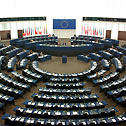
 The
European Parliament in Strasbourg demanded in a resolution on 10th May
2007 to update the legal provisions for information and consultation
and particularly the EWC Directive. The EU Commission shall present a
concrete time schedule for this. Already on 25th April 2007 a
discussion took place whereby several Members of Parliament used
current examples (Airbus, Alcatel-Lucent, Delphi Systems, Volkswagen)
to highlight the need for action of the legislator. The Parliament thus
followed the European Economic and Social Committee, which after a
crucial vote in September 2006 had asked for urgent action. Since
spring 2004 the revision procedure has run without result.
The
European Parliament in Strasbourg demanded in a resolution on 10th May
2007 to update the legal provisions for information and consultation
and particularly the EWC Directive. The EU Commission shall present a
concrete time schedule for this. Already on 25th April 2007 a
discussion took place whereby several Members of Parliament used
current examples (Airbus, Alcatel-Lucent, Delphi Systems, Volkswagen)
to highlight the need for action of the legislator. The Parliament thus
followed the European Economic and Social Committee, which after a
crucial vote in September 2006 had asked for urgent action. Since
spring 2004 the revision procedure has run without result. 
 At
the second survey of IG Metall in 2006, 28 European works councils were
examined more exactly, which conducted a special meeting on the
occasion of restructering – either with the complete council
or with the select committee. In the opinion of Dr Aline Hoffmann,
leader of the EWC team in the head office of IG Metall, the lived
practice overtakes the regulations laid down in EWC agreements. As she
explained to EWC News, “the initiative of the EWC members is
rather decisive”. In most of the cases a special meeting was
possible at short notice and opened new chances to get locally active.
However some weak points became apparent. In some cases there were no
internal preliminary meetings of the workers' side, not all locations
concerned were included, or there were no interpreters available.
At
the second survey of IG Metall in 2006, 28 European works councils were
examined more exactly, which conducted a special meeting on the
occasion of restructering – either with the complete council
or with the select committee. In the opinion of Dr Aline Hoffmann,
leader of the EWC team in the head office of IG Metall, the lived
practice overtakes the regulations laid down in EWC agreements. As she
explained to EWC News, “the initiative of the EWC members is
rather decisive”. In most of the cases a special meeting was
possible at short notice and opened new chances to get locally active.
However some weak points became apparent. In some cases there were no
internal preliminary meetings of the workers' side, not all locations
concerned were included, or there were no interpreters available.|
2.
Participation rights
after the merger
|
|
The buying up of the British BOC Group by the conglomerate Linde did not only lead to an extensive reorganisation of products and locations but also in the composition of the employee committees. While the head office of the gasses and engineering company was transferred from Wiesbaden to Munich and the fork truck division was sold, numerous members left the European works council.
The 28 members of the new EWC will come together for the first meeting in November 2007. The UK gets seven seats, Germany six, the Netherlands and France two each and all other countries one seat each (Finland, Sweden, Norway, Ireland, Spain, Italy, Austria, Poland, Czechia, Hungary and Romania). The EWC is chaired by a five-headed select committee.
Personnel support for the EWC
Jacques Bister has worked as a scientific expert for the German group works council and for the European works council since 1st April 2007. Before he was a union officer at the German Mining, Chemical and Energy Industrial Union (IG BCE) and he has long-standing experiences in the cross border cooperation of workers' representatives. Bister is co-editor of a dictionary for the international trade union work (see report in EWC News 1/2007).
The signing of the EWC agreement for ArcelorMittal took place on 9th July 2007 in Luxembourg in the presence of Lakshmi Mittal (photo). The Indian multi-millionaire will take on the chairmanship of the EWC according to French habits although particularly IG Metall trade union would have preferred the German model with a workers' representative as a chairman.
The negotiations on the merger of the two European works councils of Arcelor and Mittal Steel had been concluded in Spain on 18th April 2007 (see report in EWC News 1/2007). 54 delegates belong to the new EWC out of the following countries: France and Poland (nine mandates each), Belgium and Romania (eight each), Germany, Spain and Czechia (five each), Luxembourg (three) as well as Italy (two mandates). The workers' representatives choose a three-headed secretariate and a select committee of 25 members.
The new agreement adopts the essential features of the previous Arcelor agreement and meets the demands of the trade unions. Besides an employee participation in the administrative board the agreement provides participation rights for the EWC like in the SE Directive which goes beyond the regulations of the EWC Directive at some points. ArcelorMittal thinks about a transformation to a European company (SE).
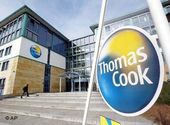
On 4th May 2007 the European Commission had allowed the take-over of the British tour operator MyTravel by the German tourism group Thomas Cook. The new company will have its seat in London and will be based on British legislation. The functions of the executive board and the supervisory board are then united in a management board which does not know any workers' directors.
The
workers' directors in the previous German supervisory board of Thomas
Cook lose their mandates with that. All the more important will be the
role of the European works council in future. Negotiations of its
working conditions started at the beginning of August 2007. At Thomas
Cook an EWC was already installed in 2003, at My Travel in 2006.
Recently the recognition was renewed for the more than 1,000 employees
at Thomas Cook in the United Kingdom and an Employee Consultation Forum
(ECF) was founded, which is comparable with a company-wide national
works council.
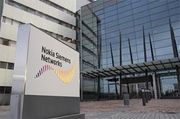
In the course of the merger between the two network divisions of Siemens and Nokia 9,000 jobs shall be cut. The company Nokia Siemens Networks (NSN) set up on 1st April 2007 does not have any EWC yet which could be consulted over the restructuring plan (see report in EWC News 1/2007).
After protests of the European Metalworkers’ Federation (EMF) central management explained for the first time its workers' representatives the plans on 25th´May 2007 in Brussels. Though it is not clear yet to which degree which countries and locations will be affected by the reduction, but first signs point to figures of 1,700 in Finland and 2,900 in Germany primarily in the research and development area. A further downsizing is feared in Belgium, Spain and the Netherlands.
|


|
3. Reports
from the courtroom
|
|
On 24th April 2007 the German Federal Labour Court (BAG) in Erfurt clarified: Collective agreements negociated by unions on plant level have priority before agreements negociated by works councils. The core of the decision was dealing with the issue whether the peace clause as laid down in the Works Constitution Act (a German feature to be explained abroad only with difficulty) basically applies during restructering or whether the freedom of association including the right to strike applies. This BAG decision brings the collective labour law in Germany closer to European normality. The following texts are available only in German:
A court in Paris determined on 27th April 2007, which information the employer must disclose to the European works council in case of Europe-wide restructuring. The European Committee for Information and Dialogue (ECID) of the telecommunications supplier Alcatel-Lucent, where several thousand jobs are to be cut after the merger, had taken legal action. Central management had not justified this reduction and pointed out to "synergy effects" only generally (see report in EWC News 1/2007).
The employer argued in front of the court that the ECID is merely a committee of social dialogue and not a full European works council. As such it would not be entitled to the rights of information and consultation in accordance with the EWC Directive because the committee had been founded 1996 on a "voluntary" basis before the national EWC laws came into force. Until present such agreements enjoy the right of continuance according to article 13 of the EWC Directive. The court followed this position, the workers' representatives also cannot refer to the EU Directive on information and consultation from the year 2002.
The court nevertheless came to the opinion that the central management has not complied sufficiently with its duties of information and consultation. The judgement was immediately published by the French unions in a joint handbill (click on the picture on the right for extending). The employer must present the following:
This information must be "complete and precise enough, to explain the employment trend on an European level to the EWC and to allow for an exchange of views and dialog with the management in view of full knowledge of the facts". At the earliest 15 days after disclosure of all information mentioned above a special session of the EWC can take place to decide on a statement. According to this judgement central management of Alcatel-Lucent is not obliged, however, to present a redundancy scheme to the EWC, because firstly this is not a component of the EWC agreement and secondly, results from the participation rights of the works councils in single countries. The EWC does not enjoy any priority compared to the national works councils. In the opinion of the court participation and consultation rights in countries concerned may not be postponed on the grounds, the EWC must be informed completely first.
Only limited expert support
Following once more protests at the companys' general meeting in Paris on 1st June 2007, central management finally presented the information demanded by the court in the middle of June 2007. The ECID does not have any claim to an own expert, however. It can only count on experts who advise the French group works council. For this reason a sound evaluation of the presented financial data is only restrictedly possible. The ECID delivered a statement on the restructuring on 4th July 2007.
The European Metalworkers' Federation (EMF) explains some judgements in EWC matters in the "newsletter on company policy".
The highest French court of justice ("Cour de cassation") condemned the Finnish electronic company Aspocomp to bear redundancy scheme costs in the amount of 11 m. € for its former factory Évreux in Normandy on 19th June 2007. The dismissals had been justified with economical reasons in 2002, however, in opinion of the court, been carried out improperly. Now the central management in Espoo must pay for costs which would have had to be borne by the meanwhile insolvent French subsidiary.
The judgement is based on EU law and was only possible because the company has its head office in the European single market. In comparable cases of insolvency, e.g. the glass plant of LG.Philips Displays in Aachen or the German locations of the mobile telephone manufacturer BenQ, central management could abscond from their responsibility in Asia. This shows the significance of EU legislation as an example for social arrangements of the globalisation.
For the first time a court in the UK adjudicated on the basis of the EU Directive on information and consultation on 24th July 2007. The Employment Appeal Tribunal in London decided on application of the union Amicus against the newspaper publishing house Macmillan, a subsidiary of the German Holtzbrinck group. British management has refused insistently to recognize an employee representation and to disclose financial data for years. Since it came neither at the completion of a company agreement nor to the compliance with the legal minimum regulations then being valid, Amicus started legal steps in June 2006. Macmillan ignored, however, the ruling of the Central Arbitration Committee (CAC), an independent arbitration board which in actuality proceeds as the first instance concerning industrial law in such matters. Therefore the London court condemned the publishing house to the payment of a penalty of 55,000 £ (82,000 €), maximum penalty would have been 75,000 £. Obviously the judges wanted to set an example and to deter other companies from seeing violations against EU employee rights as peccadillos. |



|
4.
Recently formed EWCs
|
|
On 14th December 2006, an EWC agreement was signed according to Italian law for the Italian media group of Mediaset in which the financial holding Fininvest of the former prime minister Berlusconi is involved substantially. Six members from Italy and two from Spain which meet once a year belong to the EWC. One delegate each per country coordinates the cooperation between meetings, they form a kind of "mini-committee". Germany is not affected by this agreement because the take-over of the TV station chain ProSiebenSat.1 Media by Mediaset had failed in November 2006. In May 2007 Mediaset bought a share in the Dutch TV producer Endemol ("Big Brother"), what could possibly lead to an expansion of the scope of the EWC agreement. Endemol is represented in five European countries, among them in Germany.
Negotiations completed successfully in the Bauer publishing house
On the same day as in the case of Mediaset an EWC agreement was signed for the Bauer publishing group in Hamburg, too. The negotiations had been extended over more than two years and were characterized by a heavy blockade attitude of the employer. So e.g. the chairwoman of the special negotiation body (SNB) received an official warning for participating in a seminar on EWC formation. The agreement became effective on 1st February 2007 and provides for an eight-headed EWC with a three-headed presidium. Besides Germany (three delegates) France, Spain, UK, Poland and Czechia are represented with one delegate each. The constituting meeting is planned for December 2007. The following documents are available only in German:
On pressure of the European Commission the French engineering company Alstom had to hive off some business divisions. So was the production of power station turbines with 3,000 employees in Germany, France and Britain (formerly Alstom Power Conversion, now Converteam) sold to a British financial investor. Since 24th January 2007, there has been an EWC agreement according to French law which provides two annual meetings for the nine EWC members in the company based in Massy near Paris. These choose a steering committee of three, which can initiate working groups within the EWC, comparable to the regulations for the German utilities company Stadtwerke Leipzig and to the Italian bank UniCredit (see report in EWC News 1/2007).
A training took place at Paris airport for the members and substitute members on 22nd and 23rd May 2007 some weeks before the constituting meeting. On suggestion of the French trade union CFDT and the European Metalworkers' Federation (EMF) Dr Werner Altmeyer and Dr Heiner Köhnen of the training and consultancy network "euro-workscouncil.net" equiped the delegates with an intercultural and communicative base for the work in the future EWC.
An agreement on the formation of an European works council for the 1,900 employees of the U.S. company Cytec in Europe was signed on 19th June 2007 in Graz (Austria). The wording is – characteristic for many Anglo-Saxon texts – pragmatic, the management showed itself quite accommodating at some points. So two meetings per year take place, in exceptional circumstances an additional special session is called on application within two weeks. Not only the twelve EWC members but also further workers' representatives from locations concerned take part in it.
Three delegates are sent from Belgium and Austria, two from Germany and one mandate each goes to Spain, Italy, Netherlands and Norway. France shall join at the end of 2007, the staff is increased there at the moment. Between meetings the business is run by a three-headed steering committee whose members come from different countries. Furthermore the agreement provides for training, expert support and a method to solve disagreements outside the court. It is subject to Belgian law.
IT service
providers have difficulties with European works councils
|

 After the sale: Turbine
manufacturer founds EWC
After the sale: Turbine
manufacturer founds EWC
 An
Italian cement group renews EWC agreement
An
Italian cement group renews EWC agreement|
5.
Company agreements on social standards
|
|
Since August 2006 there have been intensive negotiations at Suez between central management and the EWC on the international human resources policy. Although the parties have not reached an agreement in all points yet, three international framework agreements were signed on 3rd July 2007: about a financial participation, about an anticipatory personnel development planning and for the promotion of equal treatment and diversity. For the first time all group employees worldwide will get a financial participation.
On
12th July 2007 the French group Schneider Electric signed an agreement
on anticipatory and socially compatible design of strategic company
policy with the European Metalworkers' Federation (EMF). The initiative
was taken by the employer in December 2006. The agreement is valid in
the same countries as the EWC agreement and contains rules for
competence development of the employees, for the early involvement of
the European works council prior to cross-border restructurings and for
the procedure in case of job cuts.
On 13th April 2007 a worldwide framework agreement was signed for the Dutch group Brunel which has particularly specialized in project management and staff recruitment for the oil and gas industry. Compliance with fundamental social standards, a claim to company based further training and timely consultation of employee representations in case of restructuring is assured to the 5,300 employees. On 4th May 2007 on the edge of the EWC meeting in Barcelona, a global framework agreement was signed on compliance with international labour standards for the 35,000 employees of the Canadian printing group Quebecor. It was only in November 2006 it had almost come to a legal dispute since the EWC was ignored in advance of several transnational restructurings.
The German WAZ group is taking on a pioneer role. Within the last few years it has purchased numerous companies in Eastern Europe and on the Balkans. The framework agreement signed on 4th July 2007 in Essen is worldwide the first one in the media sector. In this agreement the company commits itself to respect fundamental social rights at work and to establish a forum where once a year representatives of all countries meet. The agreement was presented in Brussels together with EU Commisioner Viviane Reding on 9th July 2007. Rheinmetall boycotts monitoring The German car supplier and armour group Rheinmetall had concluded an international framework agreement in 2003 and obliges itself to observe worldwide core labour standards and to provide for equal opportunities and health protection. The International Metalworkers' Federation (IMF) organized a meeting of European and South American workers' representatives in Neckarsulm (Germany) on 12th and 13th June 2007 to discuss the compliance with the agreement. However, this meeting was not supported by the employer, which was described by the president of IG Metall trade union Jürgen Peters as a violation of democratic rules of the game and even as a breach of the agreement. It was only after the press had reported that central management offered a delegation of the European works council to visit Brazilian factories. The EWC chairman Peter Winter wants to accept the offer, but doesn't consider it a substitute for worldwide monitoring meetings. |
 Even
three agreements in a French utility group
Even
three agreements in a French utility group European
agreement on anticipation of change
European
agreement on anticipation of change
|
On 7th December 2006 the Mensch und Maschine Software AG with seat in Weßling near Munich was transformed into a European company. The 300 employees in Germany, Austria, Switzerland, France, Italy, UK, Belgium, Sweden and Poland know neither works councils nor an employee participation in the supervisory board. The situation reminds a little of the substantially larger rival company SAP before the formation of a works council was forced. In the course of the SE transformation the statutory consultation of the workforce took place, which however did not show interest in a participation. The separation into executive board and supervisory board was lifted in the new legal structure of the company. There is now only one management board modeled on British example. The company founder has already announced that he would transfer the seat of the corporation abroad, if he should be forced to introduce co-determination in Germany. This also reminds of statements of the SAP management before the formation of the works council.
On 14th May 2007, three special negotiation bodies at Scor have come to an agreement to form one joint SE works council for the three European companies. This is not only the first case of a SE agreement in France but also a completely new legal construction. There are two companies below Scor holding: one for life insurances and one for other insurance business. A joint SE works council ("Comité Commun des Sociétés Européennes") consisting of 19 members which quarterly meets is to look after employee participation. The employees' side can in addition send two representatives to the administrative board of the holding. Shortly before expiry of the statutorily six months period, negotiations about a participation agreement were completed in the medical group Fresenius on 13th July 2007 (see report in EWC News 1/2007 on the beginning of the negotiations). Four workers' directors from Germany and one each from Austria and Italy will belong to the twelve-headed, equally composed supervisory board (the trade unions had voiced in favor of 20 members). Among these are four works council members and two full-time trade union officers (one from the German service sector union ver.di and one from the chemical sector union of the Italian confederation CISL). The SE works council consists of 29 members among them seven from Germany and one each for the 22 other countries. The council elects a chairman, two deputies and another four members who form the select committee. The SE works council meets only once a year and special meetings are only possible with restrictions, but the select committee has the right to three meetings per annum, one thereof can serve to visit a foreign plant, and is informed in extraordinary circumstances on time. Workers' representatives from countries or locations concerned by concrete measures then can be invited to such meetings in addition. The new SE works council has the power of initiative in a range of topics: equal opportunities, health and safety at work, data protection as well as training and further education policy. The employer bears seminar costs, pays up to two experts and permits the participation of two representatives of European trade union federations. Possible disputes can be solved fast in an arbitration board.
The supervisory board of a new Porsche Automobil Holding SE convened for the constituent meeting in Stuttgart on 24th and 25th July 2007. Prior to this a participation agreement had been negotiated between central management and the special negotiation body (SNB). The SNB met for the first time on 10th May 2007, 17 members belonged to it from Germany, France, Spain, UK, Ireland, Italy, Austria and Czechia as well as trade union officers of IG Metall. In the new agreement the competences and the electoral procedure for the future SE works council and the representation of employees in the SE supervisory board are set.
Since in a German public limited company the number of mandates would rise with an increasing number of employees and thus more and more workers' directors would move to the governance body, this remains unchanged with twelve members in the SE supervisory board. This question plays a central role in many SE foundations of German enterprises while the parity representation in the supervisory board is accepted. The German group works council chairman Uwe Hück became deputy chairman of the SE supervisory board. The up to now existing Porsche AG (as a 100% daughter) and the 31% share in Volkswagen are run under the roof of the new holding. However, workers' directors of Volkswagen only get a claim on seats in the new supervisory board, if Porsche increases the VW participation to more than 50%. As a third column a new lorry group could be integrated later after the planned MAN and Scania merger.
After the decision of the general meeting on 26th April 2007 to change BASF into a SE the special negotiation body (SNB) constituted itself in Heidelberg on 12th June 2007. It will conclude a SE participation agreement with central management not later than November 2007. The 29 workers' representatives from 23 countries elected Robert Oswald, the chairman of the German group works council, as chairman of the SNB and engaged a negotiation delegation of twelve representatives from Belgium, Germany, France, UK, Italy, Poland, and Spain as well as a representative of the executive staff to do the detail work.
Accompanying research for the formation of Allianz SE Since
October 2006 the insurance group Allianz operates in the legal form of
an European company. The participation agreement of Allianz was the
first Europe-wide in such a large company and could become an example
for many others. For this reason the European federation of service
sector trade unions (UNI) had engaged the IMU-Institut in Munich to
carry out a scientific study on the process of the negotiations. Works
councils and union representatives in several countries were
questioned. The results were presented at a workshop in Brussels on 8th
and 9th May 2007. |

 Fresenius
concludes an exemplary participation agreement
Fresenius
concludes an exemplary participation agreement
 SE
negotiations at BASF started
SE
negotiations at BASF started|
7.
Case
studies: Aluminium and household appliances industry
|
|
Gigantic merger wave at mining companies
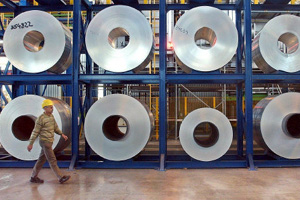
Alcoa and Alcan were world market leaders in the aluminium industry for years but since the merger of two Russian groups recently they are not any longer. Therefore the U.S. company Alcoa tried in spring 2007 to take over the Canadian competitor Alcan hostilely and to reconquer the world's top position. When these take over plans were disclosed the EWC of Alcan voiced against the merger at its meeting in Paris on 29th and 30th May 2007. Such mega-mergers would not only be a danger for the staff of the taken company but also for those of the buyer. The EWC fears that the European aluminium industry will lose more and more competence centres and research sites by doing so.
On 1st June 2007, workers' representatives of Alcan and Alcoa met in Brussels on invitation of the European Metalworkers' Federation (EMF) to discuss the effects of such a merger on the jobs: the German EWC chairman of Alcoa, the French EWC secretary (spokesman of the employees' side) of Alcan as well as two trade union officers, which assist the European works councils on behalf of the EMF. After the first conversation in the small circle further EWC members of both groups from seven countries came together in Brussels on 21st June 2007 and agreed on a common procedure. They demanded the strict compliance with their participation rights, the involvement in the process of EU merger control and the immediate convening of a common special meeting with central management of both groups. "White knight" prevents a hostile take-over
A special EWC session actually took place in Zurich on 25th July 2007, but only for the EWC of Alcan. The CEO had arrived from Canada personally to inform the workers' representatives in Europe about the merger with Rio Tinto. The Anglo-Australian mining group based in London had stood in on 12th July 2007 as a "white knight" to prevent the hostile take-over by Alcoa. The deal will have the same dimension as the take-over of Arcelor by Mittal Steel in June 2006.
The central management of Rio Tinto will explain to the EWC of Alcan its plans more exactly in the middle of September 2007. The sale of the packaging division of Alcan, which amounts to 23 per cent of the group’s turnover is particularly scheduled. The EWC demanded a financial expert report to be able to assess the effects on the jobs more exactly. For French shaped European works councils such extensive advisory services are at the agenda - differently from British or German companies. Great anxiety triggered the merger in Switzerland:
Alcan emerged from numerous take-overs, particularly the Swiss Alusuisse-Lonza and the French Pechiney group, and additionally disposes of important production sites in Germany and the UK. Already since 1996 there were European works councils in these companies. After completion of the mergers a new EWC agreement was signed according to French law in March 2006.
Rio Tinto does not have any EWC yet since large parts of the sites are located outside Europe. In Australia the company is confronted with heavy criticism of trade unions and environmental groups because of violations of employee rights and safety regulations. It remains to be seen how this anti trade union attitude will become apparent in the European locations of Alcan. The EWC of Alcan will probably represent the European employees of Rio Tinto in future. The hunter could now become the chased himself
The take-over of Alcan by Rio Tinto - Deutsche Bank served as an adviser in the background - will fundamentally change the company landscape of the mining industry. In stock exchange circles is speculated, the inferior bidder Alcoa could himself become a target of a hostile take-over, possibly by ArcelorMittal (see report further above). Alcoa has a EWC according to Dutch law since 2001 and is strongly represented in Spain, Italy and Hungary.
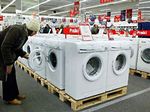
From 27th to 29th June 2007 representative of trade unions, enterprises and science from the new and old EU countries met in Arezzo (Italy) to discuss alternatives to current restructuring in the household appliances industry. A survey done by the Istituto per il Lavoro (IpL) in Bologna shows the dramatic extent of the shift to low wage countries and the loss of jobs. The shutdown of the AEG plant at Nuremberg had caused special attention in Germany. Measured in terms of employee numbers this industry still takes the second place in Italy, Spain and some Central European countries after the car industry.
Originally the "white goods" were mainly produced in Germany, Sweden and Italy. But already in the middle of the eighties a shift took place to Southern Europe. While small equipment like iron, coffee machines or vacuum cleaner is almost only produced today in Southeast Asia, the production of the large equipment (washing machines and dishwashers, dryers, ovens) drifted towards Middle and Eastern Europe including Russia and Turkey where the market steadily grows and the wages are still low. How shall trade unions and European works councils behave at such restructurings?
At the conference different approaches were discussed using case studies and the challenges also assessed for the new EU countries. Already some product lines shall be shifted from Eastern Europe to China. Which role did the European works councils of Electrolux, Whirlpool, BSH and Indesit play in the retrograde production shifts? In all these cases a considerable lack of a cross-border coordination was noticed. How employee representatives behaved locally? About this also two case studies existed: the enterprises Arctic from Romania and De' Longhi from Italy. At the end of the meeting Prof Bierbaum of INFO-Institut in Saarbrücken (Germany) introduced a suggestion for better coordination of EWC work in this industry. All meeting presentations and documents are available in the Internet on a special website.
Further industry-specific reports in earlier editions of EWC News (most in German):
|
|
8. Turkey: a topic for the EWC?
|
|
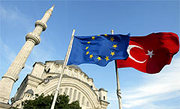
From the 20 m. employees only about 14% are members of a trade union (what corresponds to the standard of Spain), the majority in the confederation Türk-İş. The legislator has set the trade unions high hurdles: they can conduct collective bargaining only if they represent more than 50% of the employees of a company whereas every single membership must be verified notarially. The majority of the employees in Turkey therefore is not covered by collective agreements. The working week is generally 45 hours. There are no works councils, however, the set-up of a site union representation is possible by recognition agreement like in the UK. Turkey ratified the social charter of the Council of Europe in September 2006, what is regarded as an important signal in the context of EU accession negotiations. According to calculations of the European Trade Union Institute any eighth company falling under the scope of the EWC Directive had a branch office in Turkey in 2006 (in total 270 companies). If Turkey would already be member of the EU today, Turkish delegates could move in into 152 already existing European works councils. At present, five delegates and three observers from Turkey are involved on a voluntary basis in some few councils.
On 24th and 25th April 2007 the European Metalworkers' Federation (EMF) carried out a meeting in Istanbul "Social Dialog and Corporate Social Responsibility in South-East Europe" which was thought also in response to numerous cases of hindrance of trade union activities in Turkey. According to the EMF Turkish labour law does not comply yet with internatinally valid rules, which apply everywhere in the EU. 600 participants of a Labour Day demonstration were arrested in Istanbul few days later on 1st May 2007.
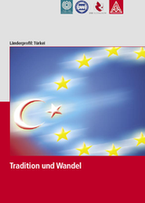
The DGB Bildungswerk together with IG Metall published in 2005 a booklet worth reading on the history, the economy and the social system of Turkey as well as on the current problems of the Turkish society with regard joining to the EU. DGB-Bildungswerk/IG Metall: Länderprofil: Türkei Tradition und Wandel Düsseldorf/Frankfurt am Main 2005, 52 pages, € 3,50 The euro zone will be enlarged
In future the euro zone will thus cover 15 of the 27 EU member states with about 320 m. inhabitants. But already in 2009 Slovakia could join, in 2011 the three Baltic states and Bulgaria. In contrast, the economically most important countries in Middle and Eastern Europe (Poland, Hungary and Czechia) will satisfy the criteria for the monetary union at the earliest in 2012, Romania only 2014. Previous focuses on countries in EWC News (mostly in German):
|

|
9. EWC research
|

 A research project on European works
councils in the motor industry started at the Ruhr University of Bochum
on 1st March 2007. The team around Prof Dr Ludger Pries would like to
develop an EWC typology, to examine structural conditions of its work
and to analyse results of negotiations between EWC and management. The
empirical study will cover production sites in Germany, France, UK,
Spain and Poland of the following groups: DaimlerChrysler, Volkswagen,
General Motors, Ford, Renault and PSA Peugeot Citroën.
A research project on European works
councils in the motor industry started at the Ruhr University of Bochum
on 1st March 2007. The team around Prof Dr Ludger Pries would like to
develop an EWC typology, to examine structural conditions of its work
and to analyse results of negotiations between EWC and management. The
empirical study will cover production sites in Germany, France, UK,
Spain and Poland of the following groups: DaimlerChrysler, Volkswagen,
General Motors, Ford, Renault and PSA Peugeot Citroën.
|
Employee participation in Europe
This new topic page of the European Trade Union Institute provides background information about numerous aspects of employee participation: European works councils, participation in the European company, information and consultation at a national company level, EU legislation, social dialog at European level and special features of industrial relations in each of the 27 EU member countries. Particular aspects, e.g. collective bargaining systems, health and safety or participation rights, can be compared "at the touch of a button" between the countries.
The United Kingdom has a new trade union since May 1st, 2007: Unite with two million members has resulted from the merger of two multi-sector unions – Amicus which is strongly represented in numerous sectors among others in the metal industry (see Amicus sectors), and the transport workers’ union T&G which is already grown beyond this sector (see T&G sectors). Unite wants to concentrate on the recruitment of younger employees (10% of the complete budget is provided for this) and the international cooperation.
Eurocadres, the Council of European professional and managerial staff has published a manual for deployment abroad on the Internet. It is aimed at all employees who work in another member country of the EU or want to return from there. For every EU country information can be retrieved about the residence and contract of employment right, the recognition of professional qualifications and diplomata, the national insurance system, the taxation, trade unions and working conditions up to tips for the search of a flat and looking for work. Italian EWC portal
We have compiled numerous further interesting links in a link collection.
|

 British mega-trade union merger


|
11. New
publications
|
|
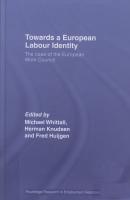
This English-speaking anthology, which deals with the question about the collective identity of European works councils has been published in May 2007. Authors from several EU countries examine different aspects of the current EWC research. How do employee representatives perform their work as an EWC member with a different cultural background?
Michael Whittall/Herman Knudsen/Fred Huijgen (eds.) Towards a European Labour Identity The case of the European Work Council London/New York 2007, 233 pages, ISBN 978-0-415-40396-2, € 120,99 → Further information → Online order
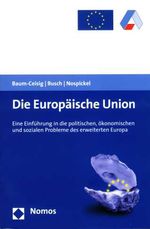
This exercise book deals with the political system of the EU (bodies, competences), the economic integration (single market, euro zone, Europeanization of the economic policy) and its social consequences (pay, social systems, taxes, migration, company relocations). A special attention is put on the problems of the Eastern enlargement and the prospects of the European social model. The book is suitable as a reference book as well as for adult education. It emerged in the context of the project "work and prosperity in an enlarged Europe". The training and consultancy network "euro-workscouncil.net" added some texts on European works councils. The book is available only in German.
Alexandra Baum-Ceisig/Klaus
Busch/Claudia Nospickel Baden-Baden 2007, 371 pages, ISBN 978-3-8329-2138-5, € 14,90 → Table of contents → Online order
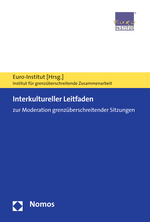
A book for the German French cooperation has been released in May 2007, which provides valuable suggestions including for European works councils. The authors do not only give practical tips how meetings or project teams can be facilitated with French, Luxembourg, Swiss and German participants - but moreover, deliver also scientifically sound instructions to the intercultural understanding. Using many case studies they show dangers, which can lead to misunderstandings, disturbances and possibly even to failure of intercultural projects. The intercultural guide is a kind of "toolbox" and was composed by experts of the intercultural cooperation from the German French Euro-Institut in Kehl. The book is available only in German.
Euro-Institut, Institut für grenzüberschreitende Zusammenarbeit (ed.) Interkultureller Leitfaden zur Moderation grenzüberschreitender Sitzungen Baden-Baden 2007, 108 pages, ISBN 978-3-8329-2477-5, € 19,- → Further information → Online order
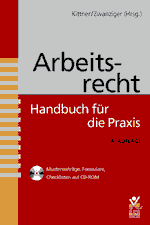
The new edition of this manual does not only represent comprehensively material labour law and labour court procedures in Germany from the employee view but contains one section each of the international labour law and of the European community law. Here basic knowledge can be refered to (hierarchy of norms, transposition of Directives etc.), however information about all important Directives concerning labour law is also part of it. A chapter deals separately with the collective European labour law and among other things with the European works council and the SE works council. The book is available only in German.
Michael Kittner/Bertram Zwanziger (editors) Arbeitsrecht Handbuch für die Praxis mit CD-ROM Frankfurt am Main 2007, 4. edition, 2.993 pages, ISBN 978-3-7673-3773-3, € 189,- → Online order
|
|
12. Training and Consultancy
Network "euro-workscouncil.net":
further examples of
our work
|
|
New faces in EWC advice and research
The growing demand for the offers of the training and consultancy network "euro-workscouncil.net" required reinforcements of our team. Two new members have joined in spring 2007, both very familiar since years with international trade union activities and industrial relations.
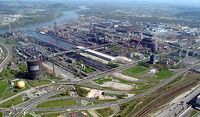
voestalpine has a similar past like Volkswagen: founded at the Nazi time the state-owned enterprise was after the war noted as a focus of trade union movement and for outstanding company benefits. Today voestalpine with its parent plant in Linz at the Danube (photo) is a highly profitable, quoted manufacturing company with an own steel base – and an exemplary EWC agreement. The workers' representatives from the four areas steel, railway systems, automotive, and profiled forms carry out cross-border division meetings with the respective division management. Such regulations exist only in few enterprises e.g. in the aviation and aerospace group EADS and in the Swedish packaging group SCA.
The training and consultancy network "euro-workscouncil.net" organized a workshop for the European works council in Linz on 16th April 2007. In working groups it was for example acquired how one can better anchor the EWC in the workforce, use the secretariat as an information turntable or develop the EWC further to a transnational negotiating party. The following texts are available only in German:
IG Metall pushes EWC formations at the lower Rhine region
Some 25 workplace representatives and full-time trade union officers of the transport sector from six countries met from 5th to 8th May 2007 in the Romanian seaport Constanţa to inform themselves about means and limits of European works councils. The workshop took place in the context of a project sponsored by EU funds with the support of the European Transportworkers' Federation (ETF). Speakers of the event were besides Werner Altmeyer of the training and consultancy network "euro-workscouncil.net", Philippe Alfonso of the ETF in Brussels and Erika Young, a deputy chairwoman of the International Transportworkers' Federation (ITF) in London. The port of Constanţa is regarded as "Rotterdam of the East" because of its strategic situation at the Rhine-Main-Danube route and the considerable volume handling.
Restructuring in the chemical industry
Our publication activities
In April 2007 Bernhard Stelzl dealt with the topic "taking on responsibility - Corporate Social Responsibility in Germany" in an article for the Personalmagazin. In May 2007 Werner Altmeyer and Lionel Fulton presented in the magazine der betriebsrat the current situation of workplace representation in Britain. And Reingard Zimmer examined Europe-wide antidiscrimination agreements in the magazine Arbeitsrecht im Betrieb in July 2007.
With
technical support of the training and
consultancy network "euro-workscouncil.net" the paper Frankfurter
Allgemeine Zeitung published a report on current trends of
EWC activities particularly at restructurings on 21st
July 2007. You find additional publications at our publications page.
On 4th June 2007 the third issue of the EWC newsletter, jointly published by the unions ver.di in Germany and GPA in Austria, was released. The contents are co-designed by the training and consultancy network "euro-workscouncil.net". Topics of the issue 1/2007 were the new EWC agreement at UniCredit with an interview of the chairman of the German group works council of HypoVereinsbank, Peter König, a report on the establishment of European works councils in the finance sector, European works councils in tourism (particularly the situation at Thomas Cook after the merger with MyTravel), the Europe-wide EWC-networking in media companies, accents in the energy sector and a report of the meeting of the services sector trade unions (UNI) in Athens. The newsletter is available only in German.
Courier, parcel and express services: Study on EWC formation
|

 The report is available only in German.
|
13.
Details of seminars planned
|
|
Registration for the following seminars and workshops that we have co-designed can now be made:
Europe for trade union officers of IG Metall Institutions, political fields, European works councils 08 -- 10-10-2007 in Bad Orb
Works council activities in Europe, the European works council (EWC) Legal basis, foundation, intercultural communication 04 -- 09-11-2007 in Hamburg → Further details about this seminar (in German)
Formation of European works councils in the port sector 18 -- 24-11-2007 in Livorno (Italy) → Further details about this workshop
In-house events Please find a survey of the subjects for in-house events here: → Subjects of In-house seminars → Subjects for in-house lectures
|
|
14. Imprint
|
EWC
News is published by: Training
and consultancy network "euro-betriebsrat.de" GbR Von-der-Tann-Straße
4, D-20259 Hamburg www.euro-workscouncil.net (English) www.euro-ce.org
(French) Authors
collaborating on this issue: Werner
Altmeyer, Carmen Bauer,
Kathleen Kollewe, Bernhard Stelzl, Reingard Zimmer Distributor
of the German
version: 8,589 Empfänger Distributor
of the English version: 870 readers Distributor
of the French version: 495 readers Newsletter
archive: www.ewc-news.com
We
are always pleased to
receive comments and suggestions in relation to this newsletter as well
as reports on your EWC activities. Please write us at: info@euro-workscouncil.net
www.euro-betriebsrat.de (German)