 |
 |
Download pdf file |  |
Newsletter archives |
 |
Dieser Newsletter auf Deutsch |  |
Cette newsletter en français |
1. New corporate legal form: a threat to co-determination? |
 |
|
More flexibility for start-ups in the European single market
This legal form could bring tangible simplification for companies operating across borders. They would no longer have to set up separate national structures in each individual country. The proposal still needs to be approved by the European Parliament and the Council of Ministers, which is being targeted by the end of 2026. Unlike an EU directive, a regulation does not have to be transposed into national law; it applies immediately in all EU countries. However, it remains to be seen whether EU Inc. will actually materialise and what the final form will be. There are already a number of reservations on the part of the trade unions; in particular, EU Inc. should not be used to escape co-determination, as is now widespread with the European Company (SE) (see report in EWC News 2/2024).
The EU Inc. should be subject to the EWC Directive
An EU Inc. can be established from scratch; existing companies can be converted into an EU Inc. or subsidiaries can be set up as an EU Inc. It must be ensured that employees' rights, e.g. to co-determination on the supervisory board, are not circumvented. The co-determination regulations of the country in which an EU Inc. has its registered office will always apply. This means that if an EU Inc. is registered in Ireland, it would not need to include employee representatives on the supervisory board, even if it has a large workforce in Germany. As many SE conversions in Germany are carried out solely for this reason (especially for start-ups and medium-sized family businesses), the SE legal form is likely to become less attractive. If an EU Inc. can be established within 48 hours, it is also impossible to establish a special negotiating body before registration in the commercial register. Instead, the European Commission's proposal stipulates that an EU Inc. is subject to the EWC directive. The trade unions have already formulated touchstones for a fair 28th regime, including:
European Parliament seeking protection for co-determination
On 20 January 2026, the European Parliament supported the introduction of the new corporate legal form with 492 votes in favour, 144 against and 28 abstentions. The resolution emphasises that the 28th regime must not serve to impair, reduce, weaken or circumvent the existing level of protection. Guarantees for co-determination should therefore be provided and any artificial use (e.g. shell or letterbox companies) effectively prevented. If an EU Inc. were to establish a larger workforce in another EU country, the European Parliament considers that it would have to comply with the rules on company co-determination in that other country. For example, if an EU Inc. based in Ireland had more than 500 employees in Germany, it would have to introduce co-determination as in Germany. In this case, a special negotiating body would have to be set up, as in the case of the SE, to negotiate the mandates of the employees on the supervisory board of the Irish EU Inc. If such negotiations fail, standard rules should apply. Whether this demand will prevail is currently unclear.
Press release and proposals of the European Commission Trade union positions on the proposal The resolution of the European Parliament |
 On 18 March 2026, the European Commission presented the draft regulation on the introduction of an "EU Inc." as a possible legal form for start-ups and companies expanding internationally, which had already been announced in January 2025. The new legal form, similar to the European Company (SE), is intended to harmonise the framework conditions within the internal market and promote cross-border activities. The aim is not to replace the systems of the 27 EU countries, but to create an additional option known as the 28th regime. The proposal provides for the following points:
2. Further developments at European level |
|
|
EU Directive on Quality Jobs in the Planning Stage
The basic idea is that there can be no competitiveness without safe and healthy jobs, fair wages and a social dialogue backed by a strong collective bargaining system. The social partners were asked to comment primarily on the following topics: algorithmic management and artificial intelligence (AI) in the workplace, health and safety on the job when deploying new technologies and mobile digital devices, subcontracting, as well as how to ensure that the green and digital transformations are implemented fairly.
The employer confederation BusinessEurope generally acknowledges the issues identified by the European Commission, but in its response rejects the idea of an EU directive. It argues that non-binding initiatives should be taken and that the legislator should focus solely on simplifying existing regulations. On the other hand, in its response, the European Trade Union Confederation (ETUC) calls for several new legislative regulations on the following topics:
Two aspects are particularly important for local and European works councils. Firstly, a special legal framework should be created for them to exercise influence at an early stage in organising the green and digital transformations. Secondly, the exodus from co-determination through SE conversions should be stopped: "More than 20 years of practice under the European Company Statute (Societas Europaea, SE) have led to alarming results. Instead of supporting the Europeanisation of industrial relations in line with economic integration, the SE is increasingly being used to circumvent employee participation rights," writes the ETUC.
European Commission press release BusinessEurope position statement  European Parliament calls for a just green and digital transformation
The package of measures includes aspects such as working conditions, professional integration of people excluded from the labour market and improving the working environment to protect health and safety. In addition, there is to be an individual right to training and skills development during working hours. Particularly important for works councils is the demand for effective implementation of the right to information and consultation, as provided for in an EU directive from 2002. According to this directive, companies with 50 or more employees in all EU countries must inform and consult their workforce on social and economic issues and establish a special committee, a kind of "works council light". While the directive had no impact in countries such as Germany, Austria or the Netherlands, countries such as Ireland or Poland had to pass new laws. The effectiveness of these laws is now coming back into focus.
Background report on the resolution Assessment from a trade union perspective European Parliament calls for EU legal framework on subcontracting
|
 On 4 December 2025, the European Commission unveiled its long-awaited Quality Jobs Roadmap, which aims to identify new challenges for labour law and culminate in a new EU directive. The first phase of consultation with the social partners ran until 29 January 2026. The second phase is scheduled to take place in the summer, with a draft directive to be presented in autumn 2026.
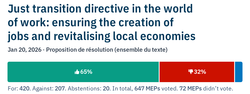 The European Parliament's resolution on a just transition in the world of work of 20 January 2026 should also be seen in the context of the ongoing initiatives for an EU directive on quality jobs (see above). By a majority of 420 votes to 207, it calls for an EU legal framework to support a socially just and inclusive transformation and the creation and protection of quality jobs.
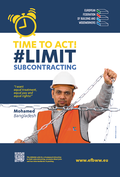 On 12 February 2026, the European Parliament adopted a "Resolution on addressing subcontracting chains and the role of intermediaries in order to protect workers' rights" by a majority of 332 votes to 209. The aim is to curb abuse in subcontracting and temporary agency work, particularly in agriculture, logistics and construction. The resolution calls for transparency and accountability along the entire subcontracting chain as well as combating illegal practices in order to promote the competitiveness of companies and fair working conditions. To this end, the competence of the European Labour Authority (see
 3. Individual country reports |
|
|
Historic turning point in Britain
The most important new regulations in individual labour law include the ban on zero-hour contracts ("work on demand") without entitlement to minimum remuneration. The "fire and rehire" practice will also be banned. This consists of ignoring collective labour agreements and dismissing employees who do not accept worse working conditions (see report in EWC News 2/2021). In the future, sick pay will be paid from the first day (previously only from the fourth day) and dismissals without justification will only be possible in the first six months (previously in the first two years). Protection against harassment, for pregnant women and the entitlement to parental leave will be improved. For the first time, there will be time off in the event of the death of relatives. Trade unions are granted the right of access to companies in order to advise employees and recruit members. In a country without works councils, this should not be underestimated. Companies must develop action plans to eliminate gender pay gaps. An independent authority ("Fair Work Agency") is to be set up to monitor the new rules.
Factsheet on the content of the law Explanatory notes from the British Trade Union Confederation (TUC) Phases of entry into force of the new regulations Factsheet on the new trade union rights Potential impact on trade union membership Is "el capitalismo alemán" coming to Spain?
Spain has a red-red minority government that has to constantly strive for a majority (see report in EWC News 1/2020). In April 2024, a motion to introduce a law on company co-determination was narrowly defeated in the relevant committee of the Spanish parliament (see report in EWC News 3/2024). The group of experts proposes that half of the supervisory board of companies with 1,000 or more employees and one third of those with 50 to 1,000 employees should be composed of employee representatives in the future. This would even go beyond the very extensive German co-determination laws. In addition, local works councils would have a right of co-determination in the introduction of artificial intelligence and the workforce would be entitled to a stake of 2% to 10% in their employer's share capital (depending on the size of the company).
The website of the expert commission Press reports on the proposals Reinstating the Greek collective bargaining system
Based on the social agreement, which had never existed in this form before, the government presented its action plan to reinforce the collective bargaining system on 17 December 2025. According to the EU Minimum Wage Directive, all EU countries with less than 80% collective bargaining coverage are obliged to do so (see report in EWC News 4/2022). Greece ranks as one of the lowest at around 10%. The action plan contains concrete measures that are already being implemented under the new law, e.g. to reinforce sectoral collective bargaining agreements, to extend and prolong collective agreements and to speed up arbitration procedures. The aim is to significantly increase the collective bargaining coverage of the labour force.
Report on the signing of the agreement The action plan to reinforce the collective bargaining system |
 On 18 December 2025, the new British Employment Rights Act came into force, one of the most important reforms of the Labour Party, which has been in power since July 2024 (see
  On 5 February 2026, an international group of experts presented the report on democracy in the workplace requested by the Spanish government. In addition to financial participation of the workforce in the company's capital, the report focuses in particular on co-determination on the supervisory board, which is completely unknown in Spain to date and is considered as "German capitalism" ("el capitalismo alemán"). The report will first be discussed with the social partners. Communist Labour Minister Yolanda Díaz Pérez then intends to propose appropriate legislation before the end of the current legislative period.
  On 16 February 2026, a law to reinforce collective bargaining agreements came into force in Greece. It enacts a social agreement concluded on 26 November 2025 between employer organisations, trade unions and the government to end the restrictions imposed during the Greek debt crisis. Since 2011, Greece has experienced a decline in its collective bargaining system under pressure from the troika. At that time, the standards of collective labour law such as the favourability principle and the universal extension of collective bargaining agreements were abolished.
4. EWC and SE legal disputes |
|
|
Ryanair bars Irish trade union from EWC
At Ryanair, a European works council was established on 12 November 2025 "by-law" under Irish jurisdiction, i.e. without an EWC agreement based on the subsidiary requirements. Prior to this, there was a special negotiating body (SNB) in place for three years, which however had not even been convened for a single meeting. Central management simply let the deadline pass without negotiating. In the end, it proposed that the 16 SNB members from eleven countries appoint themselves as EWC members. This is problematic for two reasons: firstly, the EWC members were not elected and secondly, Irish EWC law does not provide for a fixed term of office (in Germany, for example, it is four years). This means that the SNB members could theoretically continue their mandates indefinitely and keep the Fórsa trade union out of the EWC in the long term.
The Irish legal system does not provide any means for resolving such cases
The Labour Court made a recommendation that Ryanair should in future use regular meetings with the union to keep it informed of relevant developments in the appointment of EWC members. The recommendation is not binding and does not address the underlying dispute. There was no other option under Irish law to have the case decided by a court. Only criminal prosecution of individual Ryanair managers would be legally possible, but completely inappropriate for a decision on the matter. In fact, this means that there is no rule of law in Ireland in such EWC matters, which is why the European Commission initiated infringement proceedings against the Irish government in May 2022 (see report in EWC News 2/2022).
There are certainly cases in which SNB members nominate themselves as EWC members for the first term of office. This requires an EWC agreement that defines the election procedure for the future and a fixed term of office. In the UK, such a regulation was confirmed by the courts in October 2017 in the case of the US HR service provider Manpower (see report in EWC News 4/2017). At Ryanair, however, there is no EWC agreement at all that could regulate this.
The decision of the Labour Court Commentary by a law firm from the employer's perspective Mediation procedure avoids legal proceedings
Central management wanted to avoid official arbitration and proposed voluntary mediation, while at the same time noticeably improving its information policy. The mediation took place in Amsterdam on 13 and 14 January 2026. The parties agreed on the following proposals from the mediator:
Amex GBT is a US business travel management company with 18,000 employees around the globe. The EWC was established in March 2015 after the US financial services provider American Express sold its business travel division to a group of investors. The EWC agreement was last revised in March 2024 and has been subject to Dutch law since Brexit (see report in EWC News 2/2024). The duration of a consultation procedure, which consists of four steps, is jointly agreed on a case-by-case basis. The EWC agreement states that the main objective of the consultation procedure is to find socially acceptable solutions. Co-determination side-stepping through SE comes before the Federal Court of Justice
A loophole in the law allows many companies with between 500 and 2,000 employees to circumvent co-determination on the supervisory board by splitting up into a holding company and several subsidiaries. If the company reaches the threshold of 2,000 employees, this status can be permanently maintained by converting it into a European Company (SE). This fundamental question has never before been decided by the highest court, which is why the outcome of the proceedings at N26 is important for the majority of companies of this size. In June 2019, the German Federal Court of Justice issued a ruling in favour of co-determination concerning the inclusion of temporary workers when counting the workforce (see report in EWC News 3/2019).
Current figures on company co-determination in Germany |
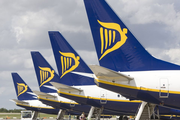 On 17 December 2025, the Labour Court in Dublin ruled on the election of Irish delegates to the European works council of the airline Ryanair. It had received a complaint from the Fórsa trade union, which is recognised by Ryanair as a collective bargaining party and acts as the employee representation for its Irish workforce. There are no works councils in Ireland. Workplace employee representation can only be established if an individual employer recognises a particular trade union as a negotiating partner.
 On 11 March 2026, the EWC and the central management of American Express Global Business Travel ("Amex GBT") signed a letter of intent on their future cooperation. Recently, there had been repeated differences of opinion regarding the interpretation of the terms "information and consultation", with the EWC complaining about a lack of information in the run-up to restructuring measures. In such cases, the EWC agreement provides for arbitration, and only thereafter can legal action be taken. The costs of arbitration and legal proceedings are borne by the company.
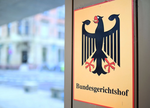 The German works councils of the Berlin-based direct bank N26 have appealed to the Federal Court of Justice in the third instance in the battle for employee representation on the supervisory board. The legal dispute, which began in April 2024 (see
 5. Social consequences of restructuring |
|
|
Luxembourg steel group seeking to relocate functions to India
On 26 February 2026, the EWC held a face-to-face meeting at the group's headquarters in Luxembourg, which produced no new results. The EWC requested that central management provide documentation "with sufficient quantitative and qualitative information on the functions affected, the number of people potentially affected and the associated social measures". Without this information, it could not render a properly reasoned opinion. The employee representatives reject the relocations because there is no operational justification for them beyond savings through Indian wages and working conditions. They are calling for key competences to be retained in Europe, particularly in the IT sector.
Although the company is officially based in Luxembourg, ArcelorMittal is actually managed from London. The world's second largest steel producer is strongly controlled by the Indian billionaire Mittal family, which holds 44% of the shares. The European works council was founded in July 2007 (see report in EWC News 2/2007). There are five employee representatives on the board of directors, as the one-third representation rule applies to all companies in Luxembourg from 1,000 employees.
Press report on the situation in Luxembourg German chemical group plans to relocate functions to India
In 2005, the IGBCE trade union accepted an in-house collective agreement for BASF Global Business Services with significantly lower salaries and longer working hours (39 instead of 37.5 hours per week) than the collective agreement for the chemical industry. In return, the group's internal services were bundled in Berlin instead of being outsourced to Slovakia as originally planned. However, it is now apparent that these concessions have not led to long-term job security.
In January 2008, BASF was one of the first major SE conversions to have a supervisory board with full-parity representation (see report in EWC News 4/2007). It was reduced from 20 to twelve members (including six employee representatives), which is usual for large SE conversions. The European works council was replaced by an SE works council. Planned mega-merger in the aerospace industry
The project was announced on 22 October 2025, and shortly afterwards the European Federation of Industrial Trade Unions (industriALL) gathered employee representatives from the three companies from seven countries in Brussels on 1 December 2025 to discuss a joint strategy for the merger. They are demanding the safeguarding of jobs and production sites, the preservation of collective agreements and working conditions as well as compliance with the right to information and consultation at every stage of the project and at all levels. As soon as Bromo is established, a European works council with representatives from all affected countries is to begin its work immediately. Negotiations on an EWC agreement should therefore begin at an early stage, which should at least match the high-quality standards of Airbus and Thales. Employee representatives should also be part of Bromo's Board of Directors, as provided for under French law.
Airbus has had an SE participation agreement under Dutch law since February 2015 (see report in EWC News 1/2015). Thales has had an EWC agreement with precise consultation rights under French law since December 2007 (see report in EWC News 2/2008). A pan-European agreement on career development was also concluded in June 2009 (see report in EWC News 2/2009). Leonardo established a European Forum under Italian law in July 2008.
Press report on the planned merger Report from the first trade union meeting Trade union assessment of the project Download the letter to the CEOs |
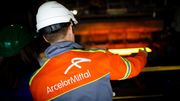 On 29 January 2026, ArcelorMittal's central management informed the European works council in a video conference that it intends to relocate 5,600 jobs in IT, logistics and maintenance in 20 countries in order to "optimise and standardise activities spread across numerous sites in Europe". This represents 11% of the European workforce. A new competence centre is planned in Poland, but the majority of functions are to be transferred to India, where almost 900 new employees have already been hired for this purpose. In Luxembourg alone, 1,150 jobs are under threat, one third of its workforce in the Grand Duchy.
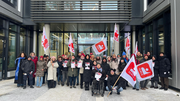 On 11 February 2026, BASF's central management announced its intention to bundle its finance, HR and IT functions in a new global hub in India by the end of 2028. The aim is to "increasingly utilise cost-efficient locations". The Global Business Services subsidiary employs 8,500 people worldwide, including 2,800 in Berlin and just under 900 at the group's headquarters in Ludwigshafen. They are responsible for payroll accounting, tenders and recruitment in all European locations and could soon lose their jobs (see photo of an initial protest action).
 On 16 February 2026, fourteen trade unions represented in Airbus, Thales and Leonardo called for social guarantees for Bromo in an open letter to the three CEOs. The new company will combine the space activities of the three partners by 2027, creating an innovative, globally competitive player in competition with Starlink. It will employ 25,000 people, have its headquarters in Toulouse and important production sites in France, Italy, the UK and Germany.
6. The working world in tech companies |
|
|
Europe's largest online fashion retailer closes logistics centre
The reorganisation of logistics is linked to the takeover of competitor About You in July 2025, a former subsidiary of the Otto Group based in Hamburg. A social-compensation plan is to be negotiated with the works council in Erfurt before the closure takes place at the end of September 2026. Zalando has been refusing to conclude a collective bargaining agreement for years - as has Amazon (see report in EWC News 3/2014). Warning strikes in favour of a collective agreement continued to take place in Erfurt in 2025.
Controversial SE conversion
The procedure for converting the start-up, which was founded in 2008, into a European Company (SE) was also problematic. An SE participation agreement has been in place since March 2014, which is below the standard rules of the law and is not considered to be particularly employee-friendly (see report in EWC News 2/2014). At the time, there were no works councils at Zalando in Germany and the ver.di union was unlawfully excluded from the special negotiating body (SNB). Zalando already had more than 2,000 employees in Germany before the SE conversion, and the supervisory board should have had full-parity employee representation under German law. However, the SNB accepted a one-third participation, which still applies today. Zalando has now grown to over 15,000 employees, the majority of whom are in Germany. ver.di filed a lawsuit against the incorrect composition of the SNB, but was unsuccessful at the Berlin Labour Court (see report in EWC News 3/2016). The legal action also failed on appeal.
Report on the reactions to the site closure Food delivery services in Italy placed under forced administration
Foodinho belongs to Berlin-based Delivery Hero, while Deliveroo is part of the US delivery service DoorDash. Riders at both delivery services are self-employed in Italy, which the public prosecutor's office refuses to accept. They are demanding that the drivers be permanently employed and are citing court judgements from 2021, according to which all delivery services in Italy were ordered to employ their drivers and pay substantial fines. An EU directive to improve working conditions in the digital platform economy has been in force since December 2024, which also plays a role in the legal assessment (see report in EWC News 4/2024). Deliveroo was already sentenced to pay compensation by the Bologna Labour Court in December 2020 for violating employee rights and discrimination (see report in EWC News 1/2021).
Press report on the public prosecutor's decision IG Metall takes legal action against election interference by Elon Musk
The Tesla plant is the only car factory in Germany without a collective bargaining agreement. For IG Metall, a majority on the works council would have been an important step towards a 35-hour week, which is standard at other German car manufacturers. The union accuses Tesla management of massively influencing the works council election: "It used all means and all channels to do so, from employee assemblies and one-to-one discussions with superiors right through to the factory radio in the toilets." From the USA, the CEO and union opponent Elon Musk had warned the workforce against making the wrong choice. "Things will certainly be more difficult if there are, so to speak, external organisations pushing Tesla in the wrong direction. We're not going to close the factory, but realistically we're not going to expand either." In works council elections, the employer is obliged to remain neutral; threats against certain lists of candidates are not permitted. IG Metall consequently applied to the labour court on 25 March 2026 to declare the works council election invalid.
In the southern states of the USA, such methods are commonplace. There was similar intimidation at Volkswagen in Tennessee and Mercedes in Alabama, for example. In April 2024, Volkswagen succeeded in establishing employee representation there for the first time after several attempts (see report in EWC News 2/2024). In 2021, the CEO of Tesla was ordered by the authorities in the USA to delete an anti-union tweet and is no longer allowed to threaten to deprive employees of benefits if they support a union. Like everywhere else in the world, Tesla also refuses to conclude collective bargaining agreements in Sweden. Strikes have been taking place there since October 2023, supported by the boycott measures of other trade unions (see report in EWC News 2/2024).
IG Metall website on the works council election Press report after the works council election Press release regarding the election challenge The events at Tesla in the USA
No European Works Council and no co-determination on the Supervisory Board
Long before the factory in Grünheide was built, Tesla Manufacturing Brandenburg SE was founded as an employee-less letterbox company. With the legal form of a European Company (SE), Tesla was able to entirely avoid co-determination on the supervisory board in the future, even if the workforce grows (see report in EWC News 4/2019). In addition, the group does not have to establish an SE works council, as this presupposes that there was a special negotiating body (SNB). However, a SNB cannot be set up in a letterbox company because there are no employees. The negotiation procedure has only to be carried out once before the SE is established, not later. A European works council cannot be established either because an SE is not subject to the EWC directive. The European Court of Justice expressly confirmed this in the case of the Japanese optics group Olympus in May 2024 (see report in EWC News 2/2024). |
 On 8 January 2026, the Zalando management announced that it would be completely closing its logistics site in Erfurt (Germany), which has 2,700 employees. The site, which was built in 2012 with €22 million in state funding, no longer meets today's requirements and the cost of modernisation would be too high. As a replacement, a "new generation" logistics centre in Giessen, 170 km away, is to be put into operation with just 1,700 employees.
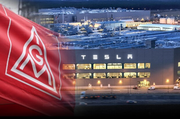 From 2 to 4 March 2026, 10,700 Tesla employees at the only European factory for electric vehicles and batteries in Grünheide (near Berlin) were able to elect their new works council. Through threats and intimidation, the richest man in the world succeeded in securing a majority for management-friendly candidates and relegating IG Metall union to just 31%. No other works council election in Germany has ever received media coverage to a similar extent. Ultimately, the European social model was on the ballot. "A triumph of authoritarian Silicon Valley capitalism over the traditional German culture of co-determination ... a capitulation of the constitutional state", commented the business newspaper Handelsblatt (comparable to the Financial Times).
7. Newly established European Works Councils |
|
|
US chemicals group with EWC under Luxembourg law
The new EWC has 16 members from twelve countries, excluding the United Kingdom and Switzerland. Countries with less than 1% of the European workforce do not have a seat, but are to be represented by a larger neighbouring country. This currently applies to Austria, Portugal and the Czech Republic. The EWC elects a select committee with four members from four countries, including the secretary. The annual plenary meetings are chaired jointly by the secretary and the management spokesperson. The select committee meets three times a year with the central management, once by video, once in Luxembourg and once at a production site including a tour of the plant.
The EWC is responsible if at least 2% of the European workforce in two countries is affected. In the event of mass redundancies or site closures, the select committee organises an extraordinary meeting at short notice, to which representatives of the affected countries are also invited. The deadline for concluding a consultation procedure is four weeks. The EWC can be supported by a trade union official and a paid expert. One day of training is organised each year. Typical of US companies are the very extensive rules on confidentiality. The EWC can set up its own intranet site to inform the workforce. Despite the new EWC directive, the EWC agreement cannot be terminated until the end of 2032 at the earliest. Danish energy company integrates British workforce
Two plenary meetings are held each year, one at the company's headquarters and one in another country. There is also one day of training per year. The EWC can call in trade union officials and one or more paid experts, who also take part in the joint meetings with management, and elects three members to the select committee. The latter is responsible for information and consultation in exceptional circumstances. However, it can only hold video conferences and not face-to-face meetings. There is no deadline for rendering an opinion. Arbitration proceedings are provided for in the event of disagreements. Dutch food delivery service with four EWC meetings per year
Although the agreement is still subject to the EWC directive of 2009, some points have already been regulated in line with the new directive: the transnational competence of the EWC, the costs for several experts and confidentiality. Four EWC meetings are held each year, two of them in Amsterdam and two as video conferences. A few weeks in advance, the select committee holds video conferences with the central management to prepare for these meetings. The select committee consists of seven members from seven countries, including the secretary, who acts as co-chair together with the management. In the case of restructuring affecting at least 100 employees in two countries, a consultation procedure is carried out. It is limited to six weeks, includes two extraordinary meetings (one in person) and is described in detail in ten points.
All EWC members are entitled to 64 hours of time-off work per year, the members of the select committee 94 hours and the secretary 124 hours - in addition to official meetings, training and travel time. Site visits in all EU countries are possible on prior agreement. Each EWC member can benefit from three days of training per year. A mediation procedure is provided for in the event of disputes. Until 30 June 2026, the SNB members will act as a provisional EWC to bridge the period until the election of delegates.
Press release on EWC establishment |
 Just a few days before the new EWC directive came into force, an EWC agreement was concluded on 3 December 2025 for the chemical group Avient, which previously had no European works council. The management in the USA had appointed a sales office in the north of the Grand Duchy located on a country road just before the Belgian border as the representative agent in accordance with EWC law, although the European headquarters are based in the Netherlands. Avient employs over 9,000 people worldwide.
 On 3 December 2025, an EWC agreement was signed at Ørsted's headquarters in Fredericia, which has now been in force since 1 January 2026. The semi-state-owned energy company is the global market leader in offshore wind energy with 8,100 employees worldwide. Until now, there was no European works council for the 6,400 employees in Europe, including 3,700 in Denmark. The new EWC has twelve delegates from seven countries, including the United Kingdom, which has the second largest workforce with 1,300 employees after Denmark.
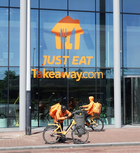 On 3 December 2025, an EWC agreement was signed in Amsterdam for Just Eat Takeaway, which has now been in force since 1 January 2026. The online delivery service is represented in 14 European countries, Israel and Canada. However, only eleven EU countries belong to the EWC, excluding the United Kingdom and Switzerland. The shareholder is the Dutch investment company Prosus, which also holds shares in the German delivery service Delivery Hero, where there has been an SE works council in place since April 2018 (see
 8. Transnational company agreements |
|
|
Artificial intelligence as a topic for the Global Works Council
The agreement sets out a four-stage process: an ongoing inventory of AI systems, risk assessment to categorise AI solutions according to the level of risk, introduction of monitoring procedures and provision of appropriate training. Employee representatives are involved in monitoring the agreement. The progress of projects related to AI and autonomous systems will be a regular agenda item for the Global works council and EWC. Solvay's Global works council has been in place since March 2015 (see report in EWC News 2/2015).
The website of the EWC and the Global Works Council Spanish textile group promotes elderly employees
The agreement contains eight points and includes a commitment to a non-discriminatory recruitment policy, an age-neutral approach to labour relations, introduction of mentoring programmes to retain the knowledge and experience of older employees and an annual analysis of the workforce. The EWC has already secured several pan-European company agreements, most recently in November 2024 on the prevention of violence against women and harassment at work (see report in EWC News 1/2025).
The declaration stipulates that special attention will be paid to the health of employees. Intensive use of AI should not lead to cognitive overload or to a reduction in social interactions, which can have a negative impact on mental health and physical integrity. In all European countries, they are informed about the use of AI systems and receive appropriate training to understand their function, benefits and potential risks. The content of the training is listed in detail. The principle of human control is explicitly confirmed for high-risk AI systems, including HR management.
If the introduction or updating of the systems has a significant impact on employees in several countries, the select committee of the EWC will be informed. Prior to the introduction or further development of AI tools, a preliminary evaluation of the risks to health and safety at work is planned at European, national or local level. An EWC working group for new information technologies and AI will monitor the implementation of the declaration in biannual meetings. This is already the fifth pan-European company agreement at Generali. A joint declaration on diversity and inclusion was last signed in November 2023 (see report in EWC News 4/2023).
Press release on the signing of the joint declaration Download the joint declaration Assessment of the joint declaration Presention of the EWC on the Generali website Press release on the launch of the software factory |
 On 15 December 2025, the central management of the Belgian chemical group Solvay agreed with the Global works council and the European works council an addendum to their framework agreement on digital transformation of March 2020 (see
  On 20 January 2026, the management of Inditex signed a pan-European agreement with the European works council to promote age diversity in the workplace. With 160,000 employees, Inditex is one of the largest clothing groups in the world and operates shops such as Zara, Pull & Bear, Massimo Dutti and Bershka. The agreement underlines the importance of professional experience of older people and the role of digitalisation in sharing knowledge between generations.
 Use of AI tools in Italian insurance group
9. The view beyond Europe |
|
|
Italian energy group enhances social responsibility
In the new framework agreement, ENI confirms its willingness to implement a robust policy of human rights due diligence throughout the entire supply chain in cooperation with trade unions. Social dialogue is seen as an important instrument for accompanying the transformation processes associated with the energy transition. There should be a just transition for employees based on skills development, inclusion and the creation of sustainable jobs. A Global works council was established in July 2016 (see report in EWC News 3/2016).
Download the framework agreement Social responsibility in the supply chain of agricultural commodities
Download the declaration of intent Collective bargaining agreement for Swedish clothing chain in New York
Report on the collective bargaining agreement Download the international framework agreement Overview of international RWDSU campaigns |
 On 13 January 2026, ENI's central management and the International Federation of Industrial Trade Unions (industriALL), with the support of three Italian trade unions, signed a new version of the international framework agreement in Milan that has been in place since 2002. With 32,000 employees in 64 countries, ENI is one of the largest energy companies in the world. The Italian state, formerly the sole owner, still holds 32% of the shares.
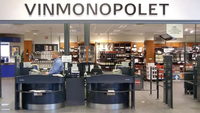 On 15 January 2026, a declaration was signed in Oslo between the Norwegian retail company Vinmonopolet and the IUF, the global umbrella organisation of food trade unions. Both parties commit to working together to improve working conditions in the alcohol industry and its entire supply chain. The annex describes a process for reporting incidents as well as a complaints mechanism. Vinmonopolet ("wine monopoly") is supervised by the Ministry of Health and, as a state-owned company, has a monopoly on the sale of beverages with a high alcohol content in Norway. Similar commitments already exist for the alcohol monopolies in Sweden (Systembolaget, 2017) and Finland (Alko, 2020).
 On 29 January 2026, the US retail union RWDSU (Retail, Wholesale and Department Store Union) announced that it had been able to secure a collective agreement for more than 1,000 employees at H&M shops in New York for the first time. It includes annual wage increases over the next three years, improvements to working hours and greater job security. The union was able to refer to the international framework agreement that was concluded in 2004 between the company management in Stockholm and the global umbrella organisation of service trade unions (UNI). It includes the right to union representation and collective bargaining and is primarily aimed at production conditions in South East Asian countries. However, the inadequate labour legislation in the USA shows that external support is also needed there in order to establish minimum social standards.
10. Interesting websites |
|
|
Competence centre for human rights due diligence
The Competence Centre's website Background to the founding of the competence centre Explanations of the German Supply Chain Act European Employers' Institute with its own website
Network for cross-border labour mobility
Research centre on collective labour law in Switzerland
|
 The competence centre founded in March 2025 by two European trade union federations, the German Trade Union Confederation (DGB) and the Friedrich Ebert Foundation with financial support from the German government now has its own website. It aims to reinforce corporate due diligence in the supply chain worldwide, in particular with regard to the respect of workers' rights. This is achieved through training, knowledge transfer, the establishment of international networks, but also political and corporate influence through cooperation with works councils.
 On 1 October 2024, thirteen employer federations founded the European Employers' Institute (EEI) in Brussels, which now also has its own website. It is intended to serve as a central point of contact for cross-industry research in order to influence EU policy decisions on social and employment issues from the employers' perspective. The EEI is the counterpart to the European Trade Union Institute (ETUI), which has existed since 2005 and whose predecessor was founded in 1978.
 Since 1993, the EURES (EURopean Employment Services) network has been supporting the search for jobs and labour throughout Europe. The network's partners include public employment services, trade unions and employer federations. The network is coordinated by the European Commission. The services offered include careers advice, checking and translating CVs, analysing job vacancies, organising video conferences for job interviews, advice on social security, funding opportunities and language learning. Special support is available for cross-border commuters.
 At the University of Basel's Faculty of Law, a research centre is working on the consequences of digitalisation, health, privacy and data protection in the working world and the internationalisation of labour law in connection with cross-border work. In addition to research activities, the centre's services include studies, legal opinions and publications. In Switzerland, the legal protection of employee representatives is currently being improved (see
 11. New publications |
|
|
Country reports on corporate co-determination
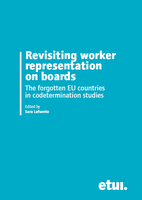
At the end of November 2025, a collection of articles was published that examines ten countries that have so far undergone little research in co-determination studies. These include Belgium, Italy, Greece, Portugal, Spain, Ireland and Poland, where company co-determination in the private sector is almost non-existent. While all of Belgium's neighbouring countries, for example, have introduced various types of participation, the Kingdom has remained a codetermination-free island (see report in EWC News 2/2023). In Italy, it was enshrined in law for the first time in June 2025 as a voluntary option (see report in EWC News 3/2025). In the Czech Republic, there have been employee representatives on supervisory boards since 1992, following the German model, starting in companies with as few as 50 employees. This was completely abolished in 2014 and reintroduced in 2017 for companies with 500 or more employees. Since then, the workforce has been able to elect one third of the members of the supervisory board. In Finland, the threshold for corporate co-determination is currently being lowered to 100 employees.
Information on the growth of co-determination in Finland Enforcement of employee data protection rights
In December 2025, the Brussels competence centre of the Friedrich Ebert Foundation on the Future of Work presented a brochure on employee data protection under the General Data Protection Regulation (GDPR). The key question is how employees can ensure control over their personal data and privacy in a digitalised workplace, with data-driven tracking, profiling and decision-making with algorithmic control. The study concludes that data protection rights in the workplace are insufficiently enforced in the EU, particularly in Austria, Ireland and the Netherlands. In contrast, the data protection authorities in Belgium, Germany and Spain are more active. In France, employee representatives are explicitly implicated under the GDPR, while in Italy they are excluded. The GDPR has been in force since May 2018 (see report in EWC News 1/2016). In December 2023, the European Court of Justice tightened the sanctions (see report in EWC News 4/2023).
The website on the future of work Legal reference work on EWC and SE law
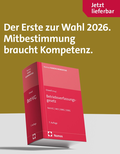
The 7th edition of this handbook on the German Works Constitution Act was published at the turn of the year 2025/2026. It contains a dedicated chapter of 219 pages on the German EWC Act and 45 pages on co-determination in the European Company (SE). The changes to EWC law that were agreed in the EU trilogue in May 2025 have already been taken into account (see report in EWC News 2/2025). The SE chapter also addresses the ruling of the European Court of Justice from May 2024 in the Olympus case. The Japanese optics group with 7,000 employees in Europe is not obliged to establish an SE works council, a co-determined SE supervisory board nor a European works council (see report in EWC News 2/2024).
Table of contents with extract International minimum wage report
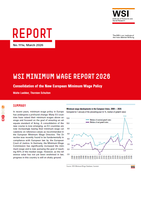
On 5 March 2026, the Hans Böckler Foundation presented a minimum wage report for Europe. It also includes comparative figures with other parts of the world. In 2025, minimum wages in the EU were raised significantly, which is attributed to the influence of the Minimum Wage Directive. The European Court of Justice ruled that it was lawful in November 2025 (see report in EWC News 4/2025). In Germany, the minimum hourly wage rose to €13.90 on 1 January 2026, but this only ranks Germany in the middle of Western European countries. Luxembourg has the highest minimum wage in the EU at €15.63, while Bulgaria has the lowest at €3.75. Slovenia is the only country in Eastern Europe to have already reached the level of Spain, leaving Portugal far behind. At £12.71 (€14.59), the minimum wage in the UK is one of the highest in Europe from April 2026. The level in Australia is similarly high. The USA has a minimum wage similar to that in Portugal and far lower than in Poland. In terms of purchasing power standards, the USA is on a par with Albania and Turkey. In Brazil, the minimum wage is €1.17.
|

12. The EWC Academy: Examples of our work |
|
|
18th conference for European and SE works councils in Hamburg
The company Eppendorf was presented as an outstanding example of the work of an SE works council. Since January 2025, the manufacturer of laboratory materials has implemented pan-European principles for the socially responsible handling of restructuring (see report in EWC News 1/2025). The first day ended with a boat trip and buffet on the River Elbe. On the second day, there was a separate working group just for SE works councils. The next Hamburg conference will take place on 25 and 26 January 2027. Swiss insurance group on its way to the new EWC Directive Unilever to spin off its food division
Unilever will firstly spin off its food division and subsequently merge it with the smaller US group. McCormick will retain its headquarters in the US and plans to create another headquarters for its international business in the Netherlands. The transaction is expected to be completed by mid-2027, with Unilever becoming a pure-play supplier of household and personal care products such as Dove soaps and Omo detergents. The consultation procedure with the European works council is currently being prepared with support of the EWC Academy. Restructuring and the sale of entire business units have taken place regularly at Unilever, e.g. sale of the margarine division to a financial investor (see report in EWC News 2/2017). Most recently, the ice cream division was spun off from the group in July 2025 (see report in EWC News 3/2025).
Press report on the planned transaction Report on the reaction of the EWC Report on how the Heilbronn plant has been safeguarded up to now |
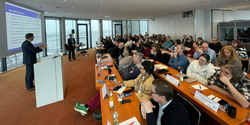 A few days after the new EWC Directive came into force, the EWC Academy once again held a conference in Hamburg on 26 and 27 January 2026. With 61 participants from ten countries, it was one of the largest of the annual conferences, which have been taking place since 2009. In addition to analysing the new legal situation for the work of European works councils, current developments in the EWC and SE landscape as well as court rulings were also discussed.
 Since 12 February 2026, EWC Academy has been advising the speaker of Swiss Life's European Forum on necessary amendments to the EWC agreement to meet the standard of the new EU directive. The European Forum has existed on a "voluntary" basis since 1996 and operates under German law. It has ten members from Germany, France, Luxembourg and Switzerland. At the same time, there are SE works councils in two subsidiaries, one in Germany and another in France. Swiss Life is the largest life insurance company in Switzerland with 11,000 employees worldwide.
 On 31 March 2026, the British consumer goods group Unilever announced that it would be selling the majority of its food business with traditional brands such as Knorr and Hellmann's to the US spice manufacturer McCormick. The deal is the largest in the history of both companies. Unilever has 4,800 employees in the food division in Europe (including the UK), around one third of the total workforce in the region.
13. Current seminar schedule |
|
|
The EWC Academy and its predecessor organisation have been holding conferences and seminars for members of European works councils, SE works councils and special negotiating bodies since January 2009. So far, 1,002 employee representatives from 333 companies have taken part, many of them several times. This corresponds to around 25% of all transnational works council bodies in Europe. This also includes 34 companies in the legal form of an SE (European Company). In addition, there are numerous in-house events and guest lectures given to other organisations.
Overview of forthcoming seminar schedule Renegotiation of EWC agreements
EWC and SE introductory seminar in Dresden
German works constitution act in English
Brochure on the German co-determination system English translation of German labour laws AI training for works councils The AI Regulation has been in force since August 2024. The EU is hereby taking on a global pioneering role in the regulation of artificial intelligence (see report in EWC News 4/2023). AI is finding its way into more and more business processes. This increases the demands on works councils to recognise the introduction, implementation and impact of such systems at an early stage and to play an active role in influencing their development. They must understand the technical basics and be familiar with participation rights and protection obligations in order to develop practical regulations within the company. The seminar is aimed at local works council members and is being offered on several dates.
In-house events
|

 The next introductory seminar for members (including future members) of European works councils, SE works councils and special negotiating bodies will take place from 20 to 23 October 2026, this time at the Hilton Hotel near the landmark Frauenkirche in Dresden. The seminar includes several modules for beginners and advanced participants. On request, we will also cover the steps for setting up an EWC for the first time for those who do not yet have an EWC.
 From 1 March to 31 May 2026, new works council elections will be held in all German companies. This takes place every four years. Among the estimated 150,000 works council members, there are more and more whose native language is not German. After having organised in-house seminars on this subject in the past, we now offer dates for individual participation. These seminars are aimed at German works council members. Representatives from other countries who wish to familiarise themselves with the German system can also take part.
14. Imprint |
|
|
EWC News is published by: D-20459 Hamburg
|
|