 |
 |
Download pdf file |  |
Newsletter archives |
 |
Dieser Newsletter auf Deutsch |  |
Cette newsletter en français |
1. New EWC Directive comes into force |
 |
|
Official launch on New Year's Eve
If existing EWC agreements do not meet the quality standards of the new directive, renegotiations will be necessary. If such negotiations fail after two years, the subsidiary requirements (EWC “by law”) will automatically apply. The minimum requirements of the new directive will apply in any case starting 1 January 2028. Around one third of all European works councils were established before 22 September 1996 and are not currently subject to this directive. This special status will end for good on 1 January 2029.
Caution: if a company wants to get rid of the EWC, central management can terminate a “voluntary” EWC agreement at the end of 2028. In this case, the EWC will be dissolved and a special negotiating body (SNB) only be established if an official request is subsequently submitted by two countries. Until early or mid-2032, there would then be no EWC (the only exception is Austria, where the dissolution of the EWC is not possible). Business labour lawyers are already pointing out this loophole. A particularly flagrant example was the US corporation Hewlett-Packard (see report in EWC News 1/2017).
The legally binding text of the new EWC Directive Download for all language versions
Last minute suspense in the European Parliament
The content of the new directive corresponds exactly to the compromise reached in the trilogue negotiations in May 2025 (see report in EWC News 2/2025). It was discussed in the plenary session of the European Parliament on 8 October 2025 and voted on the following day. The new directive was adopted by a surprisingly large majority of 75%. This majority was by no means certain, as employer associations had tried to prevent it right up to the last minute. In the previous vote in the European Parliament in December 2024, there was only a very slight majority of 52% (see report in EWC News 4/2024). After Parliament's approval, things moved very rapidly, and on 27 October 2025, the Council of Ministers also approved the directive with one abstention. Latvia did not support the directive, even though there is not a single EWC in the Baltic state.
Letter from employer federations prior to the vote Video of the debate in the European Parliament (with interpretation into all official languages) Parliament press release following the vote Council of Ministers press release following adoption UNI Europa trade union federation press release Explanatory notes in the magazine “Personalwirtschaft” for HR managers Study on the legislative process  Enthusiasm reaches the seminar room |
 On 11 December 2025, the amended Directive on the establishment and operation of European works councils and the effective enforcement of transnational information and consultation rights was published in the Official Journal of the European Union. It will come into force on 31 December 2025. All EU countries, as well as Norway, Iceland and Liechtenstein, must amend their national EWC laws accordingly by 1 January 2028 at the latest. However, the new rules will not apply until 2 January 2029.
2. Future differences to SE law |
|
|
SE works councils not affected by changes to EWC law
There are currently around 240 SE works councils in Europe, more than 85% of which are based in Germany, where SE conversions are often misused to avoid co-determination. In France, which ranks second with just under 10%, they are part of a process of internationalisation, especially in IT-related sectors. Outside Germany and France, this legal structure is virtually unknown (see report in EWC News 2/2025).
Differences to the new EWC law in detail
SE law differs from future EWC law on the following points:
No changes to SE law foreseeable
The SE Directive dates back to 2001 and has never been amended since then. In November 2010, the European Commission presented a report to prepare for the revision of the SE Directive (see report in EWC News 4/2010). A consultation of the social partners took place in summer 2011 (see report in EWC News 4/2011). Nothing has happened since then. In December 2021, the European Parliament called for a framework directive on information, consultation and involvement of employees in order to consolidate the texts of the various directives and put them on a uniform basis (see report in EWC News 4/2021).
|
 Since 2004, companies operating in several countries have been able to choose between a national legal form (e.g. German or French) and a European company (“Societas Europaea” = SE). Co-determination in the supervisory or administrative board of the SE and the rules for an SE works council (the name given to the European works council in the SE) must be negotiated in each company between a special negotiating body (SNB) and central management. If no SE agreement is reached within six months, the statutory standard rules apply. Companies with the legal form of an SE are not affected by the changes to the EWC Directive.
3. Further developments at European level |
|
|
Call for an EU directive on subcontracting and labour intermediation
According to the ETUC, the existing EU regulations concerning, for example, posting, temporary work, labour mobility, occupational health and safety and public procurement are not effective enough. All subcontractors should therefore be regulated and contract labour should be limited to exceptional cases and to a maximum of two sub-levels. To improve transparency and control, employment agencies should be registered in the EU and be subject to clear quality standards and obligations, including compliance with labour law and collective agreements. All workers performing the same job in the same workplace should benefit from equal pay, working conditions and protection. In Germany, this is currently not guaranteed (see report in EWC News 2/2023). Main contractors should keep registers of all subcontractors, intermediaries and employees and make them available to supervisory authorities, trade unions and works councils to help identify the real employer. In June 2021, the European Court of Justice put a stop to social dumping in temporary agency work via letterbox companies (see report in EWC News 2/2021).
Working paper of the European construction trade unions Working paper of the European agricultural and food trade unions Study on the logistics sector in four countries Model text for a suitable EU directive Is the EU directive on telework and the right to disconnect on its way?
An EU directive has become necessary because negotiations between the social partners failed in November 2023 (see report in EWC News 4/2023). The European Trade Union Confederation has been pushing for such a directive. The employers' confederation BusinessEurope considers it to be superfluous, but has now declared its willingness to negotiate on individual topics. Specifically, there are four proposals: on telework, the right to disconnect, revision of the health and safety framework directive and the directive on working with display screen equipment.
The opinion of the European Trade Union Confederation Supply Chain Directive watered down On 13 November 2025, the European Parliament held a crucial vote on the weakening of the Supply Chain Directive. 382 MEPs voted in favour, 249 against and 13 abstained. The majority could be reached because Christian Democrats and Liberals voted together with the far-right parties (see chart). The Corporate Sustainability Due Diligence Directive has been in force since July 2024 and aims to strengthen human rights and prevent child and forced labour as well as environmental pollution (see report in EWC News 2/2024).
In February 2025, the European Commission announced a simplification of legislation and the abolition of “unnecessary regulations” for companies, the so-called “omnibus” packages (see report in EWC News 1/2025). This includes the proposal to exclude small companies from the Supply Chain Directive and to restrict reporting obligations. Only European companies with more than 5,000 employees and an annual turnover of over €1.5 billion and companies from third countries with a turnover of more than €1.5 billion in the EU will have to comply with the due diligence obligations from July 2029. In the current directive, the threshold is 1,000 employees and an annual turnover of €450 million. Companies will also no longer be required to monitor the entire supply chain, but only suppliers with a high risk of non-compliance.
Since January 2023, the Corporate Sustainability Reporting Directive has been in force (see report in EWC News 1/2023). It requires companies with 500 or more employees to report on environmental rights, social rights, human rights and governance factors. This threshold is to be raised to 1,000 employees.
European Parliament press release Background: what is an omnibus procedure? Trade union study on the omnibus packages |
 On 1 October 2025, the European Trade Union Confederation (ETUC) formulated concrete demands in a resolution for an EU legal framework to regulate employment agencies, limit subcontracting and ensure liability throughout the subcontracting chain. Abuse in subcontracting and temporary labour is particularly prevalent in the construction industry, agriculture and the hospitality sector. However, this trend is also increasing in the manufacturing sector, particularly in the textile industry and shipbuilding. The situation was particularly critical in the German meat industry, where stricter rules have been in place since January 2021 (see
  On 6 October 2025, the second round of consultations with the European social partners on a planned EU directive on fair telework and the right to disconnect, which began in July 2025, came to an end (see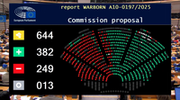
4. European Court of Justice rulings |
|
|
Tough formal requirements for collective redundancies
For the Luxembourg judges, a procedural irregularity in the run-up to collective redundancies leads to the nullity of any dismissals. The employer is no longer able to correct the errors at a later date. The directive stipulates that a consultation procedure must be carried out with the local works council on possible alternatives to dismissal. The employer must then send a full notification of the planned measure to the employment authorities in good time. Dismissals may only be implemented after a 30-day retention period has expired.
Employer-oriented commentaries on the court ruling have labelled an inadequate consultation procedure or an incomplete notification of a collective redundancy as a “highly dangerous” threat. The employer risks the invalidity not only of all dismissals, but also of all severance agreements. This is not the first time that the European Court of Justice has dealt with this issue. In September 2009, it had already ruled in a similar manner on information and consultation obligations in the case of collective redundancies (see report in EWC News 3/2009).
Parallels to EWC law
The two court rulings are also noteworthy because the EU Collective Redundancies Directive does not provide for a legally binding annulment as a consequence of procedural irregularities. It leaves the precise organisation of the legal consequences of irregularities in the consultation and notification procedure to the EU member states, although effective and efficient legal protection and a real deterrent effect should be guaranteed. How this should be defined has so far been a matter of interpretation. Now the European Court of Justice has provided an interpretation. Exactly the same question arises in EWC law. According to the EWC Directive, EU member states must define “effective, dissuasive and proportionate sanctions”. It is to be expected that the European Court of Justice will also have to fill an interpretation gap here at some point.
Report on the background to the two rulings The Directive on collective redundancies Minimum Wage Directive remains in force
The legal action was filed by the Danish government in January 2023 under pressure from the Danish trade unions on the grounds that the setting of wages does not fall within the EU's remit. The EU member states are solely responsible for this. In April 2023, the Swedish government joined the legal proceedings (see report in EWC News 2/2023). A statutory minimum wage is not necessary in the Scandinavian countries because collective bargaining coverage is very high. There is also no state interference in wage setting there.
The European Court of Justice largely dismissed the complaint. It merely invalidated two provisions in the directive: firstly, the criteria for setting and updating wages and, secondly, the ban on reducing wages if they are subject to automatic indexation (as is currently the case in Belgium and Luxembourg). However, this has no practical significance, since an ILO convention contains the same criteria and these remain in force, as they have, as a rule, been ratified by the EU member states. Employer associations criticise the ruling of the European Court of Justice, while trade unions outside Scandinavia speak of a game changer for the promotion of collective bargaining. The directive has yet to be transposed into national law in some countries (including Germany).
Press release of the trade union organisation UNI Europa Report by the Hans Böckler Foundation Transposition of the directive in the individual countries |
 On 30 October 2025, the European Court of Justice ruled on two cases filed by the German Federal Labour Court. The issues related to the consequences of procedural irregularities in the notification of collective redundancies and possible sanctions. The two court rulings interpret the 1998 Directive on the harmonisation of legislation for collective redundancies and - at first glance - have nothing to do with European works councils. Nevertheless, they raise questions for EWC law.
 On 11 November 2025, the European Court of Justice in Luxembourg announced the long-awaited ruling on the Minimum Wage Directive. It not only stipulates appropriate minimum wages, but also aims to reinforce collective bargaining. 20 EU member states in which less than 80% of the labour force is covered by collective agreements must draw up national action plans to bring collective bargaining coverage to this level (including Germany). The directive has been in force since November 2022 (see
 5. Landmark EWC ruling in Dublin |
|
|
Labour Court made massive legal errors
It was an appeal against the judgement of the Labour Court of August 2024, according to which the Court had deemed itself incompetent to rule on a collective EWC legal issue, as it only had jurisdiction for individual actions (see report in EWC News 3/2024). This would exclude European works councils in Ireland from the rule of law, which is not compatible with EU law. The industrial relations system in Ireland has historically not recognised works councils, where they are considered as a foreign body and there are no adequate regulations in the Irish legal system. The Labour Court apparently ruled on the basis of national legislation only, without considering the EU Directive. The High Court found five errors of law in the Labour Court's judgment:
1. The Labour Court erred in law by not ruling on collective legal issues and by not taking into account the provisions of the EU Directive. 2. The Labour Court committed a further error of law by dismissing the EWC chairman's claim as he was acting on behalf of the EWC and not as an individual. 3. The Labour Court made a third error of law by failing to examine the disputed expert invoice of the EWC Academy to determine whether the consultancy was necessary and reasonable. 4. The Labour Court committed a fourth error of law by failing to deal with the EWC chairman's application for reimbursement of his legal fees. 5. The Labour Court committed a fifth error of law by failing to consider the EWC chairman's arguments that the reimbursement of his legal fees should be considered even if he loses the case.
Short summary of the judgment (see page 55)
Who pays the legal fees?
The dispute was referred back to the Labour Court, where the expert invoice of the EWC Academy and the legal costs of the first and second instance had to be examined. A further hearing was held in the High Court on 3 December 2025 to discuss the costs of the High Court proceedings. In the end, the court ruled that central management should pay 90% of the EWC's costs. On 23 December 2025, the central management lodged an appeal with the Supreme Court, not only against the decision on costs, but against the entire judgment of the High Court. It would make it possible to refer the case to the European Court of Justice. However, it would no longer be of fundamental importance, as the new Directive makes it unmistakably clear that the EWC's legal costs are to be borne by the company.
Before the High Court, both parties together have incurred almost half a million € in legal fees, the value in dispute of the unpaid expert invoice amounts to €11,200. The comparison makes it quite clear that Verizon's management is not at all concerned with costs, but with obstructing independent EWC activities. Verizon's management would like to run the EWC itself as a kind of ‘management sub-committee’, but does not want to accept an independent body of worker representatives. Irrespective of the specific case, it is difficult for US companies to comprehend why they should bear the legal costs of the works council (“Why should I pay your lawyer if you sue me?”). They do not understand the difference between the works council as a “department” or “cost centre” within the company and a trade union, which is an external institution with its own financial resources. This issue was also controversial in Austria until the Supreme Court clarified the matter (see report in EWC News 4/2023). |
 On 14 November 2025, the High Court in Dublin ruled in the third instance on the legal dispute between the EWC chairman of the US company Verizon Communications and its central management based in Ireland. European works councils cannot take legal action as a collective body in Ireland, which is why the EWC chairman was mandated to do so by the entire EWC. Due to the explosive nature of the dispute, the Irish Chief State Solicitor joined the proceedings as an intervener on behalf of the government. The hearing took place in July 2025 (see
 6. Individual Country reports |
|
|
Fine for trade union in Finland
The cause of the walkout was the dismissal of two shop stewards at Finnair. The airline claimed that they had passed on confidential information. According to the union, the documents in question were related to an ongoing dispute over working conditions. As in all Nordic countries, representation at the workplace in Finland is handled by shop stewards. Their role is similar to that of works councils in Germany. However, there are no laws, only collective agreements. The reform of the right to strike is part of a broader government programme to adapt labour law (see report in EWC News 3/2023).
Report on the introduction of the new strike legislation Overview of the government's labour market reforms New collective bargaining law in Italy On 18 October 2025, a law to ensure fair minimum wages and collective bargaining came into force in Italy. There is traditionally no statutory minimum wage in Italy, but there is a very high level of collective bargaining coverage. In December 2023, the centre-left opposition failed to introduce a minimum hourly wage of €9 (see report in EWC News 4/2023). In contrast, the right-wing conservative government aimed to strengthen collective agreements.
Action was required for two reasons. Firstly, the EU Minimum Wage Directive has been in force since November 2022 (see report in EWC News 4/2022) and secondly, since October 2023 there has been a landmark ruling from the Supreme Court of Cassation on the level of an “appropriate” minimum wage that ensures a “dignified existence”. This is required by the Italian constitution. The new law stipulates that every employee must be paid at least in accordance with national sectoral collective agreements, even if they are not covered by a collective agreement themselves. To this end, the government will identify the relevant collective agreements as a benchmark for fair pay for each employee category within six months. Unfair competition through abusive contract models will also be prevented. For example, wages for subcontracting must be in line with collective agreements.
Summary of the new regulations Trade unions' opinion on the new law The collective bargaining system in Italy Action plan to reinforce collective bargaining in Ireland On 5 November 2025, the Irish government published an action plan on collective bargaining policy. According to the EU Minimum Wage Directive, all EU countries with less than 80% collective bargaining coverage are obliged to do so. It is intended to contain concrete measures to reinforce collective bargaining, but is however limited to only cosmetic corrections. In particular, the Conservative government is sticking to the voluntary nature of industrial relations in Ireland, whereby it is up to each employer to decide whether or not to recognise a trade union as the collective representation of the workforce. The action plan thus falls short of the proposals put forward in October 2022 by a high-level working group on the reform of the collective bargaining system (see report in EWC News 4/2022).
The plan envisages that the government will provide research funding and finance training for members of collective bargaining committees. Furthermore, a code of conduct for collective bargaining is to be developed, a “best practice” prize awarded and awareness-raising campaigns organised. Trade union dues are to be tax-deductible again in the future. Legislative changes are planned to reinforce the protection of workplace trade union representatives and to grant trade unions digital and physical access rights to workplaces. Mandatory arbitration is to be introduced in the run-up to strikes. The British trade union Unite, which is also represented in Ireland, has criticised the proposal. It criticises the fact that there are no legal rules for recognising a trade union, which means that Ireland lags behind the standards in the UK. As a result, an increase in collective bargaining coverage from the current 34% to the target figure of 80% would not be achievable. In Ireland, union membership has fallen from 60% in the 1980s to 22% at the end of 2024.
The Irish government's action plan Statement from the trade union Unite |
 On 19 September 2025, the Finnish Labour Court fined the aviation union IAU €67,000 for an illegal strike. On 2 December 2024, it had almost brought all air traffic at Helsinki Airport to a standstill. It is the first ruling since the reform of strike legislation in May 2024. Since then, political strikes may not last longer than 24 hours, whereas strikes in the context of collective bargaining are limited to two weeks. Fines of up to €150,000 are provided for illegal strikes.

7. Transnational Company Agreements |
|
|
Major French bank reorganises teleworking
The following general principles apply in all European countries: the implementation of telework is based on a collective team approach according to the double voluntary principle (both the employee concerned and the supervisor must agree and both can withdraw their consent at any time); telework may not exceed half of the working time and at least one day per week must be spent at the company, whereby this day rotates within a team; cost sharing by the employer for teleworking and meals; the employee's primary residence remains in principle the location of the telework. These principles are monitored by a special committee made up of the six members of the EWC board, representatives of the European trade union organisations and central management.
Employee shares and climate charter with the support of the SE works council
At the last meeting of the SE works council on 20 November 2025, a charter to reduce carbon dioxide emissions was concluded with central management. It is the result of the SE works council's permanent working group on social responsibility. The charter contains recommendations for all stakeholders in the company: employees are informed, sensitized and trained; measures are developed to reduce emissions (e.g. use of local and sustainable catering companies, reduction of plastic waste) and the effects of climate change on employees and residents/patients are analysed. Local works councils and the SE works council working group will monitor carbon dioxide emissions and support energy efficiency initiatives.
Press release on the share plan Press release on the Climate Charter Contents of the Climate Charter Commitments regarding the introduction of artificial intelligence
The 50 EWC members have been dealing specifically with generative AI as part of a separate agenda item at their bi-annual plenary meetings since 2023. In 2025, the EWC board dedicated two of its monthly meetings to this topic and is regularly informed by central management about the AI strategy, the progress of AI deployment and training programmes for the workforce. The EWC aims to “involve all employees in this development, leave no one behind and pay particular attention to maintaining employability”. The principles of the charter are transparency, ethics, fairness, human oversight, data protection and environmental aspects. Axa's EWC is one of the most active in the insurance industry. It has already negotiated several transnational company agreements, most recently in November 2023 on the promotion of older workers (see report in EWC News 4/2023).
|
 On 1 July 2025, a revised charter on teleworking for 132,000 staff in 22 countries was concluded in Paris between the central management of BNP Paribas, the European works council and two European trade union federations. It replaces the charter from April 2022 (see
  On 8 October 2025, the French care home operator Clariane launched the “Together” (French: “Ensemble”) programme, a share plan for the entire workforce. Regardless of country, profession or status, each of the 70,000 employees in six countries will receive 50 Clariane shares. They will be issued free of charge in October 2028 to all employees who have worked for the company for three years at that time. Another prerequisite is that the quality of service in the country in question meets or exceeds the group's targets. These are measured every year. Clariane's SE works council approved the share plan in this form. This is not their first pan-European company agreement; a framework agreement on accident prevention was most recently signed in June 2025 (see
  At the plenary meeting of Axa's European works council in Madrid on 27 November 2025, a charter on social dialogue regarding the development of artificial intelligence (AI) was signed. It contains commitments on the involvement of employee representatives and the training of employees in the safe, ethical and sustainable use of AI. Axa is the largest insurance group in France with 154,000 employees worldwide.
 8. Revised EWC Agreements |
|
|
Austrian logistics group integrates new EU directive
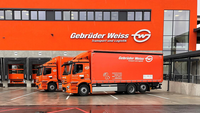
On 24 June 2025, a new EWC agreement was concluded for Gebrüder Weiss at the group headquarters in Lauterach (Vorarlberg). Gebrüder Weiss has been in existence for more than 200 years and is therefore considered Austria's oldest logistics company, with origins dating back to the 15th century, when a transport service was launched across the Alps between Lake Constance and Milan. Today, the group has 8,600 employees worldwide, including almost 3,000 in Austria. The EWC was established in October 2017 (see report in EWC News 1/2018).
Previously, the EWC only comprised the countries within the European Economic Area; in future, Switzerland, Serbia and Albania will also be included. As for the Austrian works council, the term of office is five years. As stipulated in the new EU directive, it holds two meetings per year, one of which is held in person and one hybrid meeting, where the delegates from Serbia, Albania and Romania are connected via video. It elects a board of five members and can establish a committee to deal with specific topics. The same regulations regarding time-off work and reimbursement of costs apply to the board and committee as to the EWC itself. The company bears all meeting, travel, interpreting, training and expert costs; in addition, the EWC receives a budget of €1,000 per year for its own use.
EWC may conclude transnational company agreements
The catalogue of information and consultation topics also includes issues relating to occupational safety, data protection, health and environmental protection. The EWC has the option of concluding agreements or defining guidelines with the central management, provided they affect at least 50% of the workforce in at least two countries. They should serve as guidelines and be implemented in all countries in compliance with the respective national law. If the EWC agreement is terminated, there is a grandfathering protection. If no new agreement is reached within a year, the subsidiary requirements of the Austrian labour code apply. However, the more favourable standards from the current EWC agreement remain in place. Swedish insurance company with European divisional works councils
As is typical for Scandinavia, the EWC agreement is very short and strongly oriented towards social partnership. The EWC, known as the “Communication Council”, meets four times a year at group level and is complemented by consultation forums at business unit and corporate function level (“Consultation fora”), which also meet four times a year at their respective levels. At the request of one of the parties, additional meetings are held at group level for important topics. Management representatives chair the meetings and coordinate the preparations; both sides agree on the agenda. EWC representatives are also invited to attend conferences or similar events for top management on a case-by-case basis. The work of the EWC should be regularly communicated to the workforce. In addition, central management and the EWC prepare a joint report at least once a year, which is made available to all employees in all relevant languages. Japanese automotive supplier relocates EWC from France to Germany
On 25 November 2025, an EWC agreement under German law was concluded for Minebea AccessSolutions. The EWC was established in June 2014 under French law under the former name U-Shin (see report in EWC News 2/2014). Minebea acquired U-Shin in April 2019 and integrated it as the door handles division (AccessSolutions). The EWC, based in Erdweg (Upper Bavaria), represents 2,100 employees in five countries and has twelve members, including four from Slovakia and two each from Germany, France, Hungary and Italy. Spain is no longer represented because the plant near Barcelona was closed in 2022 (see report in EWC News 1/2021).
Although the EWC agreement is now governed by German law, the company's European Managing Director remains the president of the EWC, as in the previous French EWC agreement. The employee representatives elect a chairperson and up to five other members to the select committee, who each are allocated 200 hours of time-off work per year in addition to the official meeting times. This arrangement is also typically French and unusual for Germany. As provided for in the new EU directive, two plenary sessions per year are held in person. The select committee also meets at least twice a year and is authorised to convene internal meetings without the employer if necessary. It chooses the location and duration of these meetings itself. The entitlement to training follows the generous rules of the German EWC Act.
The EWC agreement explicitly refers to the current OECD Guidelines for Multinational Enterprises and the core labour standards of the International Labour Organisation (ILO), in particular the right to join a trade union and to collective bargaining. In addition to the usual topics in accordance with the EU directive, the EWC is also informed about occupational health and safety, the social climate, psychosocial risks and major changes in the supply chain. As part of the information and consultation procedure, it is to be given sufficient time and the necessary resources. It may render its opinion after four weeks at the earliest. Local works councils and trade unions are informed at the same time as the EWC in the event of restructuring, but can only finalise their negotiations (e.g. on a severance scheme) once the EWC has issued its opinion. This gives them valuable time and allows them to exert more influence.
Face-to-face meetings given priority
The EWC agreement generally gives priority to face-to-face meetings. This is the only way to ensure that body language and gestures are being perceived. A confidential face-to-face exchange between the individual delegates can be important for forging an opinion. In principle, a meeting should only be held by video or telephone conference if this is in the interests of the health and safety of the members. Irrespective of this, the chair must convene an online meeting as quickly as possible if immediate action is required. |
 A new EWC agreement for If Skadeförsäkring was concluded in Stockholm on 28 October 2025. It replaces the previous agreement from 2021 and became necessary due to the integration of a new subsidiary in Denmark in July 2025. The EWC has been in place since 2001 and operates under Swedish law. With 10,000 employees, If is the largest property and accident insurer in Sweden, Norway, Finland, Denmark and the Baltic states and is owned by the Finnish financial group Sampo.
9. New SE Conversions |
|
|
Full-parity Supervisory Board for vehicle electronics spin-off An SE participation agreement for Aumovio has been in force since 18 July 2025 and the SE supervisory board was inaugurated on 5 September 2025. The former Automotive division of the Continental group now operates as an independent listed company with 87,000 employees in 25 countries and is headquartered in Frankfurt am Main. Aumovio provides software and electronics for vehicles. The supervisory board has 16 members, including eight employee representatives. Two seats are held by the trade unions (IG Metall and industriALL) and three by the German works councils. In addition, there are two employee representatives from Romania and one from Hungary. Such large supervisory boards are rare in SE conversions. In January 2019, a supervisory board with twenty members was established at MAN Truck & Bus (see report in EWC News 2/2019). There are similar examples in the energy industry (see report in EWC News 2/2018). As a rule, however, supervisory boards are restricted to twelve members, in rare cases even to six.
The SE works council, which is called “Europaforum”, has 17 members, including four from Germany and three from Romania. Small countries with fewer than 500 employees are allocated three regional mandates. In addition to the countries within the European Economic Area, Serbia has been included, but the United Kingdom and Switzerland have not. The European Forum meets once a year and elects seven members to the select committee, which holds four regular meetings a year and is responsible in the case of exceptional circumstances. The deadline for information and the double consultation procedure typical for SEs is quite tight at just four weeks. If a member of the European Forum is dismissed, the chairman must be informed in advance in such a way as to be able to influence the matter. In the event of disputes arising from the SE agreement, an arbitration board is set up with two assessors from each side and a neutral chairperson, who is appointed by the labour court if necessary. Thereafter, normal legal proceedings are possible.
Report on the constitution of the supervisory board Family business avoids Supervisory Board co-determination
The future SE works council is made up of nine members, including two from Romania and one each from France and Italy, and all others from Germany. One face-to-face meeting will be organised each year and further meetings - if necessary - will be systematically held as video conferences. The SE works council elects five members to the steering committee, who meet in person twice a year. Further meetings, even in exceptional circumstances, are held as video conferences. The SE works council must render opinions within one to three weeks as part of the information and consultation procedure. It may invite external trade union representatives, although these can only attend joint meetings with management with the latter's consent and are not reimbursed by the company for their travel expenses. A five-member arbitration body, with two members from each side and an independent judge, is set up to settle any disputes. All other provisions are largely based on the standard rules of the SE Directive.
Press report on the SE conversion Codetermination on supervisory board for Chinese battery manufacturer? Contemporary Amperex Technology Thuringia (CATL) in Arnstadt has been operating as a European Company (SE) since 17 December 2025. Since no SE agreement could be concluded by the end of the six-month negotiation period, the entry in the commercial register was made on the basis of the standard rules of SE legislation. The EWC Academy was involved in advising the special negotiating body. CATL is the world's largest manufacturer of electric car batteries with a market share of 40% and is one of the ten largest automotive suppliers worldwide. Since May 2025, status proceedings have been ongoing before the Erfurt Regional Court to determine the correct composition of the supervisory board (see report in EWC News 2/2025). To date, CATL has neither one-third participation nor full-parity co-determination. The outcome of the status proceedings will determine whether there will be codetermination on the SE supervisory board. |

 DF World of Spices, based in Dissen (near Osnabrück), has become a European Company (SE) since 28 October 2025. The spice manufacturer has 3,100 employees, including 1,600 in Germany and 360 in Romania. With brands such as Fuchs and Ostmann, DF World of Spices has a market share of 75% in Germany and can consequently be found in practically every supermarket. An SE participation agreement was signed at the company's headquarters on 20 March 2025. It completely excludes co-determination on the supervisory board on a permanent basis.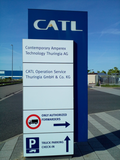
10. Interesting Websites |
|
|
European works councils in the transport sector
The ETF website for European works councils Download the guidelines for restructuring Download the other language versions Risks of digitalisation in the workplace
Statistics on digitalisation in the workplace Co-determination and collective bargaining in Germany
The videos on the co-determination portal Labour law in Denmark in 16 languages
Danish building trade union website Leaflet about the Danish labour and social systems |
 The European Transport Workers' Federation (ETF) in Brussels has set up a special EWC section on its website. Transport, a highly internationalised sector, confronts European works councils with a high level of cross-border restructuring. On 12 November 2025, the ETF published guidelines in ten languages on how to deal proactively with restructuring. A handbook with basic knowledge on EWCs had already been published in January 2025 (see
  The OSH Barometer is an online information system on occupational health and safety. It is based on statistics, surveys and public data for each of the 27 EU countries plus Norway and Iceland. A new section shows the impact of digital technologies on work intensity, autonomy and social interactions. For example, the use of digital technologies in Hungary leads to a particularly high level of monitoring of work performance (63%), while this is least common in Germany and Denmark (26%). In the Netherlands, digital technologies are most frequently used to monitor personal behaviour in the workplace (43%), while in Germany this is much less common (15%). Digital technologies reduce personal autonomy at work particularly strongly in the Czech Republic (41%) and particularly weakly in Sweden (8%).
 The Hans Böckler Foundation is providing new videos on industrial relations in Germany on its co-determination portal. The foundation is the think tank of the German Trade Union Confederation (DGB), named after its first chairman after the Second World War. The videos cover topics such as co-determination in companies, co-determination on supervisory boards, the tasks of works councils as well as youth and apprentice representation and key concepts of collective bargaining (collective agreements, repercussions, industrial peace obligations, strikes and ballots). Some of the videos are available in English.
 On a joint website, seven Danish trade unions representing a total of 90,000 workers in the construction industry provide information about the characteristics of the labour and social systems in Denmark. The information is primarily aimed at foreign workers who come to Denmark as bricklayers, plumbers, painters, electricians, welders, technicians or designers. Leaflets in 16 languages explain topics such as collective agreements, wage levels, working hours and overtime, pension funds and holiday entitlement. Like all Scandinavian countries, Denmark has a high level of collective agreement coverage (82%) and a high percentage of unionisation (67%).
11. New Publications |
|
|
New guide on algorithmic management
Study on the spread of algorithmic management in Europe Declining trade union membership around the globe
Fair working time models in service professions
Recommendations for collective bargaining policy Country comparison on the role of works councils in the ecological transition
|
 On 20 September 2025, the European Trade Union Confederation (ETUC) published a guide to support trade unions in dealing with algorithmic management in the workplace. It explains what algorithmic management means and the risks associated with it, e.g. in the allocation of work, remuneration, performance monitoring or the imposition of disciplinary sanctions. A separate chapter describes the legal framework, while another chapter shows aspects that can be regulated by collective labour agreements. Two positive examples from the platform economy in Spain and Denmark are explained in more detail. In March 2024, the EU Platform Directive was adopted, regulating algorithms in the workplace for the first time (see
 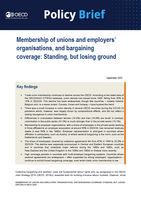 On 30 September 2025, the Organisation for Economic Co-operation and Development (OECD) based in Paris, presented a policy brief on the development of trade unions and collective bargaining. The richest 38 industrialised countries in the world work together in the OECD. According to the report, the degree of unionisation in all OECD countries has halved from 30% to 15% since 1985. Only a few countries - primarily Iceland, Belgium and, to a lesser extent, Canada, South Korea and Norway - show an opposite trend. Membership of employer federations has remained relatively stable at 55%. There are hardly any differences between women and men in the level of unionisation, but there are differences between the public sector (41%) and the private sector (10%). The proportion of employees covered by collective agreements has fallen from 47% to 34% since 1985. This decline was particularly marked in Central and Eastern Europe, the United Kingdom and Greece. In countries with sectoral collective agreements, collective bargaining coverage remains high, even if trade unions have few members.
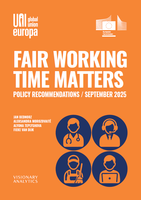 On 7 October 2025, which marked the World Day for Decent Work, the European Federation of Services Unions (UNI Europa) presented a study on working time in four sectors. Based on interviews with academics and trade union representatives from 16 countries, the study analyses the situation in care professions, retail, information and communication technology and real estate services (e.g. building cleaning). While the average working week has gradually decreased to 37 hours, there is a lot of involuntary part-time work, irregular and short-term work schedules, overtime and increased labour intensity due to staff shortages in the four sectors. In addition to the study, which is only available in English, there are recommendations for action in ten languages. The aim is to enable trade unions in these sectors to negotiate good collective agreements.
 A working paper by the Hugo Sinzheimer Institute (HSI) on the role of employee representatives in the ecological transition has been available since 20 October 2025. The trade union friendly institute based in Frankfurt am Main specialises in research on labour and social law. In the compilation, authors from Belgium, France, Germany, Hungary, Italy, the Netherlands, Poland and Spain analyse the situation in their respective countries. This includes the possibilities of collective bargaining policy by trade unions, but also the rights of works councils. In France, for example, there has been a climate law since August 2021 that extends the competence of the works council (CSE) to environmental issues (see
 12. The EWC Academy: Examples of our work |
|
|
German mechanical engineering group plans reorganisation
Press release on the transformation programme Spanish software company streamlines internal structures
French automotive supplier prepares for new EWC Directive
Report on the purchase in Belgium |
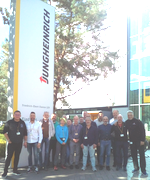 From 29 September to 2 October 2025, the annual plenary meeting of the Jungheinrich EWC took place at the company's headquarters in Hamburg. The manufacturer of forklift trucks has 21,000 employees worldwide, including 8,500 in Germany. In July 2025, central management announced a transformation programme with “personnel and location-related measures to ensure global competitiveness”, which overshadowed the EWC meeting. The EWC Academy's training on the correct organisation of a consultation procedure, the reporting obligations of EWC members in their countries of origin and the nature of cooperation between the EWC and local works councils could not have come at a better time. The new EWC Directive was also discussed. The EWC of Jungheinrich has been in existence since 1999 and the EWC agreement was last updated in 2005.
 Since 16 October 2025, the EWC Academy has been advising the European works council of Amadeus on information and consultation regarding a planned restructuring which will affect around 200 jobs in 21 countries. Amadeus operates a reservation system for the travel and tourism industry. The head office is located in Madrid, with important sites in France and Germany. The group has 20,000 employees worldwide. The EWC Academy had already provided training for the EWC in September 2024 (see
 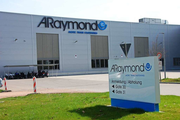 On 4 December 2025, the European works council of ARaymond held an extraordinary meeting in Barcelona to discuss its internal structures and the ongoing revision of its EWC agreement. It has not yet set up a steering committee. It represents 1,900 employees in France, Spain, Italy, Germany and Czechia. In June 2025, a plant with 650 staff in Genk (Belgium) was acquired, which is to be integrated into the EWC. At the meeting, the EWC Academy outlined the impact of the new EU Directive on the EWC agreement of this family-owned business. ARaymond, based in Grenoble, manufactures fasteners for the automotive industry. In October 2024, the EWC Academy had already provided training for the EWC (see
 13. Current Seminar Schedule |
|
|
The EWC Academy and its predecessor organisation have been conducting conferences and seminars for members of European works councils, SE works councils and special negotiating bodies since January 2009. So far, 983 employee representatives from 328 companies have taken part including many of them on multiple occasions. This corresponds to 25% of all transnational works council bodies in Europe. These include 30 companies with the legal form of an SE (European Company). In addition, there are numerous in-house events and guest lectures given to other organizations.
Overview of forthcoming seminar schedule 18th Hamburg Conference for European and SE Works Councils
Introductory seminar at Montabaur Castle
Report from a previous seminar in Montabaur Renegotiation of EWC agreements
In-house events
|

 From 7 to 10 April 2026, the annual introductory seminar for members of European works councils, SE works councils and special negotiating bodies will once again take place in Montabaur. The castle is located at the ICE railway station halfway between Frankfurt and Cologne. Several seminar modules for beginners and advanced participants will be offered there.
14. Imprint |
|
|
EWC News is published by: D-20459 Hamburg |
|