 |
 |
Download pdf file |  |
Newsletter archives |
 |
Dieser Newsletter auf Deutsch |  |
Cette newsletter en français |
1. Action plans to reinforce collective bargaining coverage |
 |
|
Vague rhetoric and vague timeframes instead of ambitious targets
Every EU country with less than 80% collective bargaining coverage must draw up an action plan to work towards this objective. This is to be elaborated with the involvement of unions and employer organisations and must contain specific measures to gradually increase collective bargaining coverage. It must also include a timetable for implementing the measures and be regularly reviewed and updated. 18 EU countries have a collective bargaining coverage rate of less than 80%, but only 13 have so far submitted an action plan. The remaining five risk fines if their non-compliance persists.
The assessment of the action plans available to date is disappointing. They focus on rather “soft” measures, formulated in vague terms and with an imprecise timeframe. In most cases, there is a lack of concrete legislative reform proposals aimed at strengthening collective bargaining coverage. Consequently, many action plans are little more than declarations of intent. This is particularly evident in Ireland, where the action plan is limited to cosmetic changes and falls short of the proposals previously drawn up by a high-level working group (see report in EWC News 4/2025). Greece is regarded as a best-practice example, as it fulfils almost to the letter all the content and procedural requirements of the EU Directive (see report in EWC News 1/2026).
High collective bargaining coverage requires an institutional framework
The Northern European countries of Denmark, Sweden and Finland, the Southern European countries of Italy, Portugal and Spain, as well as Belgium, France and Austria, all exceed the 80% threshold. This high level of collective bargaining coverage is due to two factors: widespread sectoral collective agreements and government regulations designed to support the bargaining system. In Belgium, Finland, France, Portugal and Spain, collective agreements are frequently declared universally binding and then apply to all companies in the relevant sector. In Austria, collective agreements are concluded by the Chamber of Commerce, of which all companies are compulsory members. In Italy, there is a constitutionally guaranteed right to fair pay (see report in EWC News 4/2025).
Press release from the Hans Böckler Foundation The Hans Böckler Foundation’s assessment Report of the European Commission Download the German action plan Download the annexes to the German action plan |
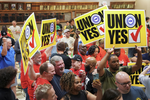 On 9 June 2026, the Hans Böckler Foundation presented an initial assessment of the national action plans to promote collective bargaining. These action plans form part of the Minimum Wage Directive, which has been in force since November 2022 (see
 2. Developments at European level |
|
|
Roadmap for high-quality jobs: second round of consultation concluded
European Commission press release Download the consultation paper Detailed analysis of the draft legislation Reply of the European Trade Union Confederation  Pay transparency: infringement proceedings in preparation
The written request from the European Parliament The Commissioner’s written response The FAQ document of the European Commission Call for an EU Directive on psychosocial risks and stress
European Parliament press release |
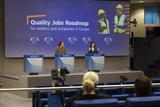 On 20 July 2026, the European Commission launched the second phase of consultation with the European social partners on a proposed EU Directive for high-quality jobs (the “Quality Jobs Act”). The aim is to improve working conditions, health and safety, and workers’ rights across the EU. The first round of consultation was concluded in January 2026 (see
  On 26 August 2026, Hadja Lahbib, Commissioner for Equality, informed the European Parliament in a written response that she was considering launching infringement proceedings. The deadline for transposing the Pay Transparency Directive into national law had expired on 7 June 2026. The majority of Member States including Germany are behind schedule, whilst Sweden has no intention at all of transposing the Directive in its current form (see
  On 6 October 2026, the European Parliament by 413 votes in favour, 210 against and 29 abstentions, called for an EU Directive to protect workers from psychosocial risks and stress at work. In future, every employer should issue guidelines prohibiting violence, harassment, bullying and discriminatory behaviour, and carry out risk assessments to address high work intensity and excessive workloads. The Belgian socialist Estelle Ceulemans was nominated as rapporteur for this legislative initiative on a cross-party basis; prior to her time in the European Parliament, she was General Secretary of the Belgian trade union confederation FGTB. The call for such an EU Directive also came from the European Trade Union Confederation in May 2024 (see
 3. National labour law under scrutiny |
|
|
Parliament rejects amendments to labour law
In order to implement its reforms nonetheless, the government could present individual measures to parliament rather than a comprehensive package and seek majorities for each of them in autumn 2026. The focus is on easing restrictions on outsourcing by companies that have recently implemented layoffs, extending fixed-term employment contracts, reintroducing individual working time models (“time banks”) and extending parental leave. Portugal has had a conservative minority government since April 2024.
Report on the government’s other plans Tesla strike in Sweden ends without success
Tesla has no manufacturing sites in Sweden. On the surface, this industrial dispute concerned only a few assembly workers in workshops, but in reality, the conflict was of a more fundamental nature. Tesla does not accept collective bargaining agreements anywhere in the world and has now managed to enforce this stance in Sweden too – the country with the world's highest percentage of trade union membership (over 60%) and a collective bargaining coverage rate of 88%. This shows that traditional trade union structures are reaching their limits in the age of global tech giants. Tesla could encourage other multinational corporations to take a similar hard-line stance and refuse to recognise collective bargaining agreements.
The IF Metall trade union describes Tesla’s actions as unprecedented. “They have employed methods that have been banned in Sweden since the 1930s.” These included flying in strike-breakers from other countries (see report in EWC News 2/2024). Added to this is the damage to the company's reputation. In a country that regards social responsibility and fair working conditions as a precious asset, Tesla has positioned itself as a confrontational player lacking in solidarity. In the long term, this image could cost the company more than any pay rises or social benefits arising from a collective bargaining agreement. In Germany, too, the company has shown itself to be anti-union and intervened against IG Metall in the run-up to the works council elections in March 2026. Proceedings are currently underway before the competent labour court regarding this matter (see report in EWC News 1/2026).
Statement from the IF Metall trade union Press report on the end of the strike Analysis of the events and consequences of the strike Study on Tesla’s anti-union behaviour German employers want short deadlines as in France
A works council could, for example, significantly delay a management decision to restructure production. Clear deadlines should be introduced for negotiations on the reconciliation of interests and social plans, so that companies can implement their plans with legal certainty within three months at the latest. The social partners within the workplace should be able to deviate from these deadlines if they agree to do so. Furthermore, co-determination in matters of health and safety and the introduction of technical systems should be restricted. Works councils should continue to monitor the employer’s measures, but no longer be able to prevent them. In other words: a shift from the German model of co-determination to a consultation system based on the French model. The proposals are reminiscent of the reform of the French works council legislation in January 2014 (see report in EWC News 1/2014).
Download the BDA position paper |
 On 19 June 2026, the Portuguese Parliament failed to secure a majority in favour of the government’s neoliberal reform package “Trabalho XXI”, which proposed amendments to over 100 articles of the Labour Code. The conservative minority government was only able to secure 100 votes in favour, whilst 230 MPs voted against it. This followed two one-day general strikes and months of protests by the trade unions. The draft bill included measures to undermine collective bargaining autonomy, to weaken protection against dismissal and to make working hours more flexible. It would have allowed 50 working hours per week instead of 40 without overtime pay. For the trade unions, this would mean the “normalisation of precarious employment”, wage cuts, more layoffs and more fixed-term contracts.
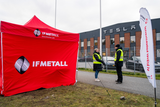 On 19 August 2026, the strike against the US car manufacturer Tesla came to an end after almost three years. Since October 2023, the IF Metall trade union had not only called on workers at the Swedish plants to strike, but had also organised solidarity actions by other trade unions (see
  In the view of the Confederation of German Employers’ Associations (BDA), the far-reaching co-determination rights of works councils are no longer appropriate in an era of rapid innovation. On 2 September 2026, they called for a comprehensive reform of the Works Constitution Act and the scaling back of co-determination rights. Anyone introducing new software in a German company must allow for a lengthy co-determination procedure, even though the technical implementation can usually be carried out overnight. According to the BDA, implementation takes place much more rapidly in other countries.
4. Collective bargaining policy in American tech groups |
|
|
Restrictions on CCTV surveillance at Amazon in Italy
Report on the collective bargaining agreement First collective bargaining agreement at Microsoft in the Czech Republic
The collective bargaining agreement provides for higher severance pay in the event of redundancies and increased pension contributions, as well as trade union’s rights to information and consultation, and regulations governing the recruitment of union members in the workplace. The in-house trade union section is the most important form of employee representation in the Czech Republic. A works council may also be established, but it has fewer rights. In practice, works councils are rare. In most cases, there is either a trade union or nothing at all. It was only in July 2024 that Microsoft’s workforce began to unionise and established an in-house trade union section.
Report on the collective bargaining agreement Meta Platforms allows British trade union to recruit members
The union already has some members at Meta and aims to organise at least 10 % of the workforce. Once this threshold is reached, it can apply for recognition as a party to shop-floor agreements and work towards establishing a workplace employee representative body. Meta has pre-empted a legal obligation set out in the new UK Labour Code (see report in EWC News 1/2026). From 30 October 2026, trade unions will have a legally guaranteed right of access to all workplaces to inform employees about their work and their right to join a trade union. They will be able to hold weekly face-to-face meetings during working hours and to send information via the company’s communication channels. Workplace trade union representatives will also benefit from enhanced protection and be entitled to office space. The Labour government hopes the new law will halt the decline in trade union membership. In 1995, trade union membership in the United Kingdom stood at 29 %, but had fallen to 20 % by 2025.
Press release from the Prospect trade union Press report on the agreement and downsizing in the tech sector Trade Union Monitor United Kingdom |
 On 22 July 2026, three Italian unions signed a nationwide collective bargaining agreement with Amazon Italia that sets out the framework for the use of CCTV surveillance and new technologies. It applies to all 19,000 employees across 57 sites. The use of camera footage for disciplinary purposes is expressly prohibited. Amazon is a global leader in digital surveillance technologies (see
  On 19 August 2026, the Czech trade union “ICT Union” announced that it had signed the first-ever in-house collective bargaining agreement with Microsoft. It applies to 1,300 employees and could serve as a model for the entire technology sector in Czechia. Microsoft is one of the largest foreign employers in the Czech capital and promotes its Prague office as an attractive “workplace of the future”.
 On 21 September 2026, the Prospect trade union announced that it had concluded an access agreement covering Meta’s 5,000 UK employees. The US-based group operates social media platforms such as Facebook and Instagram, as well as the instant messaging service WhatsApp. Prospect, the union for white-collar workers, has 160,000 members in the UK, many of whom are scientists, engineers and technology experts. From now on, Meta will support membership recruitment.
5. Dealing with restructuring |
|
|
Two-year employment guarantee across Europe
Press report on the employment guarantee Calls for a global employment guarantee
Forthcoming event
The EWC Chair at Unilever will report on how these successes were achieved at the next EWC Academy Hamburg Conference on 25 January 2027.
The programme for the Hamburg Conference Irish trade unions criticise the lack of involvement of the EWC
The trigger for the job cuts was an operating loss of €34 million in the first half of 2026. According to the parent company IAG, Aer Lingus is expected to achieve a profit margin of 12 to 15%, with future aircraft deployments subject to productivity gains. Consequently, this is not a national issue decided locally in Ireland, but rather an instruction emanating from the group’s headquarters. The EWC must always be involved in such “transnational measures”. Should a legal dispute arise over this matter, it would be brought before a Spanish court as opposed to an Irish one. IAG is a holding company for airlines (including British Airways, Iberia and Aer Lingus) and is headquartered in Madrid. In September 2023, Spain’s highest labour court ruled that IAG had failed to properly inform its EWC about the employment situation across the entire group (see report in EWC News 4/2023).
Press report on the demand for EWC involvement Press report on the suspension of talks Press report on the generous severance packages EasyJet’s EWC loses legal dispute in London
Central management argued that Morocco does not fall within the EWC’s geographical scope of competence and therefore no information or consultation was required. The EWC emphasised the financial implications of the re-routing of flights and consequences for employment in the Netherlands, Italy and France. With three European countries affected, it argued that information and consultation procedures were necessary. However, the judges concluded that, based on a comprehensive and objective assessment, the establishment of the new base in Morocco did not have a “significant” impact on the interests of the workforce in those three countries or on easyJet’s overall business operations. The number of employees potentially posted to Morocco amounted to less than 1% of easyJet’s workforce and was limited to six months. Consequently, the EWC – which has been operating on the basis of subsidiary requirements since its establishment at the end of 2011 (see report in EWC News 3/2012) – is not entitled to information and consultation.
|
 On 29 July 2026, it was announced that Unilever’s European works council had secured a two-year employment guarantee for all 4,800 employees in the food division across the EU and the United Kingdom. This guarantee will apply following the sale of the division to the US spice manufacturer McCormick, which is scheduled for mid-2027. In the event of such a transfer of undertaking, the law only provides for a period of protection of twelve months. The transaction, the largest in the history of both companies, was announced in March 2026 (see
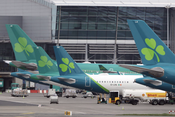 On 25 August 2026, it was reported in the press that talks between Aer Lingus management and two trade unions regarding the planned loss of 500 jobs (including pilots, cabin crew and head office staff) had been suspended. The trade unions are demanding that the European works council of the parent company, International Airlines Group (IAG), be involved first and that all measures be put on hold until then. The airline’s management categorically rejects the involvement of the EWC, arguing that this would be a purely national matter. The breakdown in talks temporarily brought Aer Lingus’s restructuring process to a standstill. On 26 September 2026, it emerged that the company was offering substantial severance payments for voluntary redundancy.
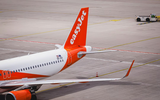 On 17 September 2026, the Central Arbitration Committee (CAC), the first instance under UK EWC law, dismissed a claim filed by easyJet’s European works council. The low-cost airline had opened its first base outside Europe in Marrakech (Morocco) in April 2026, but was unwilling to consult the EWC on the implications for its European workforce. Since Brexit, easyJet - like all British companies with EWC at the end of 2020 - remains subject to UK jurisdiction (see
 6. Revised EWC agreements |
|
|
Swiss IT firm has not yet incorporated the new EWC Directive
The EWC holds two annual meetings, one of which takes place via videoconference. The select committee is made up of five members from five countries. Extraordinary plenary meetings are convened if half of the EWC members request them. The EWC is competent when two countries are affected by a measure, but also in the case of purely national issues with significant cross-border implications. In addition to the standard range of topics covered by the EWC Directive, it is also responsible for group-wide programmes relating to further training, occupational health and safety, environmental protection, gender equality (including in terms of pay) and sustainability. It is, as a rule, informed in advance of all employee representative bodies in the various countries and receives written and oral information from central management throughout the year. Consultations take place on a list of precisely defined matters. All EWC members are entitled to training, the scope of which is not specified in detail. Experts may only attend internal EWC meetings; they may attend meetings with management only with the latter’s prior consent. The provisions of the 2025 EWC Directive are to be taken into account as soon as the French transposition legislation comes into force in 2029. French wholesaler has not yet incorporated the new EWC Directive
The EWC has 17 members from six countries, including ten delegates from France. They represent 10,300 employees; the largest countries are France with 6,400 and Spain with 2,300 employees. Only countries in which there is employee representation are entitled to a seat on the EWC. In France, small unions that do not hold a seat on the EWC may each send one representative as a permanent guest. They have the same rights as all EWC members, except the right to vote. If an EWC member resigns from their country’s local works council, their mandate on the EWC automatically ends. The select committee consists of eight delegates, who are entitled to 120 hours of time off work per year (in addition to official meeting times). The systematic use of video conferencing requires the consent of the chairperson and the EWC members. Entitlement to training follows the statutory rules; there is no provision for experts.
|
 On 27 March 2026, a new EWC agreement for SITA, governed by French law, was signed in Paris. The Geneva-based group operates communications and check-in systems at airports. The EWC was established in 2016. It consists of delegates from twenty countries, excluding Switzerland and the United Kingdom. The chair is held by the employer.
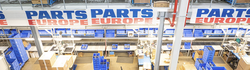 On 3 June 2026, a new EWC agreement was signed at the headquarters of Parts Holding Europe (PHE) in Arcueil, a suburb of Paris. It is valid for four years but does not incorporate the standards of the new EU Directive. The French automotive spare parts wholesaler has had a European works council since 2017. It meets once a year, chaired by the employer, who has the right to vote in the election of the secretary (the employee representative´s spokesperson). Extraordinary meetings are convened at the request of half of the EWC members.
7. Newly established European Works Councils |
|
|
German engine manufacturer establishes EWC
Consultation procedures at local level may only be concluded once the EWC has been informed and consulted in accordance with the legal requirements. The EWC is entitled to a written response to its opinion before a decision is taken on the measures in question. The select committee has up to five members; in addition, working groups may be established, for example on health and safety at work or on professional qualifications. The EWC, the select committee and the working groups may call upon external experts of their choice, the costs of which are borne by central management. In addition, a trade union coordinator from the European Federation of Industrial Unions (IndustriALL) attends the meetings. The right to training also applies to substitute members. Each year, the EWC and central management agree on a reference budget, which can be adjusted if necessary. In case of disputes, an arbitration committee with a neutral chairperson is set up, based on the model of the German works constitution. Luxembourg-based satellite operator with an EWC “by law” Swiss pharmaceutics group establishes an EWC
The new EWC, which will commence its work in November 2026, has 20 members from 13 countries within the European Single Market; Switzerland and the United Kingdom are not included. It represents 2,100 employees. Sweden has four seats, France three, and Germany and Spain two each. The term of office is five years – as is customary in Austria. Two physical meetings are held each year at rotating locations across Europe. The select committee consists of seven members from different countries. It meets virtually with central management twice a year. Internal video conferences may be held at any time. The preparations and procedure for the meetings, as well as the roles of the delegates and the expert, have been described in detail. The EWC must render its opinions within ten days of the meeting or following the resolution of any outstanding issues.
The EWC is competent when two countries are affected by a planned measure. If only one country is affected but there are implications for at least 1% of the workforce in another country, it is also involved. Extraordinary meetings in exceptional circumstances are required if 5% of the European workforce is affected by a planned restructuring within six months. Extraordinary meetings may take place in person if central management agrees; otherwise, they must be held virtually.
Dedicated budget for the EWC
Each year, the EWC may spend €25,000 on experts. This amount does not include any legal fees, which have not been specified. €8,000 is available each year for training; in the first year, the amount is €10,000, and the budget may be increased in justified cases. These funds are managed by the select committee and may be carried over to subsequent years within the term of office. The EWC has the right to set up its own intranet page. The topics covered during EWC meetings largely correspond to the scope of the new EU Directive, including the anticipation of change and the management of restructuring projects, such as those relating to the green and digital transitions. Furthermore, all matters that could significantly affect the economic, social, health or cultural interests of at least 4% of the European workforce are also addressed. Notice of termination of the agreement may be given after the first term of office. It then remains in force for a further year. If no new agreement is reached during this period, the subsidiary requirements apply (EWC “by law”). |
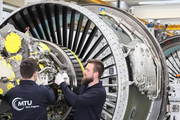 On 7 May 2026, an EWC agreement was signed at the MTU Aero Engines headquarters in Munich. The new EWC represents 12,600 employees in Germany (six seats), Poland (two seats) and the Netherlands (one seat). Plenary meetings are held once a year at varying locations. Every four months, it is informed in writing about the current business situation. In addition to the usual list of topics for information and consultation, it may propose further items which must, by principle, be included on the agenda. In exceptional circumstances, it may request an additional face-to-face meeting.
 On 15 May 2026, a European works council for the satellite operator SES was established at its headquarters in Betzdorf based on the subsidiary requirements of the Luxembourg EWC Act. Negotiations between central management and the special negotiating body (SNB) had previously broken down. It is made up of 17 members from ten countries, representing 1,500 employees. As delegates from France and Spain could not be elected in time for the constituent meeting, work initially began with an interim chair and a temporary select committee of four members. New elections are to be held at the next regular EWC meeting.
8. Latest news from the SE world |
|
|
No employee representatives on the N26 supervisory board
The German works councils of the Berlin-based online bank N26 had taken legal action because they were being denied one-third representation on the supervisory board following the bank’s conversion into a European Company (SE) (see report in EWC News 3/2025). In total, N26 has around 1,200 employees in Germany; a one-third representation on the supervisory board is required by law for companies with 500 or more employees and is retained following conversion to an SE. The workforce is based in the same building and is managed by the same HR department, but only 370 are employed by the holding company; all others have employment contracts with subsidiaries. The judges have now ruled that only the employment contracts within the holding company are relevant and that N26 will remain exempt from co-determination on a permanent basis. This establishes a two-class society and creates a further loophole for circumventing co-determination through conversion to an SE.
Press release from the Federal Court of Justice French care provider revises SE agreement
Originally, a European works council was established for Korian in June 2020; it was the first of its kind in the care sector (see report in EWC News 3/2020). Since then, two permanent working groups have been in place, which were retained for the SE works council following the company’s conversion into a European Company (SE). They meet at least once a year and may call upon the services of an expert. In addition, there is a joint committee which monitors the protocol on health, safety and the prevention of accidents at work signed in November 2021 (see report in EWC News 4/2021). The central management also promotes the establishment of local employee representative bodies at all the Group’s sites; a charter to this effect was signed with the SE works council in October 2023 (see report in EWC News 4/2023). The SE works council has the right of access to all branches, and each delegate is entitled to eight days’ training during their four-year term of office.
Report from the meeting of the SE works council
Forthcoming event
The secretary of Clariane’s SE works council will report on his work at the next Hamburg Conference organised by the EWC Academy on 25 January 2027.
The programme for the Hamburg Conference Yes to world-class research but No to employee co-determination
Press report on the site closures
Like BioNTech, Arife is based in Mainz and operates as a European Company (SE). In order to register the new pharma company as an SE without delay, a shell company was used – a company with no business activities and no workforce. Hereby, employee co-determination on the supervisory board can be completely avoided. The SE Directive merely safeguards the level of employee co-determination that existed at the time of SE registration. Added to this is the possibility of avoiding the establishment of an SE works council, which is now possible according to the European Court of Justice’s Olympus court ruling of May 2024 (see report in EWC News 2/2024). Nor can a European works council be established, since companies with the legal form of an SE are not subject to the EWC Directive. On 2 July 2026, the governing coalition in Berlin agreed to put an end to the practice of escaping co-determination through shell companies (see report in EWC News 2/2026).
Press report on the founding of Arife |
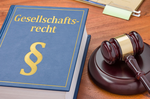 On 23 June 2026, the Federal Court of Justice in Karlsruhe ruled on a fundamental issue of corporate co-determination that had long been the subject of controversy amongst legal experts. In a joint operation where employees work side by side, are represented by the same works council and are subject to the same human resources management, they are not regarded as a single unit for the purposes of co-determination. Concerning the works council, the workforce is counted as a single entity, but this is not the case for the supervisory board.
 On 2 July 2026, a revised SE agreement was signed during a plenary session of the Clariane (formerly Korian) SE works council in Paris. The listed care group employs 70,000 people across six countries, including 23,000 in Germany. Two physical meetings are held each year, chaired by the employer. Each of the six countries is represented by one member on the select committee, which holds four physical meetings a year with central management, chaired by the elected secretary. Video conferences are possible if all parties agree.
 On 14 July 2026, the founders of the vaccine developer BioNTech registered a new company called Arife in the commercial register. They are in the midst of breaking away from the group they once founded and developed into a global vaccine pioneer. BioNTech, which currently employs 8,000 people, was the first company in the world to receive approval for a coronavirus vaccine in December 2020 and posted a profit of over €10 billion the following year. BioNTech’s headquarters are fittingly located “An der Goldmine 12” (at gold mine road 12) in Mainz. With the end of the pandemic, turnover has plummeted; the company is now posting substantial losses and is set to close three sites in Germany with 1,860 employees.
9. The view beyond Europe |
|
|
Global minimum standards for platform work
In the EU, a directive to improve working conditions in the digital platform economy has been in place since December 2024 (see report in EWC News 4/2024). Uber, the ride-hailing and food delivery platform, was the first company in the platform economy to sign a global declaration with the trade unions in February 2022, with a view to ensuring better protection for drivers and couriers in the future (see report in EWC News 2/2022).
Commentary on the contents of the agreement Interview with a representative of the International Trade Union Confederation Global call centre market leader refuses to renew framework agreement
Report on the letter to investors Download the framework agreement Report on the new collective bargaining agreement in Kenya US trade unions call for a boycott of Starbucks
Report on the call for a boycott The Starbucks Workers United website Petition in support of the demands |
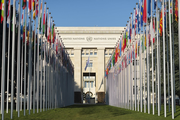 On 12 June 2026, the International Labour Organisation (ILO) adopted, by a large majority, a Convention on Decent Work in the Platform Economy (Convention No. 193) in Geneva. This marks the first time an international standard has been established for work carried out via digital platforms. This includes collective bargaining, a safe and healthy working environment, protection from hazardous work, and the regulation of algorithms and automated decision-making. UN member states must ratify the Convention and ensure that its provisions are effectively implemented in practice.
 On 29 July 2026, the international umbrella organisation for service sector trade unions (UNI) wrote to over 80 key investors in the French outsourcing and call centre service provider TP (Teleperformance). The shareholders are being urged to use their influence to persuade the company to renew the international framework agreement with UNI dating from December 2022. In this agreement, TP committed to freedom of association in all its branches worldwide and established joint committees on health and safety at work (see
  Since November 2025, 1,000 employees of the world’s second-largest fast-food company have been on strike in more than 40 cities across the United States in their bid for a collective bargaining agreement. Over 12,000 baristas have joined forces in the “Starbucks Workers United” trade union. In over 700 cafés across the country, employees voted in a secret ballot in favour of recognising their union as a party to collective bargaining. Starbucks has the financial resources to conclude the collective bargaining agreement. Less than one day’s turnover would be enough to meet the baristas’ demands. Instead, the company is stalling any progress in the negotiations. For this reason, the baristas are now calling for a boycott: no purchase of Starbucks products for offices, meetings or events, and the blacklisting of Starbucks for catering and sponsorship.
10. Interesting websites |
|
|
Research on co-determination in artificial intelligence
Documents and software on equal pay
The transposition monitor for all EU countries A counter-discourse on a par with Big Tech
Advisory network for posted workers
Brochure on the advisory structures |
 The DIGILARE research project examines workers’ rights in the context of digital transformation, focusing in particular on how high-quality working conditions and the co-determination rights of works councils and trade unions can be safeguarded in the digital working world. This involves a comparative legal analysis involving 23 research workers from 15 countries. The project is led by the University of Santiago de Compostela (Spain) and the University of Vienna, with financial support from the EU.
 The Centre for Digital Rights and Democracy is dedicated to the protection of fundamental digital rights. Tech giants such as X, Meta and Google shape public debate and, through their algorithms, determine what is visible - often exacerbating polarisation and disinformation. The Centre, a non-governmental organisation based in Berlin, highlights this power and provides up-to-date analyses on issues relating to internet policy. This includes a lobbying map of the IT sector.
 When employees are posted by their employer to another EU country to work there on a temporary basis (e.g. in the construction industry), they are protected under the EU Posting of Workers Directive. They are subject to the regulations of the country in which they are working (in particular rest periods, minimum annual leave, health and safety at work, and gender equality). The “Fair Labour Mobility EU” project runs advisory centres for workers in the sending countries – Bulgaria, Poland, Hungary, Romania, Serbia and Slovenia – which work closely with trade unions in the host countries, Germany and Austria. The project’s website is funded by the EU.
11. New publications |
|
|
Country studies on employee involvement in the digitalisation of work
Download the comprehensive evaluation Download the country study of Ireland Overview of all country studies Country profiles to enhance intercultural awareness
Works council co-determination for working from home in practice
Study on the prevalence of working from home Cross-country comparison of mental health and stress in the workplace
|
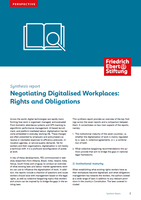 On 8 May 2026, the Friedrich Ebert Foundation published a comprehensive evaluation of seven country studies from the “Negotiating Digitalised Workplaces” series. The country studies cover Albania, Brazil, Kenya, India, Ireland, South Korea and Uruguay. They set out the rights, laws and labour market policy agreements in place in each country to enable workers and their trade unions to exert greater influence over the use of digital technologies. There is often a lack of knowledge, capabilities and awareness of existing rights. For this reason, there are also very few collective bargaining agreements or company agreements that specifically address the digitalisation of work. Each country study contains practical checklists and recommendations for collective bargaining, which help to close legal loopholes and enable a more thorough and strategic response at a local level.
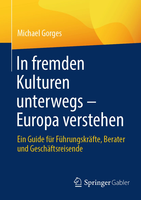 On 29 May 2026, the practical guide “Travelling in foreign cultures – Understanding Europe” was published providing practical and concise insights into the cultural characteristics of 30 countries which is also useful for members of European works councils (England and Scotland are dealt with separately, and Andorra is also included). The author sheds light on the different ways of thinking, communicating and observing everyday social etiquette. He highlights Belgium’s cultural diversity, with its various language communities. A unique cultural diversity flourishes within a relatively small area. In Italy, communication is lively and characterised by emotional expression. The Dutch combine direct communication with open-minded tolerance and pragmatic approaches to problem-solving. In Austria, the culture of conversation is characterised by politeness, a desire for harmony, an indirect style of communication and subtle social diplomacy – traits that are less pronounced in Germany.
 On 8 July 2026, the Hans Böckler Foundation published a working paper examining the challenges faced by works councils due to the increasing prevalence of remote working in four companies in the metal and electrical industry. In connection with home working, they are faced with a rising level of conflict and a heavier workload; working from home also reduces the ability of employee representatives to resolve conflicts. During collective bargaining negotiations, the question arose: “Can’t I go on strike from home, just sitting in front of my screen?” Works councils were often unable to prevent a blurring of the boundaries between working hours and personal time for employees working from home, and they adapted their communication methods, for example by using social media. When work from home was to be scaled back from 2024, management attempted to form a coalition with works councils to encourage greater on-site presence. Despite these efforts, working from home is “here to stay”.
 On 9 July 2026, the European Trade Union Institute (ETUI) in Brussels published a country-by-country study on psychosocial risks, workplace bullying and stress in the workplace. The study examined which laws, collective bargaining agreements and court rulings in EU countries address these issues. The term “work-related psychosocial risks” appears in the legislation of 19 countries, whilst “workplace bullying” is mentioned in the legislation of all countries. In 13 countries, there are collective agreements at national or sectoral level concerning work-related psychosocial risks. On the basis of this analysis, the authors argue that a harmonised policy framework at EU level is required to promote a preventive approach to psychosocial risks in the workplace, in terms of aligning, clarifying and updating EU policies. The annex to the study contains a detailed country analysis for each of the 27 EU countries.
12. The EWC Academy: examples of our work |
|
|
Information and consultation under SE legislation Legal seminar in Würzburg EWC operating “by law” without an agreement |
 Since 19 August 2026, the EWC Academy has been advising the SE works council of the online spare parts retailer Autodoc in Berlin on the exercise of its rights to information and consultation. The company has around 5,000 employees and operates online shops in 27 European countries. Autodoc has been operating as a European Company (SE) since November 2022, thereby avoiding co-determination on the supervisory board. In addition to Berlin, the company’s logistics network includes sites in Szczecin (Poland) and Cheb (Czech Republic), as well as a recently opened warehouse in Ghent (Belgium).
 From 6 to 9 October 2026, the EWC Academy held its annual seminar on revising EWC agreements. The focus was on the necessary amendments to bring agreements into line with the standards of the new EU Directive, which has been in force since December 2025 and must be transposed into national law in all EU countries by early January 2028 (see
 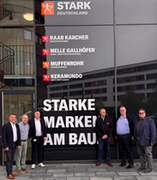 On 13 and 14 October 2026, the quarterly meeting of Stark’s select committee took place at the German subsidiary’s offices in Offenbach am Main. Since its establishment in April 2023, the EWC of this building materials supplier has been operating on the basis of the subsidiary requirements of the Danish EWC Act, as no agreement had been reached between the SNB and central management. In September 2024, a further attempt was made to negotiate an EWC agreement (see
 13. Current seminar schedule |
|
|
The EWC Academy and its predecessor organisation have been holding conferences and seminars for members of European Works Councils, SE Works Councils and Special Negotiating Bodies since January 2009. So far, 1,002 employee representatives from 333 companies have taken part, many of them several times. This corresponds to around 25% of all transnational works council bodies in Europe. This also includes 34 companies in the legal form of an SE (European Company). In addition, there are numerous in-house events and guest lectures given to other organisations.
Overview of forthcoming seminar schedule Video briefing on Irish law
A court ruling by the Supreme Court in Dublin in the legal dispute between the EWC and the US corporation Verizon is expected shortly (see report in EWC News 2/2026). This should provide answers to a number of questions for all European works councils governed by Irish law. We will discuss the implications of the ruling in a video briefing to be held once the ruling has been pronounced. Participation is free of charge.
The programme for the video briefing 19th Hamburg Conference for European and SE Works Councils
German works constitution act in English
Brochure on the German co-determination system English translation of German labour laws AI training for works council members The AI Regulation has been in force since August 2024. The EU is hereby taking on a global pioneering role in the regulation of artificial intelligence (see report in EWC News 4/2023). AI is finding its way into more and more business processes. This increases the demands on works councils to recognise the introduction, implementation and impact of such systems at an early stage and to play an active role in influencing their development. They must understand the technical basics and be familiar with participation rights and protection obligations in order to develop practical regulations within the company. The seminar is being offered on several dates.
Micropolitics – what happens beneath the surface and isn’t written in any law book
Fundamentals of EU labour law with a focus on equal pay From 3 to 5 March 2027, a seminar on the fundamentals of EU labour law will take place in Hamburg, focusing in particular on the topic of equal pay. The seminar will present the provisions of the new Directive on pay transparency and their significance for those involved in workplace employee representation. Furthermore, practical approaches to achieving gender-equitable pay practices within companies will be developed using real-life examples. The seminar is aimed at members of works councils at all levels, from local to European.
In-house events
|


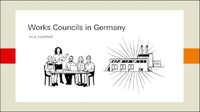 From 1 March to 31 May 2026, new works council elections were held in all German companies. These take place every four years. Among the estimated 180,000 works council members, there are an increasing number whose mother tongue is not German. Having previously run in-house seminars on this topic, we are now offering sessions for individual participation. These seminars are aimed at German works council members, but representatives from other countries who wish to familiarise themselves with the German system are also welcome to attend.
 On 3 and 4 March 2026, a seminar on micropolitics for works council members will take place in Hamburg. Hidden strategies and power struggles exist within every company: control of information, selective communication or strategic positioning. Works council members need to understand these informal processes when dealing with management in order to address conflicts at the right level – or, better still, to avoid them altogether. How can one present oneself as a convincing representative spokesperson? The seminar is aimed at members of works councils from the local to the European level.
14. Imprint |
|
|
EWC News is published by: D-20459 Hamburg |
|