 |
 Welcome to issue no. 1 / 2008 of EWC News. 2 April 2008
|

|
The
training and consultancy network
"euro-workscouncil.net"
EWC
News appears four times a year.
You can find past issues in the newsletter archives.
|


|
1.
Employers clear the way
for negotiations
|
|
New EWC Directive: setback for British hardliners
It was not an easy decision for the employers, but the pressure of trade unions, European Parliament and the European Commission had increased in recent months (see report in EWC News 2/2007). Without willingness to compromise the further legislative process would hardly have been influenced by the employers.
Review: The second phase of consultations started with delay
Already in early January 2008 an initiative of the European Commission had been expected (see report in EWC News 4/2007), but was slow in coming. After intense lobbying by the employers (see report in EWC News 3/2007), which was aimed in particular to weaken the requirements for informing and consulting the EWC, intense discussions took place behind the scenes between top officials from the inner circle of Social Affaires Commissioner Vladimír Špidla and representatives of trade unions and employers' federations. The European Commission was finally ready to make its draft easier acceptable for employers to pave the way for direct negotiations between the social partners.
On 20th February 2008 the European Commission went to the public with its consultation paper. The European Trade Union Confederation (ETUC) responded the same day agreeing with a press release.
Accompanying scientific study
The European Commission engaged the London-based consultancy firm GHK Consulting to calculate the impact of the legislative proposals for companies and to analyze costs and benefits of the EWC work. GHK Consulting is currently conducting telephone interviews in 80 companies with employers' and employees' side (that's one in ten companies with EWC).
The revision of the EWC Directive could get an additional dynamic in the second half of the year 2008, when France takes over the Presidency of the EU. Under the motto "Anticipation of Change" the French government wants to convene a forum to discuss early involvement of employees in restructuring. The European Commission wants to link all relevant legislative initiatives to a consistent strategy. Already on February 28th, 2008, Social Affairs Commissioner Vladimír Špidla had announced several initiatives for the period of the French Presidency to the European Economic and Social Committee in Brussels. This includes in addition to the revision of the EWC Directive in particular:
|
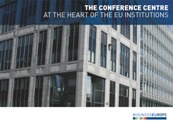
 The
attention was focussed until last with tension on this building in
Brussels
near the EU institutions: the headquarters of the European
employers' federation BusinessEurope. Its decision was
announced
on 2nd April 2008. Unlike the adoption of the EWC Directive in
1994,
continental European employers' federations could enforce this time a
pragmatic
solution against the resistance of British industry. Now there is time
until January 2009 for direct negotiations with the trade unions on the
wording of the
new EWC directive.
The
attention was focussed until last with tension on this building in
Brussels
near the EU institutions: the headquarters of the European
employers' federation BusinessEurope. Its decision was
announced
on 2nd April 2008. Unlike the adoption of the EWC Directive in
1994,
continental European employers' federations could enforce this time a
pragmatic
solution against the resistance of British industry. Now there is time
until January 2009 for direct negotiations with the trade unions on the
wording of the
new EWC directive. 
|
2.
Court decisions in EWC
issues
|
|
The ruling states that supervisory or administrative boards of multinational companies are not entitled to decide on a merger with other companies unless the consultation of the EWC has taken place correctly in all details and has been completed. The process includes a financial analysis by consulting firms, selected by the EWC itself. The judges grant an independent right of participation to the EWC - regardless of the rights of works councils of individual countries. The decision represents the culmination of a series of judgments in France, which strengthen the importance of transnational employee representation.
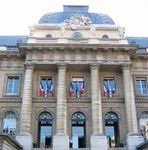
Also the French central works council of Gaz de France was not involved properly. Only a few days later, on 22nd January 2008, the district court of Paris reinforced its rights as well.
New consultation process ends with social guarantees
Another special EWC meeting on 22nd January 2008 remained also without result. In response to the criticism and the judgement which was passed in the meantime, central management provided all required documents and faced once more the discussion in the EWC on 21st February 2008. On 11th March 2008 the EWC finally decided on his opinion against the merger after submission of the consultant studies. At the same time central management issued a statement on social guarantees for the merger, which is considered as a success for the employees. The following documents are only available in French: After concessions from management, the EWC of Suez had already given its opinion on 7th January 2008, it also rejects the merger. With the legally correct conclusion of the consultation process in both groups, the way for the merger is now free. The future of the two European works councils
With the merger, the EWC of Suez is automatically dissolved and the EWC of Gaz de France shall represent the entire group. Simultaneously, a special negotiating body (SNB) is formed, which is to negotiate a new EWC agreement within a few months. With that more could be achieved than with Alcatel-Lucent, where central management strictly declined a renegotiation of the EWC agreement after the merger.
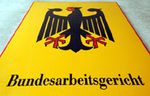
On 18th April 2007, the German Federal Labour Court (BAG) in Erfurt ruled on the question which court is competent for the contestation of the election of German members in the European works council of a French group. The BAG corrected the decision of the industrial tribunal Düsseldorf of June 2005 and referred the procedure back to the Higher Labour Court in Düsseldorf, where a judgement was made in December 2007. German and no French industrial tribunals are therefore competent. The following documents are only available in German: |
 No merger without
consulting the EWC
No merger without
consulting the EWC 
|
3. Reactions
to factory relocations
|
|
Completely surprisingly the Finnish electronics company Nokia declared on 15th January 2008 the shutdown of its factory for mobile phones in Bochum with 2,300 employees to 30th June 2008. Previously the company had got nearly 100 m. € subsidies and guaranteed a certain number of jobs until 31st December 2007. The shutdown was announced two weeks after expiry of this period although the profit had increased by 60% in the 4th quarter 2007. The federal state government in Düsseldorf reclaims 41 m. € of Nokia.
On 30th January 2008 employee representatives from European Nokia locations met in Brussels on invitation of the European Metalworkers' Federation (EMF). They condemned the way of acting of the management, demanded an extraordinary meeting of the Euro Forum (so the official name of the EWC) and engaged a legal report for the possible violation of the EWC Directive. Nokia had already founded its Euro Forum in 1993, when the adoption of the EWC Directive was still far from certain and belonged at that time to the pioneers of a social Europe. On
12th February 2008 a delegation of the Bochum works council held
conversations with the Nokia central management in Finland, however
without achieving the withdrawal of the shutdown decision. One day
later the Finnish unions together with IG Metall and EMF published the "declaration
of Helsinki" to the company policy of Nokia in which
they
demand a fair framework for participation in such restructuring
decisions. Since 20th February 2008 the German group works council
negotiates a compensation agreement with the employer. The situation in Romania
Till
now, the Romanian trade unions haven't succeeded yet to
organize
the workforce and to negotiate a collective agreement. According to
media reports
uniformed watchdogs are engaged to prevent contacts of the newly
hired employees with journalists or trade unions. The metalworkers'
federation of the Romanian confederation Cartel Alfa accuses
Nokia
of
exploitation, because the staff is working 60 to 70 hours per week,
although the law allows only 48 hours. On 5th February 2008 the
company went to the Romanian Minister of Labour Paul
Păcuraru to apply for a change of the labour law. Since 18th March 2008
the Romanian anti-corruption agency checks the contracts between
Nokia and the local authorities, after the mayor of Jucu has already
been arrested in
summer 2007.
On 18th December 2007, the 240 employees of the Novartis research institute in Vienna (photo) learned by video message of the shutdown of its location. The works council wants to use all possibilities to make this decision reversed. On request of the trade unions, the national economic commission dealt with the topic on 7th February 2008. It can check the company's decision, call for reports and make recommendations.
The pharmaceutical company Novartis has a European works council ("Euroforum") since 1995 under Austrian law. The company headquarters is located in Switzerland. The EWC had accomplished in 2006 a Europe-wide comparison of working conditions as part of an EU-sponsored project.
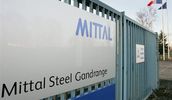
On 16th January 2008 the works council of the ArcelorMittal plant Gandrange on the Moselle was informed that 600 of the 1,100 jobs are to be cut. The European Metalworkers' Federation (EMF) in Brussels calls for the maintenance of an economically viable site and wants to stand up for an alternative concept together with the European works council of ArcelorMittal. The consulting firm Syndex, which was engaged by the works council, presented its report on 14th March 2008. This is also to be discussed in the select committee of the EWC in early April 2008 (see report in EWC News 2/2007 for the EWC agreement of ArcelorMittal).
To introduce its divergent ideas into the discussion, the trade union CGT ordered a counter-report from the consulting firm EVS. Such an "expert battle" between unions is hard to imagine outside France. The CGT is in Lorraine in many companies in a minority position, the CFDT has ranked first there for some years.
The Kléber tyre plant in Toul (Lorraine), a subsidiary of the French group Michelin, with 800 employees will be closed 2009. In the course of the protests, the staff took two HR managers at the plant under arrest and released them only three days later after agreement on a social plan. At the same time blockades were set up and tires were set in fire. An agreement was reached on 17th February 2008, after the French Labour Minister Christine Lagarde intervened in the conflict. The action found a Europe-wide press coverage, the German newspaper Frankfurter Allgemeine Zeitung (FAZ) warned: "Who negotiates with French trade unions must dress warmly."
The household appliances factory of Electrolux in Florence with 900 employees is to be closed. For the 4th April 2008, the Italian trade unions therefore call for a full day strike. In a solidarity message the Spanish union UGT demands uniform minimum standards at restructuring should apply in all European countries. Electrolux had already closed the AEG plant in Nuremberg in the year 2006. Only
in June 2007 a conference on the future of the household appliances
industry in Europe took place in Arezzo (Italy) at which was also
discussed
Electrolux (see report
in EWC News 2/2007). For the Italian sites of the
Swedish household appliances group a framework agreement was concluded
in January 2007.
On 22nd January 2008, the Hans Böckler foundation published first results of a survey conducted by the WSI institute among 2,000 German works councils. According to this about 8% of all sites were affected by a relocation. Most is relocated within Germany, only every fifth relocation went abroad. The following documents are only available in German: |



 No
detectable increase
of relocations
No
detectable increase
of relocations|
4.
EWC agreements are adapted
|
|
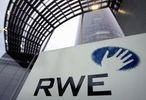
The move to a two-tier EWC structure in the energy group RWE took place on 16th November 2007 when a framework agreement was signed on the formation of a European Forum on RWE's top holding level. The special negotiating body (SNB) was formed in April 2007 and negotiated quickly and constructively.
The new agreement replaces a principle arrangement from the year 1995 which expressively waived a "holding EWC" and provided only for the formation of divisional European works councils. After the take-over of the British water company Thames Water, the "European Water Forum" was initially established in June 2002. In March 2005 the "European Energy Forum" for the sales and network division RWE Energy followed and in January 2006, the "European Power Forum" for the power generation company RWE Power was launched.
The employee representatives of the respective subsidiaries were informed by central management of RWE on European developments and could coordinate their positions transnationally during the half-yearly meetings. With the sale of Thames Water in December 2006 however, the "European Water Forum" had lost its basis. With the now practised two-tier EWC structure, RWE is standing in a line with the Swedish paper group SCA, the aircraft manufacturer and armament group EADS and the Austrian steel producer Voest-Alpine (see report in EWC News 2/2007).
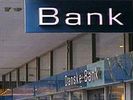
Ambitious EWC project in a Danish bank
This agreement goes at one point far beyond the status quo of the EWC Directive: The rights of information shall serve namely to conclude group-wide agreements comparable to the examples Suez or Schneider Electric (see report in EWC News 2/2007). The new EWC agreement replaces the previous agreement from 2005. To further strengthen cooperation in the EWC an EU-funded project for Danske Bank was launched. From 2 to 4 December 2007, the first workshop was held in Dublin.
After months of conflict-loaded negotiations, a new EWC agreement for Generali was signed on 18th December 2007 at its headquarters in Trieste. The role of the trade unions was particularly controversial, since they had organized a pan-European protest day in October 2006 together with the EWC against plans of the Italian insurance group to cut thousands of jobs. The hereby triggered pressure was not without effect: central management has committed itself in November 2006 to consult the employee representatives of all European countries early before restructuring (see report in EWC News 1/2007).
The now signed EWC agreement gives a new, improved basis to the European works council founded in 1997. It is based both on the new social charter of the group as well as the Italian implementation of the EU Directive on information and consultation. Provided are two annual plenary meetings with all 37 EWC members, a steering committee composed of seven members is running the daily business. However, the quality of the participation rights is not sufficient to match the levels of the Italian bank UniCredit, which had formed an EWC in January 2007 following the take-over of the German group HypoVereinsbank (see report in the EWC News 1/2007). Earlier, the unions opposed the merger of the German daughters Volksfürsorge and AachenMünchner insurance. This would eliminate the headquarters of Volksfürsorge in Hamburg and 500 jobs.
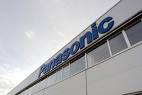
A new EWC agreement for the Japanese electronics company Panasonic was signed in Paris on 8th February 2008 - it is subject to UK law. The "Panasonic European Congress" (PEC), the official name of the 1995 founded EWC, meets once a year chaired by the employer, it consists of 27 employee representatives from twelve countries. The new agreement extends the session by an additional meeting day. From now on all documents are translated into all relevant languages. A three-member Employee Representative Committee (ERC = presidium) meets four times a year. By contrast, a claim to training and to form internal working groups (on topics such as working conditions and similar) could not be reached. The negotiations were accompanied by Prof Dr Ulrich Zachert of the University of Hamburg, who also acts as a legal adviser of the training and consultancy network "euro-workscouncil.net". One of Europe's first legal proceedings in an EWC matter took place in 1998 at Panasonic in the face of a plant closure in Longwy (France) and the then following relocation to Peine (Germany). The employee side then lost the trial in the second instance for formal reasons. To avoid such situations, every EWC should provide in its standing orders rules of decision-making and assigning of authority.
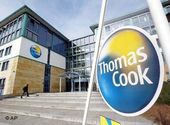
On 6th March 2008 a new agreement for the tourism group Thomas Cook was signed in Oberursel (Germany). The negotiations had become necessary due to the merger with the British company My Travel (see report in EWC News 2/2007). A new election of the EWC delegates will be held only in 2010, the two existing European works councils meet together until then. The new agreement provides for two annual meetings with a duration of three days. The EWC elects a three-member executive committee which has a right of access to all European branches. EWC meetings are attended by a full-time trade union officer from Germany and the UK in an advisory capacity, additional experts may be called in accordance with German practice.
|

|
5.
Employers hinder EWC establishment
|
|
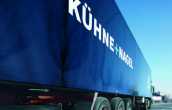
Since 1996, workers' representatives in the forwarding group Kühne + Nagel tried in vain to set up a European works council. They failed because of the aversion of the major shareholder and company founder against any form of employee participation, that appeard as early as 1976, when the German Co-Determination Act was passed: at that time to prevent the establishment of a supervisory board with workers' directors, he moved the company headquarters unceremoniously from Germany to Switzerland. This was also very favorable to avoid a European works council, as the courts had to deal with the responsibility within the EU for years, until in 2004 the European court of justice in Luxembourg (ECJ) finally declared the German subsidiary of Kühne + Nagel responsible.
In the European Transport Workers' Federation (ETF), the case of Kühne + Nagel is now treated with highest priority. On 7th December 2007, a meeting took place in Brussels involving the consultancy network "euro-workscouncil.net" on how to proceed.
On 6th December 2007, the regional Labour Court of Baden-Württemberg rejected the claim of the Stilke station bookshops' works council to establish an European works council – for formal reasons. A voluntary agreement from 1996 stands contrary, which provides only for a written procedure on information and consultation. The establishment of an EWC is therein excluded. The company Stilke is part of the Valora group, based in Switzerland, which is in continuous conflict with its employee representatives. The following documents are only available in German: The decision of the German labour court judges is rather unusual in the European comparison. In a comparable case, a voluntary EWC agreement of 1995 was suspended by a French court in October 2006, because only one single trade union (the CGT) had sued it (see report in EWC News 1/2007). France's highest appeals court confirmed that decision quite recently on 8th March 2008.
|
 Stilke
works council will continue to be without EWC
Stilke
works council will continue to be without EWC|
On 28th November 2007 the employee representatives of the European works council of French retail group Galeries Lafayette called on central management to convene an extraordinary EWC meeting. Previously relocations from Portugal to Poland had become known, without any consultation of the EWC had occurred. The group operates department stores in France and Germany as well as financial services in eight countries. The EWC was formed in February 2005 under French law.
26
employee representatives from twelve countries met in Warwick, UK from
28th to 30th November 2007 for the annual meeting of the
Holcim Euro Forum. Since the acquisition of Aggregate Industries, the
UK
with 6,000 employees is the largest country in the Holcim
group. For the first time delegates from Romania and Bulgaria
attended no longer as observers but as full members. The
employee
representatives started a project with support of
the Institute for Industrial Relations in Amsterdam to
compare wages and working conditions in Holcim factories. The
Holcim Euro Forum, so the official name of the EWC, had been
established in 1996 according to Belgian law. The group has its seat in
Switzerland.
Digression: participation rights of employees in Switzerland
The trade union Unia recently compared the participation rights of employees in Switzerland with the EU standards. The documents are available only in German and can be download here:
In
a public letter the EWC of the IT service provider Atos Origin
turned to central management in Paris on 17th January 2008 to
protest
against the violation of collective bargaining and labour law standards
and the
dismissal of employee representatives in Belgium. In June 2007, after
long and arduous negotiations and shortly before the final expiration
of the statutory three-year period, an EWC
has been established at Atos Origin (see report in
EWC News 2/2007).
Guarantee fund for restructuring requested
After the acquisition of the Canadian aluminum producer Alcan by the Anglo-Australian mining group Rio Tinto, the central management agreed to integrate the European operations of Rio Tinto into the EWC of Alcan. Rio Tinto had not yet established a transnational employee representation. The Alcan agreement was concluded in March 2006 under French law.
General Motors close to conclusion of a framework agreement? For more than a year the next Astra generation is being negotiated between the European Employee Forum of General Motors and the central management. On 13th March 2008 at a meeting in Frankfort on the Main, the workers' representatives rejected new plans of the group (productivity improvements, outsourcing) generally. Previously a pan-European framework agreement should be signed, providing for minimum standards in the case of outsourcing and a waiver of plant closures. Such a negotiation mandate is not provided in the EWC Directive, it is based on a General Motors' European solidarity pledge from December 2005. |
 IT
service provider violates Belgian law
IT
service provider violates Belgian law

|
On 9th October 2007, negotiations on an EWC agreement were finalized at the headquarters of the Schaeffler group in Herzogenaurach (Bavaria). The employee representatives from ten countries, during the 15-month-long negotiations, dealt not only with the text of the agreement, but had already begun in anticipation of the new EWC with its substantive work. In the special negotiating body (SNB) they exchanged experiences on flexible working hours and job security. The EWC will be constituted by June 2008 under German law. The following texts are available only in German:
On 30th January 2008, an EWC agreement for Crédit Agricole group was signed in Paris. This is one of the last major French banks, which has so far not yet founded an employee representation at the European level.
The agreement reveals a distinct French handwriting: it is a mixed body. The employer side consists of at least eight delegates, including the president of the bank as chairman of the EWC. Employee representatives come from 22 countries and are supported by a full-time trade union officer of the European federation of service sector trade unions (UNI). They meet once a year with the employer and can ask for a second plenary session. The nine members of the steering committee, including the secretary of the EWC, meet once a year with the employer and twice a year internally as well as at current events. All meetings will be held in Paris.
Although all costs for the meetings are paid directly by the employer, the EWC gets its own budget of € 60,000 annually. In addition to the meetings and to time-off in their countries of origin all EWC members get 30, the members of the steering committee 60 and the secretary 100 hours per year for personal disposition. Typical for France is also a very large funding of experts.
On 13th February 2008, an EWC agreement was signed for Nalco. The U.S. group is working in water treatment and chemical processes for the industry. The special feature of the agreement: at the end of each quarter, there is an EWC meeting with all the delegates from 19 countries at the headquarters of the European management in Leiden (Netherlands), in which the management will provide a report on the financial situation. In addition, special meetings are possible in special cases. Each EWC member receives a personal time-off allocation of 40 hours, the secretary of 120 hours and the five other members of the steering committee of 60 hours per year. Attendance at meetings will not credited against this.
The texts of numerous EWC agreements are available on a download page.
|
|
International framework agreements in the service sector
The French food group Danone was already in the 80s one of the pioneers in signing international framework agreements with unions. Nevertheless, fundamental labour rights are not granted anywhere, such as in the U.S. The 300 employees of the yoghurt plant in Minster (Ohio) were successful only on 6th December 2007 to enforce their right to union representation after the management had previously denied this. The success in the U.S. was made possible by support of the International Union of Food Workers (IUF) in Geneva, who had recently in June 2007 concluded an agreement on anti-discrimination with Danone (see report in EWC News 4/2007).
On 20th February 2008 a Social Charter was signed at the Paris Roissy airport between the EWC and the central management of Air France KLM and thus extended an agreement for Air France from the year 2001 to the new group. After the takeover of the Dutch airline KLM by Air France, the two European works councils had merged in February 2006. The steering committee of the EWC will monitor the implementation of the charter, which formally applies only within the EU, but is worldwide regarded as a reference in the group. |

 Yoghurt
factory in the U.S. gets employee representation
Yoghurt
factory in the U.S. gets employee representation
 Air
France KLM with new Social Charter
Air
France KLM with new Social Charter |
9. EWC research
|
|
Study on consulting services for works councils shows large national differences
Of particular interest for European works councils is the chapter 5 as it compares consulting services for works councils on an international scale. The EU Directives on collective redundancies or on the information and consultation at national level stipulate – in contrast to the EWC Directive – no minimum provisions on the use of consultants. Everything here depends on national traditions. Thus, for example, the use of external experts is most widespread in France and virtually nonexistent in the United Kingdom. Germany is in the middle, but has a backlog. The study points to the legal framework for some countries:
In Germany, the legal basis is sometimes disputed, as a judgment of the Regional Labour Court in Cologne in October 2006 shows, that exempts the employer from reimbursement. Consulting for European works councils
The EWC Directive states in the subsidiary requirements the claim to call in an expert, what is most strongly used in French companies. The smallest is the expert support in Anglo-Saxon companies. Only 60% of all EWC agreements provide for the presence of experts in all EWC meetings, in some cases, the employer is not obliged to assume the costs.
For this reason the advisory mandate is often taken by full-time trade union officers free of charge. Here can be spoken of a hidden subsidization of the employer by membership fees of the unions. The present EWC Directive shows an unsharpness in the distinction between union officers and experts, that is why the European Trade Union Confederation is arguing for an independent right of unions to participate in EWC meetings in addition to assume the costs for experts.
On 28th January 2008, the University of Linz presented the final report of a research project, which had examined in cooperation with the Austrian Trade Union Confederation (ÖGB) success factors, barriers and challenges for European works councils. Case studies highlight the EWC work in Austria Tabak, Semperit, MAN and other companies. The study defines corner points on the way to an active and successful European works council and identifies problems such as the unsatisfactory staffing capacity of the unions for EWC support. The following documents are only available in German: In previous editions of EWC News we had already presented results of the research project. The researchers have classified the role of the central management by type: |

|
Under the umbrella of Nordic IN 22 trade unions from the industries metal, energy, chemistry, paper and textile from Sweden, Denmark, Finland, Norway and Iceland have joined forces in order to strengthen its influence in Europe. The website provides also latest news on industrial relations and European works councils, partly in English. European works councils in small EU countries
French EWC with its own bulletin
Regional networking of trade unions Regional unions of Lower Saxony, Andalusia, Greater Poland and Normandy connect with each other with this EU-funded project. Information about scheduled workshops and topics to be dealt with in the project, are available on the website. We have arranged numerous further interesting links in a link collection.
|
 Nordic trade unions
inform about EWC topics
Nordic trade unions
inform about EWC topics

|
11. New
publications
|
|
Rules
for financial investors
UNI Global Union Private Equity. Why this matters to trade unions Nyon 2007, 44 pages
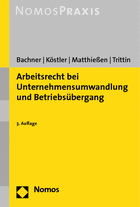
In February 2008, the third edition of a guide for works councils, who are confronted with various forms of restructuring, has been published. Shown are the legal consequences of business changes to the works council, the participation in the supervisory board, the validity of collective agreements, the individual employment contract as well as company pension schemes. Newly inserted are both the EU Merger Directive and the SE legislation. The book is only available in German. Michael Bachner/Roland Köstler/Volker Matthießen/Wolfgang Trittin Arbeitsrecht bei Unternehmensumwandlung und Betriebsübergang Baden-Baden 2008, 3. edition, 499 pages, ISBN 978-3-8329-2592-5, € 58,-
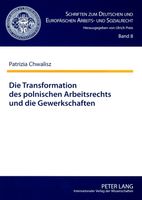
At the end of 2007, this dissertation was published, dealing with the transformation of Polish labour law in the years after 1989. An important aspect is the role of trade unions, who had initially claimed a monopoly in representing interests in the workplace (similar to the UK). Only the transposition of the EU Directive on information and consultation into Polish legislation led to the establishment of works councils in Polish companies starting from 2007. The prehistory of recent developments is shown by the author as well as the implementation of the EWC Directive and the consequences for the Polish industrial relations. The book is only available in German.
Patrizia Chwalisz Die Transformation des polnischen Arbeitsrechts und die Gewerkschaften Frankfurt am Main 2007, 248 pages, ISBN 978-3-631-56518-6, € 51,50
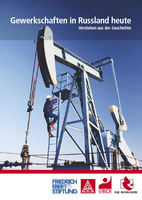
This booklet having been published in January 2008 examines the history of the Russian trade union movement after 1992 as well as the current situation in the metal industry and the chemical industry. It describes exemplarily the regular exchange of experience between the German and Russian workers' representatives in the Henkel group. DGB-Bildungswerk and Others Gewerkschaften in Rußland heute Düsseldorf 2008, 55 pages, € 3,50
In May 2006 the European Federation of Public Service Unions (EPSU) presented a study on the Russian Gazprom group, one of the largest employers in Europe. |

|
12. Training and consultancy
network "euro-workscouncil.net":
Examples of our work
|
|
European Forum of Roche starts new term of office
A major point of discussion was the ongoing revision of the EWC Directive, which could potentially lead to an adjustment of the EWC agreement with Roche. This provides for one annual meeting with the central management, a coordinating committee meets twice a year. As a voluntary agreement according to article 13 of the EWC Directive it enjoys continuance protection until now; it is subject neither to the Swiss nor the law of a EU country. Positive feature is the inclusion of the two divisions pharmaceuticals and diagnostics; each subsidiary with more than 150 employees appoints at least one delegate per country to the EWC.
Restructuring in the energy industry in Western and Eastern Europe
Completed projects: Reports now available
Recent articles in professional journals
On the main topic "Trade unions on the rise?" in the magazine spw in December 2007, Kathleen Kollewe is involved with an article titled "What is Good Work?". Labour relations in Sweden are being illuminated in a country report by Dr. Werner Altmeyer and Olle Hammarström in the journal der betriebsrat in January 2008 under the title "Union representatives instead of works council". Also in January 2008, Bernhard Stelzl reported in the magazine Mitbestimmung about the WSI fall convention "WSI to poverty, wealth and welfare state" and Dr. Werner Altmeyer explained the recent court ruling on the preliminary stopped merger of Gaz de France with Suez ("Supervisory board must consider EWC rights", see also point 2 above). All texts are available only in German:
More publications can be found on our publications page.
|


|
13.
Current training schedule
|
|
Registrations are possible for the following seminars and workshops co-organized by us:
Works council activity in Europe – the European works council (EWC)
Europe for trade union officers of IG Metall Institutions – Fields of politics – European works councils 16 – 18-04-2008 in Bad Orb 13 – 15-10-2008 in Bad Orb
In-house events You find an overview of the subjects of in-house events here: → Topics for in-house training → Topics for in-house lectures
|
|
14. Imprint
|
EWC
News is published by: Training
and consultancy network "euro-betriebsrat.de" GbR Von-der-Tann-Straße
4, D-20259 Hamburg www.euro-workscouncil.net (English) www.euro-ce.org
(French) Authors
collaborating on this issue: Werner Altmeyer,
Carmen Bauer, Kathleen
Kollewe, Bernhard Stelzl, Reingard Zimmer Distributor
of the German
version: 10,073 readers Distributor of
the English version: 1,150 readers Distributor of
the French version: 822 readers Newsletter
archive: www.ewc-news.com
We
are always pleased to
receive comments and suggestions in relation to this newsletter as well
as reports on your EWC activities. Please write us at: info@euro-workscouncil.net
www.euro-betriebsrat.de (German)