 |
 Welcome to issue no. 2 / 2008 of EWC News. 13th July 2008
|

|
The training and consultancy network
"euro-workscouncil.net"
EWC
News appears four times a year.
You can find past issues in the newsletter archives.
|


|
1.
Will the European
Parliament touch up?
|
|
First outline of the new EWC Directive disappointing
The European Commission presented its draft text for the revision of the EWC Directive on July 2nd, 2008 to the public. Unlike expected before the draft remains in important points behind trade unions’ demands. It shall be adopted before the end of this year. The hopes focus now on the European Parliament which had expressively demanded an improvement in May 2007 (see report in EWC News 2/2007). Meanwhile the employers' federations run a hard lobby campaign which is particularly turned against the trade union influence on European works councils. Retrospect: Play on time declined
When the European employers' confederation BusinessEurope declined this in exploratory talks, the ETUC let burst the not yet started negotiations on April 11th, 2008 and asked the European Commission to present immediately a text of a bill.
On April 30th, 2008, the European Commission reacted with the request to the social partners they still may come anyway to the negotiating table. After that the ETUC justified again its rejection in a letter to the president of the European Commission, Barroso. Lobby campaign of the trade unions
At a meeting on June 9th and 10th, 2008 the ETUC assembled about 250 members of European works councils and trade union officers in Brussels to discuss the current situation with representatives from the politics. A few days later, on June 18th, 2008 the French prime minister François Fillon particularly declared in favour of a strengthening of the European works councils before the National Assembly in Paris. The “revival of a social Europe" is one of the keywords of the French EU presidency in the second half of the year 2008.
Symposium on the new EWC directive: what is going to happen?
The symposium is carried out in German. Interested parties in other languages please ask us for the purpose of individual arrangements.
Offer for trade unions
We carry out similar events on behalf of regional and local trade unions (see for example report in EWC News 2/2007), an EWC workshop of several days also is in preparation for the ver.di federal office. The costs arrangement is in accordance of § 37, para. 6, of the (German) Works Constitution Act. Furthermore for such events EU funds can be applied for (see item 8 below).
|


|
2.
Developments in Middle
and Eastern Europe
|
|
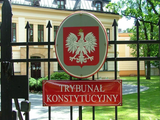
On July 1st, 2008 the Polish constitutional court granted a complaint of the Polish employers' federation and declared the works council law, which was passed in April 2006 to be unconstitutional. Within twelve months the legislator must make a new regulation. The law had become effective after intense political discussions and with delay at that time. It transposes an EU Directive of the year 2002 into Polish law, which obligatorily stipulates to inform and consult the workforce in social and economic issues in companies with more than 50 employees. There hadn't been any works councils in Poland before yet and the representation of the staff was an exclusive task of the trade unions -- provided that they had members in the company (see report in EWC News 2/2006).
The court declared the electoral procedure, which gives a priority to the trade unions to nominate candidates for the works councils, as incompatible with the negative freedom to form a coalition. It discriminates employees who don't (want to) belong to any trade union. If the verdict should find an echo in other countries, it could for example shake the foundationes of the industrial relations in the UK or France. It virtually means a turning to the German system where the works council is de jure completely independent from the trade unions.
Works councils secure rights of information
Another judgement annoys in contrast the Polish employers. The works council of FSO in Warsaw, once the centre of the Polish motor industry, was anxious about the high number of temporary workers and wanted more exact information about the full costs of this sort of employment. When the employer refused this, it went to court and achieved a success. The company must disclose all figures now. The verdict is regarded as a precedent for all works councils in Poland and set about another twenty legal proceedings into motion in the meantime.
From May 14th to 16th, 2008 the Otto Brenner foundation (OBS) held a conference on trade union developments in Middle and Eastern Europe in Kranjska Gora (Slovenia). The OBS is the science foundation of IG Metall and attaches special importance to the adjustment between East and West. Presentations and speeches of the meeting can be downloaded from the Internet as pdf-files as well as pictures and sound. The conference delegates also voiced in favour of a speedy improvement of the EWC Directive.
Reports and studies on the situation of the trade unions
An interim report of the trade union development and the labour relations after the EU Eastern enlargement was presented by Dr Heribert Kohl at the meeting:
Have the trade unions of the new EU member states from Middle and Eastern Europe arrived in Brussels by now? This was subject of a research project in the year 2007:
We have arranged on a special page answers to the question which meaning the EU Eastern enlargement has for European works councils.
|

|
3. EWC
answers to restructurings
|
|
The French Belgian bank Dexia ("Short term has no future") is regarded as a classic example for a social partnership company in this sector. An agreement which assures the European works council of minimum standards at the sale of business activities was signed in Brussels on December 19th, 2007. This is valid both for the time of the information and consultation as well as for the modalities of the process of sales. All potential buyers are asked for a written information, whether they keep the social standard of Dexia and want to guarantee the previous status of the employees after the take-over. Central management of Dexia will make this a criterion for the choice of the buyer.
The board of directors decided on the transformation into a European Company (SE) on July 3rd, 2008. Negotiations about a participation agreement shall start in September 2008.
Agreement in the mineral oil sector
An Europe-wide framework agreement on the production of the new Astra and Zafira models was concluded between EWC and central management on April 29th, 2008 in Rüsselsheim (see photo). This agreement is not only a milestone for General Motors but also a political signal of first rank for the development of all European works councils into a full-functional committee of workers’ representation. The framework agreement provides the following points:
The framework agreement had to be won hard and has a past history:
As a reaction to this attempt to “divide and rule” all employee representations concluded in December 2005 an "European solidarity promise" with the aim to conduct negotiations on the future of locations exclusively at European and not at a local level. Thus they authorized the European works council to perform their participation and negotiation rights although this is till now not foreseen by the legislator at all. In order to put this on stable grounds a scientific project company was started and financing by the EU was applied for (see report in the EWC News 1/2006).
Workers' representatives of the automobile manufacturer Ford from Germany, France and Belgium came together in Brussels on June 3rd, 2008 to prevent the threatening shutdown of the production centre for automatic transmissions in Blanquefort near Bordeaux. They want to outline an agreement at European level and start negotiations with central management about this. Plant shutdowns then would also be no longer a national affair but an European topic at Ford. |



|
4.
Improved EWC agreements
|
|
After partial merger: excellent EWC regulations negotiated
In future 35 workers' representatives belong to the EWC, which meets under the chairmanship of the employer, amongst this 17 from France, five from the UK, three from Germany and two each from Italy and Spain. The high French delegate number was necessary to take all trade unions adequately into account. The agreement provides two annual EWC plenary meetings in addition there are for the first time division meetings: twice annual for the areas of defence, aerospace and transport security.
The steering committee consists of twelve members (thereof six from France) and meets every two months. The EWC secretary gets 350 hours time-off per annum, members of the steering committee 150 hours and the other EWC members 100 hours. The EWC is supported by the consultancy firm of the French group works council and can engage an additional international expert up to the annual limit of 50,000 €. The EWC in addition gets an annual budget of 16,500 € for other costs in which the costs for meetings, journeys and interpreters aren't credited to this.
Precise information rights
The new agreement provides for clarity at an important point, which leads to quarrel with the employer in many European works councils again and again. When does an issue have a transnational character? The EWC of Thales is involved if more than 150 redundancies are carried out in two countries or if a restructuring measure concerns more than 500 employees. The EWC also has to be involved in case of fundamental structure changes of the company in only one country.
It required a legal altercation to induce the central management of the French conglomerate Bouygues to renegotiate the agreement from the year 1995 (see report in EWC News 1/2007). It was signed in Paris on February 19th, 2008. According to that the European committee for social dialog is changed into a full EWC, which also contains Switzerland besides the EU. Bouygues is active in the construction and property sector, operates a telephone company, has shares in the formerly state television channel TF1 and in the engeneering company Alstom. The EWC consists of employers’ and workers' representatives, which is typical for EWC agreements based on French model. The employees' side sends 12 members from France and 12 members from other countries as well as two trade union delegates, who must be employees of the group. The French delegates aren't elected by the group works council but appointed by the trade unions in which the CGT-FO forms the majority with seven mandates. Countries with which the EU is conducting accession negotiation (at present these are Croatia and Turkey) send observers into the EWC.
The employees' side elects a speaker ("secretary") and four deputies, who together form the "office" and get 220 hours each time-off per annum for this mandate. Together with the CEO of Bouygues, who also performs the EWC chairmanship, they form the select committee. In urgent cases the committee meets within 72 hours. The employer bears all costs for meetings, means for work and experts and provides in addition the EWC with an own annual budget of 14,000 €. There is an entitlement of four days training during a four-year period of office.
Threat with lawsuit leads to improved EWC regulations
The agreement still leaves Switzerland aside but reveals however an observer status in the EWC to all countries with which the EU conducts accession negotiations. The select committee was increased to six members to allocate an additional seat to Eastern Europe. All six must come from different countries. The number of annual meetings was increased from two to four. The information and consultation of the EWC in exceptional circumstances is in future carried out at the same time with the national works councils of the countries concerned.
At a meeting in Vienna a new version of the EWC agreement was signed by Siemens on May 29th, 2008. The previous agreement had stopped on the level of 1995 when the "Siemens Europe Committee" (SEC) had been established on a voluntary basis.
The most important innovations: the steering committee is enlarged from four to five members, the mandates are in future bound to certain regions, namely the Northwest, the Southwest and Eastern Europe. In addition to the annual plenary meetings so-called "cluster meetings" where the SEC members of the respective region meet the management take place once per year. These new regional committees are informed and consulted in matters, which concern their respective countries. This actually means doubling the meeting frequency, because before the electrical company didn't go beyond the legal minimum requirement of one annual meeting. |

 Some
passages of the valid EWC agreement of the French tyre manufacturer
Michelin were modified in an EWC plenary session on April 2nd, 2008 at
the group seat in Clermont-Ferrand. A complete new version shall
however be carried out only when the revision of the EWC Directive is
completed in Brussels. Starting point for the renegotiation was a
threatening lawsuit, which could be avoided in April 2007 in the last
minute (see
Some
passages of the valid EWC agreement of the French tyre manufacturer
Michelin were modified in an EWC plenary session on April 2nd, 2008 at
the group seat in Clermont-Ferrand. A complete new version shall
however be carried out only when the revision of the EWC Directive is
completed in Brussels. Starting point for the renegotiation was a
threatening lawsuit, which could be avoided in April 2007 in the last
minute (see 
|
5.
New formation of European works councils
|
|
A Belgian textile group founds EWC
An EWC agreement was signed according to British law for the second greatest logistics company of the world on March 14th, 2008. Ceva Logistics with seat nearby the Amsterdam airport resulted from the merger of the Dutch TNT Logistics with the U.S. company Eagle Global Logistics (EGL) in August 2007. Both belong to the U.S. finance investor Apollo Management. 30 members from 16 countries belong to the new EWC, which meets once to twice every year. Further meetings are possible in extraordinary cases. The steering committee consists of four members. The agreement provides training measures as well as the support by experts.
Call centre with a "long line" The texts of numerous EWC agreements are available on a download page.
|


|
6. Mixed
interim results of the European Company
|
|
Since June 27th, 2008 Knauf Interfer with seat in Essen (formerly Stinnes Stahl) has signed as a European Company (SE). Before a SE participation agreement had been signed on April 8th, 2008. The steel trade group has branch offices in Austria, Poland, Hungary and the Netherlands.
The supervisory board consists of three members, amongst this is one workers' representative. A SE works council is founded on the basis of the legal minimum requirements if the staff number exceeds 250 outside Germany. Until then the German group works council takes over the tasks of the SE works council, all countries with more than 50 employees can send guests to the group works council meetings. Growing into the equal participation of workers’ directors in the supervisory board is particularly excluded in the agreement.
A SE participation agreement was signed in the Cologne raw material and recycling company Interseroh on April 15th, 2008. The negotiations had started in January 2008 (see report in EWC News 4/2007). Since there is no participation in the present German supervisory board, the future SE supervisory board also remains without employee participation. The SE works council will consist of nine members although before 17 members had belonged to the special negotiation committee (SNB). The SE works council will be the first transnational committee of workers’ representation at Interseroh, there hadn't been any European works council before yet. The entry of the Interseroh SE in the register of companies is planned for autumn 2008.
Also Klöckner without participation
European Company as threatening potential?
The SE works council of the French reinsurer Scor was invited at short notice for a special session on July 3rd, 2008. Central management announced the reduction of 200 jobs, what means one eighth of the staff. The staff cuts are apparently part of the transformation into a European Company (SE) in connection with merger and restructuring processes in Germany and Switzerland. Scor had concluded a SE agreement as the first company according to French law in May 2007 (see report in EWC News 2/2007). The SE works council wants to engage a consultancy firm to analyse the financial data and work out a sound alternative concept for the plans of central management. For the workers' representatives the complete legal form of the SE is politically put to test. |

 Job
reduction for the first time a topic for SE works council
Job
reduction for the first time a topic for SE works council|
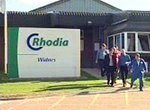
On March 25th, 2008 a worldwide framework agreement was signed for the French chemical group Rhodia in Paris, which is more precise in its wording than the old agreement of 2005 (see report in EWC News 1/2005). New is the formation of an international working group on safety at work including an external expert. To check the compliance with the agreement locally, a commission visits a certain country every year. In October 2007 China stood on the programme, Brazil will follow soon.
Europcar commits itself to the compliance with social fundamental rights
A worldwide framework agreement was signed between the European works council and the central management of Vallourec on April 9th, 2008. The company produces pipes for the oil and gas industry and has obliged itself with the agreement to respect international labour standards in all branch offices and in its choice of suppliers. The EWC receives a report on it every year.
Pioneering agreement in Facility Management
An agreement on health and safety at work was signed for the steel group ArcelorMittal in Luxembourg on June 3rd, 2008. It provides the formation of an international committee on safety at work consisting of three employers and nine trade union representatives, which can visit factories in the whole world to improve safety regulations. The agreement had already been announced at a meeting of the workers' representatives of ArcelorMittal in Montréal (Canada) in September 2007 (see report in EWC News 4/2007).
The Italian cement manufacturer Italcementi signed an international framework agreement on June 17th, 2008 with the Building and Woodworkers' International (BWI) and its European works council at the group seat in Bergamo. The agreement doesn't only apply to all branch offices worldwide but also to contractors and suppliers. It provides for the formation of a reference group under participation of the EWC, which supervises the compliance with the agreement at least once a year. Italcementi also had improved its EWC agreement in July 2007 (see report in EWC News 2/2007).
Shortly before the merger with the utility group Suez (see report in EWC News 1/2008) central management of the partly state owned French gas provider Gaz de France obliged itself to recognize worldwide basic social rights on July 2nd, 2008. Foreseen is also the formation of a monitoring group under participation of the European Mining, Chemistry and Energy Federation EMCEF. |





|
Training activities and restructuring projects
Depending on the focus of the programme the European Commission promotes 80 to 90% of the total costs of the project, which makes up to about 150,000 € per year. Projects with a larger volume are more likely to be funded. Important: partners must be involved from at least two EU member states and projects including the accession countries from Middle and Eastern Europe enjoy priority. The most important areas for such a support are:
Practically all topics, which European works councils are dealing with, are eligible. The applications can be made in spring and autumn of every year, the budget for this amounts to several million € and is provided every year. Examples of EU sponsored projects:
The training and consultancy network "euro-workscouncil.net" helps with the application for these funds and supports trade unions and works councils also with suggestions as regards to content.
|
|
9. EWC research
|
|
The European foundation for the improvement of living and working conditions with seat in Dublin presented a study on March 20th, 2008, which gives a brief summary of the current stand of EWC research. Not only figures on the current distribution of European works councils are displayed on 22 pages, but also portrayals on single topics:
The study is available only in English.
New paper on transnational company agreements
A group of experts had worked out a study on transnational company agreements on behalf of the European Commission in May 2006 (see report in EWC News 2/2006). To this topic the Directorate-General employment, social affairs and equal opportunities presented two new papers on July 2nd, 2008. The working document with the title "The role of transnational company agreements in the context of increasing international integration" is completed by a comprehensive evaluation of agreements.
|


|
European works council of Deutsche Bahn
More and more European works councils are represented with their own site on the Internet, e. g.:
Social responsibility in the sugar industry
The International Transportworkers Federation (ITF) has set up an own web site for the trade unions at A.P. Moller-Maersk, the world's biggest transport group based in Copenhagen and main activities in the container shipment and port logistics. Information about the worldwide working conditions, news, reports and documents can be downloaded there.
With the EU sponsored project ZAUBER ("future of industrial relations and labour in Europe"), the education association Arbeit & Leben in Osnabrück tries to activate the debate by means of workshops and events. Main emphases are the information and consultation of employees in multinational companies, the European wage policy and prospects for industrial relations in Middle and Eastern Europe.
We have arranged numerous further interesting links in a link collection.
|


 EU project on the
future of industrial relations
EU project on the
future of industrial relations|
11. New
publications
|
  English dictionary for works
councils English dictionary for works
councils
The DGB-Saar has presented now a dictionary German -- English too, in addition to a glossary German -- French (see report in EWC News 1/2007). It contains a special vocabulary which is of high using value particularly for works councils and trade unions and is rarely found in such a comprehensive form in general dictionaries. Jacques Bister/Marcel Mansfeld/Christine Parkin Vocabulary for trade union work German - English, English - German Saarbrücken 2008, 84 pages, € 10,70 Country comparison of workers' representation
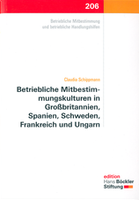
Claudia Schippmann Betriebliche Mitbestimmungskulturen in Großbritannien, Spanien, Schweden, Frankreich und Ungarn Düsseldorf 2008, 166 pages, ISBN 978-3-86593-086-6, € 18,- If you want more details you can revert to the thesis of Werner Altmeyer.
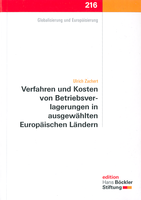
The Hans Böckler foundation published a report in July 2008, which it had ordered after the decision of Nokia for the shutdown of its plant for mobile telephones in Bochum (see report in EWC News 1/2008). Prof Dr Ulrich Zachert examined how time and cost-intensive such a closure would be in seven other EU countries and compares this with the legal and practical situation in Germany. The booklet also contains two country case studies about mass redundancies in Sweden and in the Netherlands. As a result the author suggests to expand the information and consultation rights of the European works councils to veto rights. Ulrich Zachert Verfahren und Kosten von Betriebsverlagerungen in ausgewählten europäischen Ländern Düsseldorf 2008, 70 pages, ISBN 978-3-86593-098-9, € 10,-
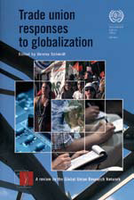
This book of Verena Schmidt from the employee office of the International Labour Organization (ILO) published in November 2007 bundles the work of trade union activists and scientists of the global trade union network GURN (Global Union Research Network). The book gives a valuable summary of trade union strategies in view of the globalisation. The authors inform extensively about the social partnership at a global level, global value-added chains, sweatshops and experiences from different countries (e.g. Brazil, Bulgaria, Caribbean, Colombia, India, Poland, UK, Turkey and South Africa).
Verena Schmidt (ed.) Trade Union Responses to Globalization A review by the Global Union Research Network Geneva 2007, 218 pages, ISBN 978-92-2-119860-4, € 20,- |
|
12. Training and consultancy
network "euro-workscouncil.net":
Examples of our work
|
|
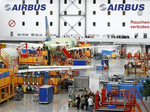
An intercultural communication at cross-border contacts of works councils holds a number of stumbling blocks, which can particularly impede a common strategy considerably at restructurings. At present a studies project on Airbus is conducted at the University of Hamburg under management of Prof Dr Ulrich Zachert, to which the training and consultancy network "euro-workscouncil.net" delivers support.
Bombardier: German participation laws in the international group
German Dutch meeting on participation
Requirements on an up-to-date company policy
The look at the European level also shall play a role. On this occasion Dr Werner Altmeyer from the training and consultancy network "euro-workscouncil.net" will give a report as keynote-speaker on networked, international works council work. Further contributions are expected from Ralf-Peter Hayen, head of department “workplace participation” in the DGB federal office, Prof Dr Thomas Blanke of Oldenburg University and Andrea Nahles, deputy party leader of the SPD. |
|
13.
Details of seminars planned
|
|
For the following seminars and workshops registrations are possible:
Works council activity in Europe, the Euro works council (EWC)
Europe for trade union officers of IG Metall Institutions -- Political fields -- European works councils 13 -- 15-10-2008 in Bad Orb → further information about this workshop
Hamburg conference for European works councils The new EWC directive: what is going to happen? 26-01-2009 in Hamburg → further information about this conference
Workshops of ver.di-federal office (further information follows soon)
In-house events Please find a survey of possible subjects of in-house events here: |
|
14. Imprint
|
EWC
News is published by: Training
and consultancy network "euro-betriebsrat.de" GbR Von-der-Tann-Straße
4, D-20259 Hamburg www.euro-workscouncil.net (English) www.euro-ce.org
(French) Authors
collaborating on this issue: Werner Altmeyer,
Carmen Bauer, Bernhard Stelzl,
Ulrich Zachert, Reingard Zimmer Distributor
of the German
version: 10,625 readers Distributor of
the English version: 1,253 readers Distributor of
the French version: 937 readers Newsletter
archive: www.ewc-news.com
We
are always pleased to
receive comments and suggestions in relation to this newsletter as well
as reports on your EWC activities. Please write us at: info@euro-workscouncil.net
www.euro-betriebsrat.de (German)