 |
 |
Download pdf file |  |
Newsletter archives |
 |
Dieser Newsletter auf Deutsch |  |
Cette newsletter en français |
1. Showdown in Dublin |
 |
|
US group refuses to pay EWC's legal costs
Supreme Court ruling on the leave to appeal
The central issue in dispute is the payment of legal fees for the legal proceedings, which have been ongoing through the courts since 2021. Whilst this issue is clearly addressed in the new EWC Directive (see report in EWC-News 2/2025), the 2009 Directive, which is still currently applicable, leaves some room for interpretation. Verizon takes the view that US companies in Europe would be unduly burdened if they were required to pay the works council’s (the defendant’s) lawyer. This would effectively give the employee representatives a “blank check” to drag the employer through the courts time and time again. Apparently, the management of the US group is unfamiliar with the situation in continental Europe, where the works council’s lawyers have, as a matter of principle, been paid for by the employer for many years without this leading to arbitrary waves of litigation. This applies in particular to the Netherlands (since 1950) and Germany (since 1952).
Unlike, for example, works councils in France, Verizon’s EWC does not have its own budget. If the employer were not to cover the legal costs, the rule of law in Ireland would not be guaranteed and the works council system would be dysfunctional. Ireland has no previous experience with works councils and the entire legal system is not prepared for them. Since May 2022, the European Commission has also been conducting infringement proceedings against Ireland on the grounds of inadequate transposition of the EWC Directive (see report in EWC-News 2/2022).
Could the issue be brought before the European Court of Justice?
To date, there have only been three countries where a European works council has taken a legal dispute all the way to the national courts of last instance: France, Spain and Austria. However, in none of these cases was the matter referred to the European Court of Justice. In January 2024, the UK Supreme Court declined to examine a European works council legal issue dating from before Brexit (see report in EWC-News 1/2024). Shortly afterwards, an out-of-court settlement was rapidly reached within the recruitment agency Adecco (see report in EWC-News 4/2024). Between 2001 and 2004, the European Court of Justice ruled three times on disputes arising in the run-up to the establishment of an EWC. The plaintiffs were German works councils; no EWC has yet made it to Luxembourg.
Of particular relevance to the case in Ireland is the landmark ruling by the Supreme Court in Vienna in August 2023, which was secured by the European works council of Mayr-Melnhof Packaging (see report in EWC-News 4/2023). Based on this ruling, the Vienna Labour and Social Court ruled in August 2024 that an EWC is entitled to reimbursement of all legal costs incurred in the course of labour law proceedings (see report in EWC-News 3/2024). The Austrian judgement has now been translated for the Irish judges and submitted to the proceedings, along with the general considerations from the "Fitting” legal commentary on the Works Constitution Act, the undisputed standard reference work for German employers, works councils and labour courts. There is nothing comparable in the English-speaking world.
Overview of court rulings on EWC law
Forthcoming event The Supreme Court’s ruling is expected within a few weeks. This should provide answers to a number of questions for all European works councils governed by Irish law. We will discuss the implications of the ruling in a video briefing to be held once the ruling has been pronounced.
|
 On 30 June and 1 July 2026, the Supreme Court hearing took place in Dublin regarding the appeal against the High Court’s decision of November 2025 in the case involving the US company Verizon Communications (see
2. Transposition of EU legislation |
|
|
Sweden wants to renegotiate the Pay Transparency Directive
The Swedish government, which voted against the directive in 2023, does not wish to implement it in its current form. On 26 March 2026, it called for renegotiation to simplify the regulations. For the European Commission, this is not an option. It could initiate infringement proceedings against Sweden, and the European Court of Justice could impose fines, as it did in March 2025 in relation to the “Whistleblower Directive” (see report in EWC-News 2/2025). Irrespective of this, every employee is able to invoke the directive before national courts since 7 June 2026. In Germany, a Pay Transparency Act has been in force since July 2017, which must be brought into line with the EU Directive. However, no draft legislation has yet been tabled. On 5 March 2026, the European Commission presented its strategy for gender equality up to 2030.
The contents of the Directive
Companies with 100 or more employees are required to implement various measures, such as reporting on gender pay gaps. The pay report must be submitted to the relevant authority. If there is a pay gap of more than 5% between the sexes, the employer must prove that this is justified. If the employer is unable to do so, the pay must be corrected within six months. A pay assessment must be carried out in consultation with the works council or the trade union representatives within the company. The reasons for pay disparity must be analysed and the pay gap eliminated.
Download the EU Pay Transparency Directive Overview of the state of transposition by country The legal situation in Germany Details of the transposition law in Poland Press release on the European Commission’s gender equality strategy  Artificial Intelligence (AI) Regulation to be watered down
The reason behind this is the so-called “Digital Omnibus”, a comprehensive overhaul of data and AI legislation at EU level. In February 2025, the European Commission had announced “Omnibus” packages aimed at simplifying legislation and removing “unnecessary regulations” for businesses (see report in EWC-News 1/2025). The original three “Omnibus” packages have since grown to ten. In this context, the Corporate Sustainability Due Diligence Directive was also recently watered down (see report in EWC-News 4/2025). However, in the view of the trade unions, the contents of the Digital Omnibus are not merely technical clarifications, but far-reaching changes that affect fundamental rights and often weaken them. Changes to the Machinery Regulation are subject of particular criticism. They would have direct consequences for health and safety at a time when AI technologies are increasingly being integrated into industrial machinery, automated systems and protective equipment used by workers in the workplace.
Overview of the amendments to the AI Regulation The European Parliament’s resolution Analysis from the perspective of the trade unions Criticism from the European Federation of Industrial Trade Unions Download the Machinery Regulation
Forthcoming event As AI becomes increasingly integrated into business processes, the demand for works councils to influence the development of these systems is growing. To this end, we are offering a number of seminar dates for local works council members.
New rules on the coordination of social security systems
At the heart of the regulation are entitlements to unemployment benefits, long-term care benefits and family benefits when moving to another country. Employees and self-employed persons who are posted abroad for a maximum of 24 months remain insured in the EU country where their employer is based or where they usually carry out their work. The new EU regulation also promotes cooperation between countries in the exchange of information to better detect fraud (e.g. through letterbox companies). In future, A1 certificates will no longer be required for short business trips (such as attending conferences, training courses or business meetings). The construction sector is exempt. The European Trade Union Confederation (ETUC) regularly publishes an up-to-date guide for mobile workers (see report in EWC-News 1/2023).
European Parliament press release The European Parliament’s resolution Factsheet on the revised regulation Statistical report on coordination to date |
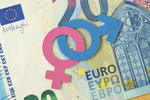 The deadline for transposing the Pay Transparency Directive into national law expired on 7 June 2026. However, the majority of countries are running behind schedule; only Italy, Lithuania, Malta and Slovakia have transposed it on time. The Directive has been in force since June 2023 and aims to promote equal pay for women and men for the same or equivalent work and to reduce the pay gap (see
  The AI Regulation has been in force since August 2024, positioning the EU as a global pioneer in regulation of AI (see
  On 7 July 2026, the European Parliament approved, by 511 votes in favour, 87 against and 61 abstentions, proposed changes designed to ensure that workers do not lose their social security protection when they move or work across borders within the single market. The next step is for the Council of Ministers to give its formal approval before the amendments are published in the Official Journal of the EU and come into force two years later (summer 2028). The EU Regulation on the coordination of social security systems has been in force since 2010. In addition to all EU countries, it also covers Norway, Iceland, Liechtenstein and Switzerland. Since Brexit, special coordination rules have applied to the United Kingdom.
3. Individual Country reports |
|
|
Significant increase in wages in Bulgaria
The average hourly wage in Bulgaria is €10.50, compared with €49.70 in Luxembourg and €34.50 in Germany. Wage growth in Bulgaria has been supported by policy measures, including a regulation introduced in 2024 stipulating that the minimum wage must be at least 50% of the country’s average wage – a requirement of the EU Minimum Wage Directive (see report in EWC-News 2/2022). According to the Bulgarian trade union confederation CITUB, income levels have now reached 68% of the EU average; nevertheless, a large proportion of the workforce lives below the subsistence level. Compared with other countries in Central and Eastern Europe, trade union membership in Bulgaria remains relatively high (see report in EWC-News 3/2023).
Currency switch in early 2026
Bulgaria adopted the € as its official currency on 1 January 2026; the country had already been a member of the Exchange Rate Mechanism II since July 2020 (see report in EWC-News 3/2020). At 3.1%, the Bulgarian economy is growing faster than in other EU countries, and the unemployment rate has reached a historic low of 3.5%. Only the Czech Republic, Poland and Malta have slightly lower unemployment rates.
Overview of minimum wages in Europe Change of government in Hungary
In terms of social policy, the new government plans to double child benefits, which have not been increased since 2008, provide childcare accessible to all, link pensions to inflation and wage growth, and allocate public funds to the construction of social housing. There are also plans to introduce a wealth tax of 1% on assets worth one billion forint (€2.8 million) or more.
Battery factories to be inspected
The government announced an audit of all electric vehicle battery factories, which Orbán had pushed to be located in Hungary with the aim of making it the world’s third-largest battery producer (see report in EWC-News 2/2023). A few months before the election, a scandal surrounding the Samsung plant in Göd, near Budapest – which has been in operation since 2017 – made headlines. For years, workers there were exposed to carcinogenic heavy-metal dust at levels up to 500 times the permissible limit. The Orbán government was aware of this but did not close the factory for economic reasons. Also controversial is the construction of a battery factory by CATL, the largest investment in Hungarian history. The Chinese company has been building its second European plant in Debrecen since 2023; its first plant is located in Arnstadt in Thuringia (see report in EWC-News 4/2025).
Report on Tisza’s election manifesto German Federal Government seeks to halt exodus from co-determination
The possibility of circumventing German co-determination rights by setting up so-called “shelf SEs” will be brought to an end. In the discussions on the introduction of a new EU-wide 28th corporate form (28th regime), the Federal Government is strongly advocating that the protection of co-determination must not be undermined.
In 2022, almost 2.5 million employees in 400 large companies were denied full-parity co-determination on the supervisory board (40% of all large companies). This often occurs through conversion to the legal form of a European Company (SE), which allows co-determination to be either frozen or avoided altogether. The Hans Böckler Foundation regularly publishes figures on this (see report in EWC-News 2/2024). This situation was exacerbated in May 2024 by a ruling of the European Court of Justice, according to which a “letterbox company” established without any employees (a so-called “shelf SE”) is not required to introduce co-determination even if it later employs several thousand workers. In such cases, there is neither an SE works council nor a European works council, nor is there any co-determination on the supervisory board (see report in EWC-News 2/2024).
This loophole in the law is to be closed. The previous government had already planned to do this; according to the coalition agreement of December 2021, it intended to put an end to the abusive circumvention of co-determination rights through SE conversions (see report in EWC-News 4/2021). Since March 2026, there has been a draft bill from the European Commission to introduce a new legal form, “EU Inc.” (the so-called “28th regime”). This has put further pressure on co-determination (see report in EWC-News 1/2026).
Implementation of the Supply Chain Directive
Another point in the government programme concerns the EU Supply Chain Directive, which is to be transposed in Germany directly from the watered-down version adopted by the European Parliament in November 2025 (see report in EWC-News 4/2025). The stricter German Due Diligence Act, which has been in force since January 2023 (see report in EWC-News 1/2023), will be repealed.
Download the coalition’s programme DGB factsheet on the 28th regime |
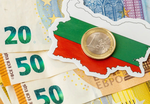 Bulgaria continues to be the poorest country in the European Union, with the lowest wages and the greatest income inequality. Since 1 January 2026, the monthly minimum wage has been €620, or €3.75 per hour (see
 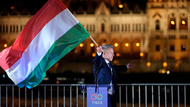 Hungary has a new Prime Minister since 9 May 2026: Péter Magyar succeeded Viktor Orbán, who had been in office for 16 years. His liberal-conservative party, “Respect and Freedom” (Tisza), secured a two-thirds majority in the parliamentary election on 12 April 2026. He aims to restore Hungary’s status as a constructive partner of the EU. The courts, law enforcement agencies and universities are to regain their independence, and press freedom is to be restored.
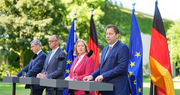 On 2 July 2026, the governing coalition of Christian Democrats and Social Democrats presented a 34-point programme for “Economic Recovery and Employment”. In addition to covering pensions, taxes, the labour market and the reduction of red tape, it also contains – largely unnoticed by the public – a clear commitment to German co-determination in companies. Point 21 reads as follows:
4. Recent court rulings |
|
|
Solidarity strikes remain permitted in Denmark
The company had invoked the free movement of persons within the European Single Market and felt disadvantaged by provisions in the collective bargaining agreement requiring a housing allowance of 25 kroner (€3.34) per hour to be paid to foreign workers. It argued that this put foreign companies at a disadvantage compared with Danish companies. The trade union argued that the allowance served to protect foreign workers from wage discrimination and to combat social dumping. However, the court stated that, in the case of a breach of freedom of movement of workers, solidarity strikes would be prohibited in Denmark. The European Court of Justice had ruled along these lines in December 2007 (see report in EWC-News 4/2007). In Germany, by contrast, solidarity strikes are always prohibited.
In Denmark, there is only one Labour Court (“Arbejdsretten”). Its court rulings are final and cannot be appealed. Before a case reaches the Labour Court, mediation takes place at the workplace with the involvement of trade unions and employer organisations.
Presentation of the ruling (from page 25 on) Overview of the functions of the Danish labour court Ryanair loses case before the German Federal Labour Court
Ryanair’s argument was that there was no independent business unit of Malta Air in Berlin and that all HR decisions were taken in Malta and Ireland. A German works council would therefore have no German employer as a negotiating partner, and the Works Constitution Act would not apply. Germany’s highest Labour Court did not, however, endorse this viewpoint. The court decision has implications that extend far beyond the specific case. Had the court ruled otherwise, any German company could have relocated its human resources department abroad to avoid having works councils in Germany.
As early as 2018, the German legislator had clarified in the Works Constitution Act – through the so-called “Lex Ryanair” – that flight crew also have the right to co-determination within the company. Although collective bargaining agreements have been in place at Malta Air since January 2020, a meeting to elect a works council in December 2022 was prohibited by the court. Ryanair pursued the case through all levels of the courts and, shortly before the Federal Labour Court’s ruling, decided to close its Berlin operations. The company had pursued a similar strategy in Denmark in July 2015, when it withdrew from the country following a defeat before the Labour Court (see report in EWC-News 3/2015).
Press release from the Federal Labour Court Press release from the ver.di trade union Interview with the lawyer representing the employees International law protects the right to strike
Established in 1919, the ILO is now a specialised agency of the UN, tasked with promoting social justice as well as human and labour rights. Its governing bodies include representatives of member states, employers and trade unions. Since 2012, the employers’ group has refused to recognise violations of the right to strike in individual ILO member states as breaches of Convention No. 87. It argued that freedom of association does not automatically entail the right to industrial action. In October 2025, hearings took place before the International Court of Justice. The trade unions and a large majority of governments described strikes as one of the essential means by which workers and their organisations can promote and defend their economic and social interests. Collective bargaining without the right to strike would amount to “collective begging”, as the Federal Constitutional Court in Germany had also argued in earlier court rulings.
Press report on the legal opinion Press release from the International Trade Union Confederation Full text of Convention No. 87 |
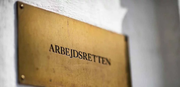 On 6 May 2026, the Labour Court in Copenhagen ruled on the legality of solidarity strikes aimed at securing a collective bargaining agreement for a foreign company. The solidarity strike had been initiated by the Danish trade union confederation FH in support of the construction workers’ union against the Lithuanian construction firm MB Steko Service. The company regarded the strike as unlawful and incompatible with EU law and sought to refer the matter to the European Court of Justice, but the Labour Court rejected this. It ruled entirely in favour of the trade union.
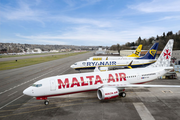 On 13 May 2026, the German Federal Labour Court ruled that a works council could be established for Malta Air at Berlin Airport for 320 cockpit and cabin crew members. Like Buzz in Poland, Malta Air is one of five airlines within the Ryanair Group that is repeatedly involved in legal disputes in other countries over social dumping and the rejection of works councils (see
 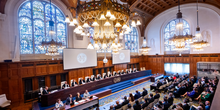 On 21 May 2026, the International Court of Justice in The Hague (photo) issued a legal opinion on the right to strike. At the request of the International Labour Organisation (ILO) in Geneva, it was asked to clarify whether Convention No. 87 on freedom of association, concluded in 1948, also encompasses the right to strike, which is not expressly mentioned in the text. In the judges’ opinion, both go hand in hand. The legal opinion is not binding, but is used by many states and courts as a basis for national law, including for the interpretation of freedom of association in Germany.
5. Europe-wide restructuring |
|
|
Protocol for the organisation of a consultation procedure
The EWC had 30 days to render its opinion, to which central management was required to respond before implementing the plan. Employee representatives from all affected countries (primarily Germany, France, the UK, Spain and Italy) were informed of the respective implications, but were only able to conclude their negotiations – such as finalising social plans – once the consultation process at European level had been completed. A period of two years has been set aside for implementation; during this phase, a progress review will be carried out at each ordinary meeting of the EWC. Nestlé’s EWC is a joint body which also includes management. It holds two meetings per year and operates under Belgian law. It also includes delegates from Switzerland and the United Kingdom.
With 271,000 employees in 185 countries, Nestlé is the world’s largest food manufacturer and Switzerland’s largest industrial company, known for products such as KitKat chocolate bars and Nespresso coffee. The group is headquartered in Vevey on Lake Geneva. In future, it is to be structured around four pillars: coffee, pet care, nutrition and health, and food and snacks. Nestlé is currently inviting bids from potential investors for its mineral water division, which employs 30,000 people worldwide; the sale of this division has been planned for some time.
Press report on the restructuring Reactions from the trade unions following the announcement of the restructuring plan Press release from the food industry trade unions´ federation dated May 2026 No site closures for US car manufacturer
On 21 May 2026, the group’s management in the US had presented a five-year strategic plan to tackle the challenges facing the industry. Whilst capacity in Europe will be reduced by 800,000 vehicles, there are to be no site closures. The plant in Poissy (near Paris) will not be closed, as previously announced, but will instead be converted – with an investment of €100 million – into a parts and specialist plant for 3D components and recycling. Through partnerships with Chinese manufacturers, the Spanish factories in Madrid and Zaragoza, as well as the plant in Rennes, France, will gain additional production capacity. Capacity utilisation is set to rise from 60 to 80% by 2030, with turnover expected to grow by 15%. Stellantis increased its deliveries in the first quarter of 2026 by 12% compared with the previous year, with Europe also making a positive contribution.
Stellantis was founded in January 2021 following the merger of the automotive groups Fiat Chrysler Automobiles (FCA) and PSA, comprising the Peugeot, Citroën, Opel, Fiat, Jeep and Chrysler brands. The three European works councils that existed at that time were merged in September 2024 (see report in EWC-News 4/2024). The new EWC operates under Dutch law and represents 124,000 staff. Its responsibilities extend far beyond the minimum requirements of the EU Directive.
|
 On 22 April 2026, an extraordinary meeting of the Nestlé European Council for Information and Consultation (the name of Nestlé’s EWC, established in 1996) was held in Lausanne. This marked the start of the Swiss food group’s information and consultation procedure regarding a comprehensive corporate restructuring, which was announced in October 2025 and involves the loss of 16,000 jobs worldwide. The EWC and central management had set out the arrangements for the information and consultation procedure in a protocol. This also included a list of all the business data to be submitted to the EWC.
6. Announced mergers and acquisitions |
|
|
Trade unions see mega-merger as a breach of trust
Employee representatives were neither informed nor consulted beforehand and only found out about the deal from the press, despite national co-determination rights and international agreements requiring them to be involved. For the IG Metall trade union, this is not a mere procedural error, but a deliberate disregard for co-determination. Employees in Germany fear that the takeover will lead to the complete break-up of the company. On 20 May 2026, the first protests took place outside Kone’s German headquarters in Hanover (photo), as well as in Düsseldorf and Frankfurt. On 17 June 2026, IG Metall succeeded in securing a procedural agreement containing clear commitments regarding job security and the further course of the restructuring measures.
TK Elevator has had a sound EWC agreement in place since June 2022 (see report in EWC-News 4/2022) and a global framework agreement with the trade unions has been in place since November 2020 (see report in EWC-News 1/2021). At Kone, there has been a “voluntary” EWC under Finnish law since 1995, with less favourable provisions. Should the acquisition be approved by the competition authorities and completed in mid-2027, the two European works councils will have to be merged.
Press report on the planned takeover Press release from the European Industrial Trade Union Confederation Report on the protests by IG Metall The contents of the procedural agreement Defence against a hostile takeover: Works council files criminal complaint
Commerzbank took over Dresdner Bank in 2009 and now employs 39,000 people; UniCredit, with 72,000 employees, is almost twice as large. To fend off the hostile takeover, Commerzbank intends to boost efficiency and profitability and cut 3,000 jobs. This was officially announced on 8 May 2026 and has been agreed with the works councils. Compulsory redundancies have been ruled out. Following a successful takeover, UniCredit intends to cut 7,000 jobs in Germany alone and is questioning Commerzbank's international network. A merger with UniCredit's German subsidiary HypoVereinsbank requires a 75% majority of voting rights at a shareholders’ meeting. At the supervisory board elections in April 2027, UniCredit could push through its own candidates and force significant restructuring measures – even without a complete takeover.
Press report on the takeover bid Assessment by the ver.di trade union
UniCredit has had a European works council since January 2007, which was initiated by the works councils in Germany and Austria following the acquisition of HypoVereinsbank and Bank Austria (see report in EWC-News 1/2007). It has concluded several transnational agreements with the central management (see report in EWC-News 4/2020). Since January 2019, there has also been a global framework agreement with the trade unions (see report in EWC-News 1/2019). |
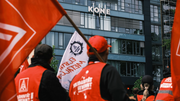 On 29 April 2026, it was announced without any prior notice that the Finnish lift manufacturer Kone would be taking over the German lift manufacturer TK Elevator. The family-owned company Kone will thereby double in size and become the global market leader in lifts and escalators, with 100,000 employees (including 45,000 in Europe). The German industrial group thyssenkrupp had sold its TK Elevator division to financial investors in February 2020.
 On 12 June 2026, Commerzbank’s Central Works Council filed a criminal complaint under the Securities Trading Act on suspicion of market manipulation and misleading conduct. In Germany, this constitutes a criminal offence. The major Italian bank UniCredit had submitted a takeover bid for Commerzbank on 5 May 2026 and has so far secured almost 48% of the shares. Together with management, the works councils and the ver.di trade union are fighting against the takeover. The German state holds 12% of the shares. The federal government is also opposed to the takeover. On 10 July 2026, the Frankfurt public prosecutor’s office declined to initiate an investigation.
7. New EWC agreements |
|
|
The EWC continues to replace the French Group Works Council
The EWC represents twelve countries, including Switzerland and the United Kingdom. However, not every country is allocated a seat. The nine members of the EWC include three from France and two from Germany. The secretary and deputy must not be from the same country. An in-person EWC meeting is held each year, chaired by the employer. The EWC must render its opinions by the end of the meeting at the latest; an extension of the meeting or a further meeting is not permitted. In the event of restructuring, extraordinary meetings are held, either in person or via video conference. No steering committee is established.
A training session takes place every year as part of the EWC meeting. Furthermore, the company pays for each EWC member to attend 80 hours of English language tuition outside working hours. Half of the hourly wage is paid as compensation for this. The EWC may not appoint its own expert and must address all queries to the group’s auditing firm. The agreement contains detailed confidentiality rules. If an EWC member breaches these rules, the member must pay a fine of €500 to the company. In addition to official meeting times, each EWC member is granted twelve hours of time-off work per year; the secretary is granted 60 hours and the deputy secretary 24 hours. As neither a budget nor the reimbursement of legal fees is provided for, this agreement contravenes principles of the new EWC Directive.
Norwegian care group establishes EWC
The two largest countries are Norway and Sweden, each with 10,500 employees. They each appoint six delegates, Finland four, and Germany, Poland and the Netherlands two each. The EWC is chaired by the employer, and the employee representatives elect a secretary. Two meetings are held each year: one in person in varying countries and one via video conference. The six members of the select committee meet in person six times a year. Each country elects one representative to the select committee. Should the group in future have sites in the United Kingdom or an EU accession country, observers from those countries will be sent to the EWC. In addition, there is an external trade union officer and – where necessary – subject-matter experts. The EWC may set up thematic working groups, which may meet in person in various countries and are permitted to visit sites.
The scope of the EWC’s remit largely corresponds to the EU Directive. The EWC agreement stipulates that the results of the information and consultation procedure should be communicated to as many employees as possible at national level. A further clause states: “To ensure the proper establishment of a well-functioning EWC, the select committee shall, within the first year of its term of office, conduct a survey of the entire workforce to identify the priorities and concerns that employees wish to raise at group level.” Should differences of opinion arise between the EWC and central management, amicable solutions are to be sought first. If the dispute lasts longer than four months (!!), an arbitration board comprising two members from each side (without a neutral chair) shall be established. If no resolution is reached, a mediation procedure is initiated. Only thereafter are legal proceedings possible, the costs of which are borne by central management. These rules are highly unusual and certainly impractical when decisions need to be taken at short notice, but they reflect the fundamental approach to social partnership in the Scandinavian countries.
Report from the first meeting of the Special Negotiating Body |
 Since 1 January 2026, a new EWC agreement under French law has been in force for the family-owned company Hamelin, based in Caen (Normandy). The manufacturer of paper goods and office supplies employs 3,000 people across 19 countries. Since January 2013, there has been an EWC which also exercises the rights of the French group works council and replaces it. In France, this is possible and is practised in isolated cases (see
  On 6 January 2026, an EWC agreement was signed for the family-owned group NHC (Norlandia Health & Care) in Oslo. Negotiations had been ongoing between January and May 2025. NHC has 23,700 employees and operates around 730 nurseries, care homes, integration centres and outpatient care services in Norway, Sweden, Finland, the Netherlands, Germany and Poland. The new EWC has 22 members.
8. The future status of “voluntary” EWC agreements |
|
|
Transition to the new EU Directive does not require an SNB
Download the minutes (see page 12 onwards)
The following applies to “voluntary” EWC agreements:
Dissolution of the EWC without replacement remains possible
Central management may terminate a “voluntary” EWC agreement at the end of 2028. In this case, the EWC will be dissolved and a special negotiating body (SNB) will only be established if an official request is subsequently submitted by two countries. There would then be no EWC until early or mid-2032 (the only exception being Austria, where the dissolution of the EWC is not possible). Lawyers associated with employers are already pointing out this loophole. A particularly striking example was the US corporation Hewlett-Packard (see report in EWC-News 1/2017).
Forthcoming event Due to the new EU Directive, a large number of EWC agreements will need to be amended. To help you prepare for this, we are offering a seminar in Würzburg from 6 to 9 October 2026.
|
 The new EWC Directive came into force on 31 December 2025. Around one third of all European works councils were established before 22 September 1996 and have not, until now, been subject to EU law (so-called “voluntary” EWC agreements). This special status will definitively end on 1 January 2029. Until now, it has been a matter of debate whether a special negotiating body (SNB) must be established for the transition from a “voluntary” agreement to one under EU law, or whether the existing EWC can conduct the negotiations itself. This issue has now been clarified. On 16 June 2026, the European Commission published the minutes of an expert group that had dealt in detail with this and many other issues relating to the new EWC Directive.
9. The view beyond Europe |
|
|
Improved reporting procedures in the supply chain
Download the memorandum of understanding Global trade union meeting at Swedish fashion retailer
Download the framework agreement German car manufacturer flouts its own standards in the US
|
 On 22 January 2026, Tesco’s central management signed an expanded memorandum of understanding with the International Union of Food Workers (IUL) to protect workers’ rights in food production throughout the global supply chain. This expands on the memorandum of understanding concluded in January 2022 (see
  On 5 and 6 May 2026, 60 employee representatives from H&M across 13 countries gathered at the fashion group’s headquarters in Stockholm to discuss ways of reinforcing collective bargaining. It was the first in-person meeting since 2018 (see
  On 21 May 2026, the Global Federation of Industrial Trade Unions (IndustriALL) terminated the international framework agreement with Mercedes-Benz, which had been in force since September 2021 (see
 10. Interesting websites |
|
|
Database of global company agreements
Database of the Global Federation of Industrial Trade Unions Research into health and safety at work
Occupational safety and health in supply chains Projects on the ecological transition
Overview of projects on ecological trade union policy The website for the “EcoMobility Transition” project The “Train-the-Trainer” qualification project European alternatives for digital products
The website featuring European alternatives |
 The International Labour Organisation (ILO) in Geneva provides the full texts of over 300 company agreements for download on its website. These agreements are concluded between multinational companies and global trade union federations and ensure minimum social standards, core labour standards and trade union rights in all branches worldwide. Whilst such traditional issues continue to play a major role, recent focus has increasingly shifted to due diligence in supply chains, environmental sustainability, digital transformation and artificial intelligence.
 Since April 2026, the website of the European Agency for Safety and Health at Work (EU-OSHA) has featured a section summarising case studies, reports and discussion papers. These examine which factors promote or hinder compliance with health and safety regulations at work, and which innovative strategies improve such compliance. Supply chains are also examined, with a particular focus on the construction and food sectors.
 Since 2017, the non-profit organisation NELA (Next Economy Lab), based in Bonn, Germany, has been working on issues such as sustainable business and ecological trade union policy. It is funded primarily by grants from foundations and public funds. Current projects include strengthening the socio-ecological dialogue in the automotive industry in the Czech Republic, Hungary and Slovakia. Another project (“EcoMobility Transition”) supports regions in Poland, Slovakia, the Czech Republic and Hungary in shaping the mobility transition in a fair and sustainable way. There is also an ongoing project on train-the-trainer qualifications for IG Metall and ver.di trade unions.
 In our everyday digital lives – whether it be search-engines, cloud services, email, navigation tools, translation services, messaging apps or social media platforms – tech giants from the US and China dominate. A software developer from Vienna has created a platform showcasing European alternatives. Many are not only slightly cheaper than their overseas counterparts, but are actually better. The website lists 56 categories and up to 30 alternative providers per category. They are briefly described, categorised and provided with links.
11. New publications |
|
|
European construction trade unions aim to strengthen collective bargaining
Further information on the project Guidelines on gender-neutral job evaluation On 26 March 2026, the European Institute for Gender Equality (EIGE) published a handbook containing guidelines, recommendations and examples to enable jobs to be evaluated on the basis of objective, gender-neutral criteria. Its primary aim is to support employers in complying with the Pay Transparency Directive. However, there is also a chapter aimed at employee representatives and trade unions, enabling them to ensure transparent and fair job evaluation procedures and to review pay structures in collective bargaining agreements. Another chapter helps employees to participate in discussions on equal pay and gender-neutral job evaluation. EIGE is an EU agency based in Vilnius (Lithuania), which also publishes the European Gender Equality Index (see report in EWC-News 1/2020).
Report on the benefits of gender-neutral job evaluation Risks and opportunities for the European working world
Further information on the report Collective bargaining coverage in a global comparison The Impact of Generative AI in the Services Sector On 18 May 2026, several trade unions and employer’s federations from the banking, IT and audiovisual media sectors presented a study on the impact of generative AI in these three sectors. The study was produced as part of an EU-funded social partner project entitled “Shaping Generative AI for a Sustainable and Fair Services Economy”. The study examines both general and sector-specific trends and describes in detail the social, ethical and technological implications. Of particular interest are the examples of AI strategies in various regions of Europe and the overview of collective bargaining agreements in different countries, for example at the major Italian bank Intesa Sanpaolo, at Orange (formerly France Télécom), the Bank of Ireland and the RTL media group. The report emphasises the need for human oversight, regulation and collective bargaining agreements. According to the project partners, European works councils should also address this issue and, for example, refer to the joint declaration by the social partners on the employment aspects of AI in the banking sector.
Statements by the social partners on the study Download the declaration in the banking sector |
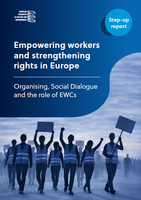 On 20 March 2026, the European Federation of Building and Woodworkers (EFBWW) published the results of the “Step-up” project in Brussels. The project aims to strengthen cross-border cooperation on collective bargaining policy, by also providing access to collective bargaining information at national and European level. The establishment and functioning of European works councils were also on the agenda. The project report examines both economic developments and industrial relations in the timber and construction sectors in Europe, supplemented by the results of a survey of national trade unions and EWC members. A short chapter is devoted specifically to European works councils. In addition, a toolkit has been published which compiles best practice and practical tips. This also includes specific examples from France, Belgium, Norway, Finland, Sweden and Italy.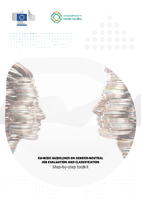
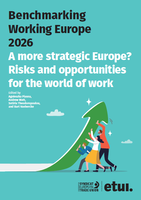 On 29 April 2026, the new edition of “Benchmarking Working Europe” was launched. Published annually since 2001, the report examines progress towards the EU’s economic, employment and social objectives. It is published by the European Trade Union Institute (ETUI) in Brussels. One chapter (from page 70 onwards) examines the development of trade unions in the European Single Market, Switzerland and the United Kingdom. Membership figures are falling across the board, but Scandinavia remains among the front-runners with a level of unionisation of around 50% (in Sweden and Denmark, it is even over 60%). Estonia comes in last with 5%. Industrial action statistics also show a downward trend, although France, Belgium and Portugal consistently record high numbers of days lost to industrial action. In Italy, Belgium, Austria and France, almost 100% of the working population is covered by collective bargaining agreements, whilst a number of countries in Central and Eastern Europe lag far behind. Poland ranks last with just 12%.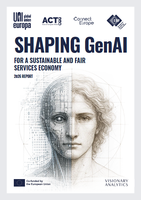
12. The EWC Academy: Examples of our work |
|
|
British software company on the road to establishing an EWC EWC negotiations in the final stages
On 15 and 16 June 2026, the quarterly meeting of the special negotiating body of Salesforce took place, this time in Stockholm. Some delegates participated via video link. The US software group is negotiating the establishment of an EWC under Irish law. The employee representatives are being advised by the EWC Academy (see report in EWC-News 1/2025). Training for newly established EWC under Dutch law |
 On 20 May 2026, the EWC Academy held a training session in Barcelona for members of Sage’s special negotiating body. The British company provides business software and services for small and medium-sized enterprises and has 11,000 employees worldwide. The application for establishing the EWC was submitted by employee representatives in France and Spain, the countries with the largest workforces in the EU.
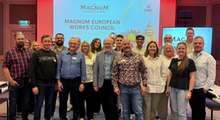 From 16 to 18 June 2026, Magnum’s EWC met at the group’s headquarters in Amsterdam. The world’s largest ice-cream manufacturer was part of Unilever until December 2025 and is now an independent company. The EWC was established in July 2025, prior to the company’s IPO, and adopted key elements of Unilever’s “voluntary” EWC agreement (see
 13. Current seminar schedule |
|
|
The EWC Academy and its predecessor organisation have been holding conferences and seminars for members of European works councils, SE works councils and special negotiating bodies since January 2009. So far, 1,002 employee representatives from 333 companies have taken part, many of them several times. This corresponds to around 25% of all transnational works council bodies in Europe. This also includes 34 companies in the legal form of an SE (European Company). In addition, there are numerous in-house events and guest lectures given to other organisations.
Overview of forthcoming seminar schedule Renegotiation of EWC agreements
EWC and SE introductory seminar in Dresden
German Works Constitution Act in English
Brochure on the German co-determination system English translation of German labour laws AI training for works councils The AI Regulation has been in force since August 2024. The EU is hereby taking on a global pioneering role in the regulation of artificial intelligence (see report in EWC-News 4/2023). AI is finding its way into more and more business processes. This increases the demands on works councils to recognise the introduction, implementation and impact of such systems at an early stage and to play an active role in influencing their development. They must understand the technical basics and be familiar with participation rights and protection obligations in order to develop practical regulations within the company. The seminar is aimed at local works council members and is being offered on several dates.
In-house events
|

 The next introductory seminar for members (including future members) of European works councils, SE works councils and special negotiating bodies will take place from 20 to 23 October 2026, this time at the Hilton Hotel near the landmark Church of Our Lady in Dresden. The seminar includes several modules for beginners and advanced participants. On request, we will also cover the steps for setting up an EWC for the first time for those who do not yet have one.
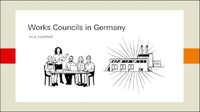 From 1 March to 31 May 2026, new works council elections were held in all German companies. These take place every four years. Among the estimated 150,000 works council members, there are an increasing number whose mother tongue is not German. Having previously run in-house seminars on this topic, we are now offering sessions for individual participation. These seminars are particularly aimed at German works council members. Employee representatives from other countries who wish to familiarise themselves with the German system are also welcome to attend.
14. Imprint |
|
|
EWC News is published by: D-20459 Hamburg |
|