 |
 Welcome to issue no. 3 / 2009 of EWC News. 31st October, 2009
|

|
The training and consultancy network
"euro-workscouncil.net"
EWC
News appears four times a year.
You can find past issues in the newsletter archives.
|


|
1.
EWC busy with
Restructuring
|
|
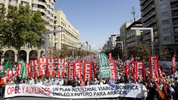
Opel sale: Speculation over strikes in Germany
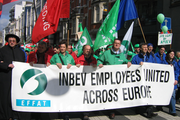
Since 20th September 2009 the select committee of the General Motors’ European Work Council has been in negotiations with Magna on the extent of the planned layoffs. Under discussion is a workforce reduction of 10.500 jobs, of which 4,500 in Germany. Since 2005 the local work councils of General Motors have given a negotiation mandate to the EWC, with a view to guaranteeing a common position. It can therefore act on a European level like a real company-wide central works council, although the European Union guideline does not provide for this. Protest day in Antwerp
Agreement in the UK
A deal signed on 13th October 2009 between the British trade union Unite and Magna provides a guarantee for the 5,500 employees at the Vauxhall sites of Ellesmere Port and Luton until 2013. Spanish government procures guarantees
Magna avoids European Work Council
Neither Magna nor the Sberbank have so far established their European Work Councils. In 2007, Magna employee representatives from France, Belgium and Czech Republic officially requested the creation of the EWC. Central management however allowed the legal period for the convening of the special negotiation body to pass by. Legally speaking therefore a default EWC has been in place in Magna, since February 2008, which has never been convened for a meeting. Instead of a European Work Council Magna has however put in place an "Employee Relations Advisory Board" for the monitoring of an employee charter defined unilaterally by the company. Its members are selected by the company and not by employees.
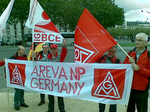
In the French nuclear company Areva, coordinated actions took place on 15th September 2009 throughout eight European countries against the planned sale of their energy transmission and distribution division. The European work council together with trade unions also organized a central demonstration with foreign participants in Paris (photo).
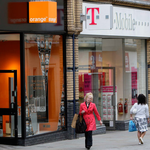
France Télécom and Deutsche Telekom plan to merge their mobile network daughter companies in the UK (Orange and T-Mobile) with 20,000 employees in a joint venture, in order to become market leader. British trade unions fear the closure of call centers and offices. On 11th September 2009 they met in Dublin on the occasion of a conference organized by UNI, the umbrella organization of service sector trade unions, with representatives from Germany and France, in order to discuss next steps.
Possible consequences were also discussed on 18th September 2009 in the European works council of France Télécom. Unlike DeutscheTelekom, the central management of the formerly nationalized French company committed in December 2006 to an agreement for social responsibility (see report in EWC News 1/2007). Both telecommunications companies created a EWC in April 2004. Belgian Beer Company sells entire Eastern Europe business |
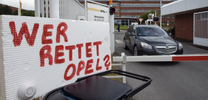
 Since Opel’s mother company, General
Motors, filed for bankruptcy on 1st June 2009, its future seems
uncertain. Although the German Federal Government secured the planned
sale of Opel to the Canadian-Austrian automobile supplier Magna and the
Russian Sberbank with a bridging loan, the sale is up to now still in
the balance. The European Commission has also expressed doubts.
According to press reports trade unions want to increase the pressure
for the completion of the sale by taking industrial action if
necessary. The IG Metall union has denied this - at least officially.
Since Opel’s mother company, General
Motors, filed for bankruptcy on 1st June 2009, its future seems
uncertain. Although the German Federal Government secured the planned
sale of Opel to the Canadian-Austrian automobile supplier Magna and the
Russian Sberbank with a bridging loan, the sale is up to now still in
the balance. The European Commission has also expressed doubts.
According to press reports trade unions want to increase the pressure
for the completion of the sale by taking industrial action if
necessary. The IG Metall union has denied this - at least officially.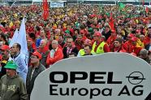
|
2.
Country
highlights
|
|
New Works Council
legislation in Poland
Employers must bear works council costs
The new legislation brings another innovation. In the future all the costs for the election and the on-going activities of work councils are to be borne by the employers. For the first time in Poland this applies also to the costs for experts. According to the previous 2006 legislation all costs had still to be borne by the trade unions. The change in legislation was made necessary since the Polish constitutional court had removed the trade unions privileges for the nomination process of work councils in July 2008 (see report in EWC News 2/2008). In addition to the works councils in Poland there still remain company trade unions, which represent all employees of the company (including non-members) according to the trade union legislation of 1991.
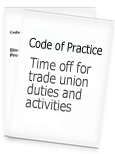
On 14th August 2009 the independent arbitration board ACAS in London submitted a new code of practice for time-off of employee representatives. This will have a great practical impact since no precise legal rules exist in the United Kingdom. The code was established by the ACAS Council, made up of both trade union and employer representatives as well as independent experts. Acceptance by British employers is therefore guaranteed. The code is due to enter into force at the beginning of 2010 after having recently obtained approval by the Department for Business and the Parliament.
There are separate rules for union and for non-unionized employee representatives. The code not only regulates time-off, but also covers the right to training, resources as well as confidentiality issues. It applies also to members of health and safety committees, special negotiation bodies and European work councils.
Financial market crisis urges Iceland into the European Union
Further countries waiting to enter
Negotiations for the accession of Turkey are currently at a standstill, due to amongst other things their parliament blocking new trade union legislation. Turkey must first comply with the standards for industrial relations within the European Union before negotiations can be resumed (see country report for Turkey in EWC News 2/2007). Negotiations have not yet begun for the former Yugoslav Republic of Macedonia, which has been an official EU applicant since December 2005, nor for Albania, which officially applied for membership on 28th April 2009.
Conference on industrial relations à la française
|
 New time-off rules in Britain
|
3. Improved
working conditions for European Work Councils
|
|
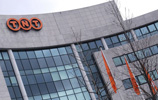
In February 2009 the EWC agreement for TNT was renewed. The logistics company, which is a spin-off from the national postal service, has had a EWC in place under Dutch legislation since 2000 with rights extending far beyond the minimum standards of the EWC Directive.
It is characteristic for a logistics company to have its dealings spread over a wide geographical area. The new EWC agreement therefore has been particularly extended to cover Eastern Europe. The EWC now has 35 members, of which only five come from the Netherlands. In the future, the steering committee can meet up to four times per year. Each EWC member has a personal annual training right of one day. The EWC receives its own budget according to the French model.
US Company accepts better consultation procedure
The L'Oréal EWC agreement dating from 1996 was updated on 17th April 2009 at the headquarters in Clichy near Paris. Although there is still a right to only one annual plenary meeting of the EWC, the consultation procedure has been defined more precisely in accordance with the new EWC Directive and divided into three separate steps. The steering committee consisting of three members from three different countries will take responsibility for the process.
The EWC of the world’s largest cosmetics manufacturer is made up of 30 members of which eight come from France and four from the UK. According to French custom the employer chairs the meetings. Each EWC member has a right to two days time-off in addition to those for participating in meetings, and the steering committee members an additional twenty. An exceptional three day time-off is given for every consultation procedure.
The EWC agreement from Colgate-Palmolive signed in 1996 under Belgian law was renewed on 8th July 2009. The definition for information and consultation complies with the new EWC Directive. A new steering committee is to be put in place with four members coming from four different countries who must not all belong to the same sex. It will meet once per quarter with central management. The employer still chairs the EWC and experts may be provided by the trade unions free of charge. The US company will therefore benefit from long-lasting subsidies originating from union membership fees.
|

|
4. Current court
decisions
|
|
On 14th May 2009 the High Court of Justice in Denmark decided that workers' directors may inform their trade union about a forthcoming merger. In 2000, an employee representative on the board of Directors of a bank had informed the chairman of his trade union, Allan Bang, about a planned merger with another bank. Criminal proceedings were taken against both for illegal passing-on of insider information. In 2005 the European Court of Justice then judged that passing-on of information pertaining to the accomplishment of a professional activity to be legally permissible.
No individual opposition rights against social compensation plan
On 16th July 2009 the European Court of Justice decided in Luxembourg that individual employees cannot contest an incorrectly completed consultation procedure for mass redundancies. The violation of consultation rights may be challenged only by work councils and trade unions. In 2006 the labor court in Liège had awarded higher compensation to several employees made redundant at the automobile supplier Mono Car Styling, than that given by the agreed social compensation plan. The Belgian judges argued that employers had not carried out correctly the consultation procedure with the employee representatives. The judges in Luxembourg decided differently: and in their view the higher compensation is illegal.
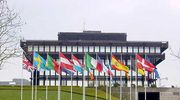
Based on the Fujitsu Siemens Computers case in Finland, the European Court of Justice in Luxembourg (photo) ruled on 10th September 2009 on mass redundancy information and consultation obligations for employers. According to the opinion of the court the consultation procedure must be completely finalized before any layoffs can be notified. The judges assume the following sequence of events: firstly the parent company makes a fundamental strategic decision, followed by the information and consultation process carried out in the subsidiary and only thereafter can the final decision of the parent company be taken. Any dismissals made in disrespect of this flow are invalid. This judgment is also of great importance for European work councils, since it emphasizes the formal operational sequence of the consultation process. The employer can act only if the consultation with the EWC has been correctly completed. The consultation procedure is considered finalized once the EWC has expressed an opinion resolution. Such a resolution is only possible if the employer has fulfilled its obligation to provide necessary information. This was defined exactly for the first time in the Alcatel-Lucent case in 2007 by a French court (see report in EWC News 2/2007). An incompletely terminated consultation procedure can lead to invalidation proceedings, illustrated well by the example of Gaz de France (see report in EWC News 1/2008).
|


|
5.
Newly
created European Work Councils
|
|
In March 2007 Hilton sold the 132 Scandic hotels to the financial investor EQT (see report in EWC News 3/2007). With the separation from the Hilton EWC, there were no longer any transnational representation structure for Scandic. An EWC agreement was therefore signed on 26th December 2008 under Swedish legislation and the new EWC held its constitutional meeting in Stockholm on 6-8th October 2009. The 18 members represent ten countries and meet once annually. Since the main focus lies in the four Scandinavian countries, the steering committee is made up entirely of one member from each of these countries. Sweden provides the EWC coordinator. It is remarkable that all European countries from outside the European Union are represented with one observer in the EWC.
Group from Singapore soon with European-wide Representation
US Printing Company sets benchmark for British EWC agreements
The texts of numerous EWC agreements are available on a download page.
|
|
6. Safeguarding
minimum social standards
|
|
Tourism group strengthens social responsibility
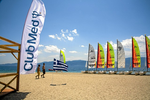
The second part of the agreement safeguards the working conditions of seasonal workers in Europe and Africa, which must not be worse than the local native employees. This concerns in particular employees from Morocco, Tunisia and Turkey, who work temporarily within the European Union. In addition, it concerns holiday clubs all around the Mediterranean, in Senegal, on the Ivory Coast and in Mauritius. In the future each of these sites will be visited for three days every season by union representatives for an inspection of local working conditions. Following texts are available only in French:
International Framework Agreement for Spanish Clothing Company
European trade union Charter for tourism
|
|
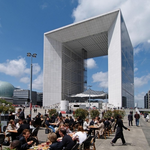
On 15th May 2009 for the first time a company quoted on the CAC 40, the French stock exchange index, was converted into a Societas Europaea (SE). The Unibail Rodamco real estate group from Paris operates shopping centers and office-blocks in eight EU countries, including in La Défence (photo). Two thirds of its’ 1,600 employees work in France. As there was no European works council yet established, the meeting of the special negotiation body (SNB) was the very first opportunity for an international meeting of employee representatives.
During the three-day long constitutional meeting of the SNB, central management pressed without much room for discussion to have its own pre-prepared text signed as the SE agreement. The SNB was not able however to agree to the text and requested the intervention of the French labour authorities. Finally an SE agreement was signed on 27th February 2009 with provisions to establish a 14 member EWC. The company has decided for a somewhat unconventional top-management structure. Whereas many French companies put in place a board of directors, Unibail Rodamco has chosen to have a separate executive committee and supervisory board. There is however not a single employee representative on the new SE supervisory board.
Bavarian Family business escapes co-determination
The Huber machine manufacturer from Berching has been operating since 17th July 2009 as a Societas Europaea (SE). The conversion was completed just in time before they exceeded the threshold of 500 employees in Germany. Hereby, the three-member supervisory board is able to remain employee-free also in the future. The company manufactures water purification equipment and is present in 16 countries of the European domestic market with a total worldwide workforce of 800. Strangely enough no reference to its escape from co-determination can be found in the press release.
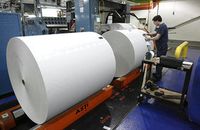
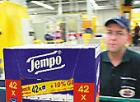
SCA Hygiene Products in Munich has been operating since 18th September 2009 as a Societas Europaea (SE). The company produces among other things Tempo handkerchiefs and Zewa paper rolls and employs over 6,500 persons in six European Union countries. During the conversion to SE status, the subsidiary of the Swedish SCA group wanted to halve the number of seats on the supervisory board.
The group had previously a parity-based supervisory board with twelve members, since nearly 2,900 employees work in Germany - approximately 44% of the European workforce. Since this figure is far greater than the threshold value of 25%, specified by the SE Directive to ensure co-determination rights, central management could not legally avoid a parity-based SE supervisory board. They still wanted however to reduce the supervisory board from twelve to six members.
For the 13 members of the special negotiation body (SNB) including five from Germany, this was unacceptable. They proceeded by informing the press at the headquarters of the parent company in Sweden. The legally allowed six month's negotiation period was consequently extended and a co-determination agreement was finally concluded on 2nd June 2009. It provides for a parity-based supervisory board with six employee representatives who have to be elected in the meantime: two German work council members, one representative each from Britain, Austria and the Netherlands as well as a full-time trade union officer of the German chemical industrial union IG BCE.
Initially no SE Work Council established
Since a European works council for the SCA group has been in place for many years as well as four divisional European works councils, it was decided to do without the creation of a SE works council for the subsidiary SCA Hygiene Products SE. In the meantime, the existing divisional European works councils are to remain in operation.
European Parliament pushes for SE Review
The European Parliament is of the opinion that the Directive on Worker Participation in the Societas Europaea (SE) must be urgently reviewed. The subject was up for discussion in its plenary meeting on 7th October 2009 in Brussels. One of the points criticized in the SE Directive is its lack of adaptability to any increase in the workforce, which in Germany can be particularly misused to "freeze" co-dermination rights (see report in EWC News 3/2008).
New review on the Allianz SE
In May 2009 the IMU-Institute from Munich presented a review of employee participation practice within Allianz after its conversion to SE. What has changed in the German subsidiary since October 2006, when the insurance company was one of the first companies in Europe to be converted into a SE?
|
|
How many EWC members master foreign languages?
On 24th September 2009 the European Union statistics office (Eurostat) presented data on the development of education in foreign languages. According to the report there exists a north-south divide between the language-talented Scandinavians and the mumbling attempts of the British and Mediterraneans. These practical findings give us guidance as to which languages require the urgent assistance of interpreters during EWC meetings.
The biggest language difficulties are experienced in southern EU-countries, where 40 to 50% of the population cannot speak any foreign language at all. In Hungary the figure reaches 75%. Approximately 29% of the adult population in Germany does not understand any foreign language, and in France 41%. The other extreme is Norway, where merely 2.9% of all adults understand exclusively their native language. In the Scandinavian countries, Belgium and Slovenia more than half of the population actually master two foreign languages.
Business English for German work councils
The July 2009 issue of the AiBplus magazine reports on the problems that German work council members have, when their school English is not good enough to be able to negotiate with English spoken managers or to communicate with their EWC colleagues before and after meetings. The article presents language courses which are particularly useful in such circumstances.
Such a language course is being organized by the “euro-workscouncil.net” training and consulting network together with Euro-Team Institut 26-29th January 2010 in Hamburg. The training will concentrate on typical expressions used in work councils, small talk for the coffee breaks during EWC meetings and office communication for the EWC office. The language teachers for these courses have had over 18 years working experience with work councils and trade unions. The training can be combined with the EWC conference, which will take place in the same hotel.
A further possibility for improving knowledge of languages is provided in an e-Learning project from the ver.di union training center. A choice of English, French, Spanish, Italian and German as a foreign language is available, with additional modules on business culture in different European countries. The language project is operated by partners from several countries and sponsored by the European Union. It is however not specifically addressed to work council members, and is also open to all employees.
In March 2009 the DGB Saar presented the second edition of its German to French dictionary for the trade union work. There is also a comparable German to English dictionary (see report in EWC News 2/2008). |



|
9. Aid for
EWC work
|
|
New EWC Directive leaflet
New statistics on European Works Councils In July 2009 the European Trade Union Institute in Brussels published new figures which indicate that there are now 908 European works councils, of which more than one third in the metal and electrical industries. In the European Union Germany is listed with the highest number of companies with a EWC in operation. Standing rules avoid legal risks Not only European works councils, but also special negotiation bodies can establish their own set of standing rules. These are particularly important to document the correct execution of resolutions e.g. for forthcoming legal proceedings. Such standing rules have recently been adopted by the special negotiation body (SNB) of the Japanese Pharma group Takeda (see report in EWC News 1/2009) and may be useful as a template.
Country Trade-Union Profile reference guide Any EWC member concerned with for example a site delocalization to Tunisia or planning discussions with employee representatives from Mexico is able to find a concise description of the most important basic conditions in the respective country. The trade-union activity of the whole world is covered in over 200 pages. All countries have their own profile and are listed in alphabetical order. |


|
Campaign for socially responsible restructuring in DHL
The Swiss food group likes to maintain its image as a socially responsible company. The international union of the food workers documents on a new web page, where Nestlé goes against its own requirements and which actions were taken throughout the world.
Turkey and the European Union get closer
The wage information system "agri info.eu" supplies data on work and wage conditions in European agricultural industry. Background information is available in seven languages on the social systems, employment health and safety and on the trade unions for 31 countries. We have put together a collection of additional useful links.
|

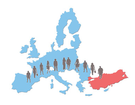 Turkey’s
entry to the European Union has been under negotiation since 2005, but
there still remains mutual prejudice, making the entry more difficult
(see
Turkey’s
entry to the European Union has been under negotiation since 2005, but
there still remains mutual prejudice, making the entry more difficult
(see  Wage and social standards in
the farming industry
Wage and social standards in
the farming industry|
11. New
publications
|
|
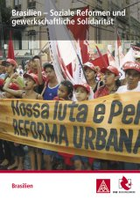
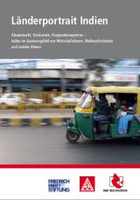
The DGB training department in co-operation with IG Metall trade union has presented two new brochures in German language on the developing countries, Brazil and India. The publication on Brazil examines the social situation and the situation of trade unions under Lula a former trade union secretary and governing president since 2002. One chapter highlights the impact of international framework agreements through several examples from the metal industry.
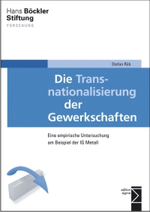
The EWC researcher, Dr. Stefan Rüb, analyzes this question in his thesis published end of August 2009 and based on numerous interviews. In his opinion, apart from collective bargaining trade union company policy play a central role, including international framework agreements for the penetration of world-wide social standards and European works councils. The author illustrates in a clear historical review, the tensions and points of friction that can exist within a trade union organization, when it has to position itself in a transnational perspective, in order to continue to act effectively. Rüb concludes with the criticism that the union organization of IG Metall only implements a real European working logic in exceptional cases.
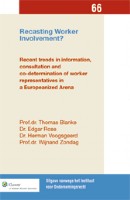
This collection, which was published in September 2009, describes a German-Dutch conference on employee participation (see report in EWC News 2/2008). Topics covered are industrial relations in Germany and the Netherlands, European works councils and workers' representation in the Societas Europaea (SE). Dr. Werner Altmeyer of the training and consulting network "euro-workscouncil.net" describes EWC intercultural problems and gives positive examples of EWC contractual policies. The book is available only in English.
Thomas Blanke/Edgar Rose/Herman Voogsgeerd/Wijnand Zondag (editors) Recasting Worker Involvement? Recent trends in information, consultation and co-determination of worker representatives in a Europeanized Arena Deventer 2009, 220 pages, ISBN 978-90-13-06329-5, € 45,-
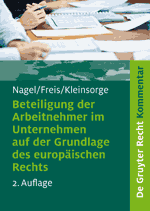
A second edition of this legal guidebook have been available since September 2009 and is highly recommendable for works councils which are affected by SE conversions. Co-determination issues within the SE are covered in detail. Apart from the background history to the creation of the SE Directive, the rules of the merger Directive are explained, which applies to transnational mergers of public companies. While there are already numerous cases of SE transformation particularly in Germany, the merger directive has only been put into practice once, i.e. in the Münchner Rück insurance company (see report in EWC News 2/2009).
|
|
12. Training and Consulting
Network " euro-workscouncil.net ":
Further
examples from our work
|
|
On 6-7th July 2009, Bank Austria and HypoVereinsbank EWC members met in Bad Hofgastein (Austria), in preparation for the next EWC meeting of the parent company UniCredit. The focal point of the meeting was a course given by Dr. Reingard Zimmer, from the training and consulting network "euro-workscouncil.net", on the development of international social and ethic standards in banking. The Danske Bank agreement signed in September 2008 (see report in EWC News 3/2008) served as a model. A global trade union network for UniCredit was subsequently set up on 21st September 2009.
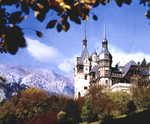
A workshop for members of European works councils from the services and metal industries took place on 14-15th September 2009 in the Sinaia spa-resort in the Carpathians (the photo shows the former royal summer residence). Around 25 employee representatives from seven countries exchanged their experiences with restructuring. Dr. Werner Altmeyer from the "euro-workscouncil.net" also presented the new EWC Directive.
During 2010 several comparable EWC Workshops are to take place. Dates are planned in Paris, London, Madrid, Berlin, Bucharest and Warsaw. More detailed information will follow in the next edition of EWC News.
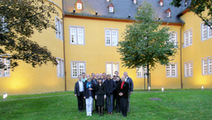
Workshop in Montabaur Castle
The workshop will be held again in October 2010 at the same venue.
|
|
13. Current
seminar schedule
|
|
Registration is open for the following seminars and workshops:
Legal and practical issues in EWC work 25-01-2010 in Hamburg Workers' participation à la française? 26-01-2010 in Hamburg (both dates can be booked separately) English language course for EWC members 26 -- 29-01-2010 in Hamburg French-German EWC conference 05 -- 07-07-2010 in Paris
Workshop for European Work Councils October 2010 in Montabaur
Seminars from the Institute for further education of works councils (ifb)
Basic seminar: The path to the European Works Council 07 -- 11-06-2010 in Fulda 08 -- 12-11-2010 in Hannover
Advanced seminar: Practical knowledge, EWC special 16 -- 20-11-2009 in Nuremberg 14 -- 18-06-2010 in Erfurt 15 -- 19-11-2010 in Hamburg
Institutions, political background, European works councils 14 -- 16-10-2009 in Bad Orb
Workshop of IG BCE trade union
24 -- 26-03-2010 in Bad Münder (further information will follow soon)
In-house events Please find a survey of possible subjects of in-house events here: |
 Hamburg Conference for
European Work Councils
Hamburg Conference for
European Work Councils
 Europe
for IG Metall trade union officers
Europe
for IG Metall trade union officers 


|
14. Imprint
|
EWC
News is published by: Training
and consultancy
network "euro-betriebsrat.de" GbR Von-der-Tann-Straße
4, D-20259 Hamburg www.euro-workscouncil.net (English) www.euro-ce.org
(French) Authors
collaborating on this issue: Werner Altmeyer,
Rudolf Reitter, Reingard Zimmer Distributor
of the German
version: 12,806 readers Distributor of
the English version: 1,698 readers Distributor of
the French version: 1,436 readers Newsletter
archive: www.ewc-news.com
We
are always pleased to
receive comments and suggestions in relation to this newsletter as well
as reports on your EWC activities. Please write us at: info@euro-workscouncil.net
www.euro-betriebsrat.de (German)